
Sweden's worst growth in the EU: "Pretty good"
Of:
Nivette Dawod
Published: Less than 2 hours ago
Updated: Less than 1 hour ago
Crisis winter
Sweden's economy is doing the worst in the EU and will shrink in 2023.
That's the EU Commission's new winter forecast. '
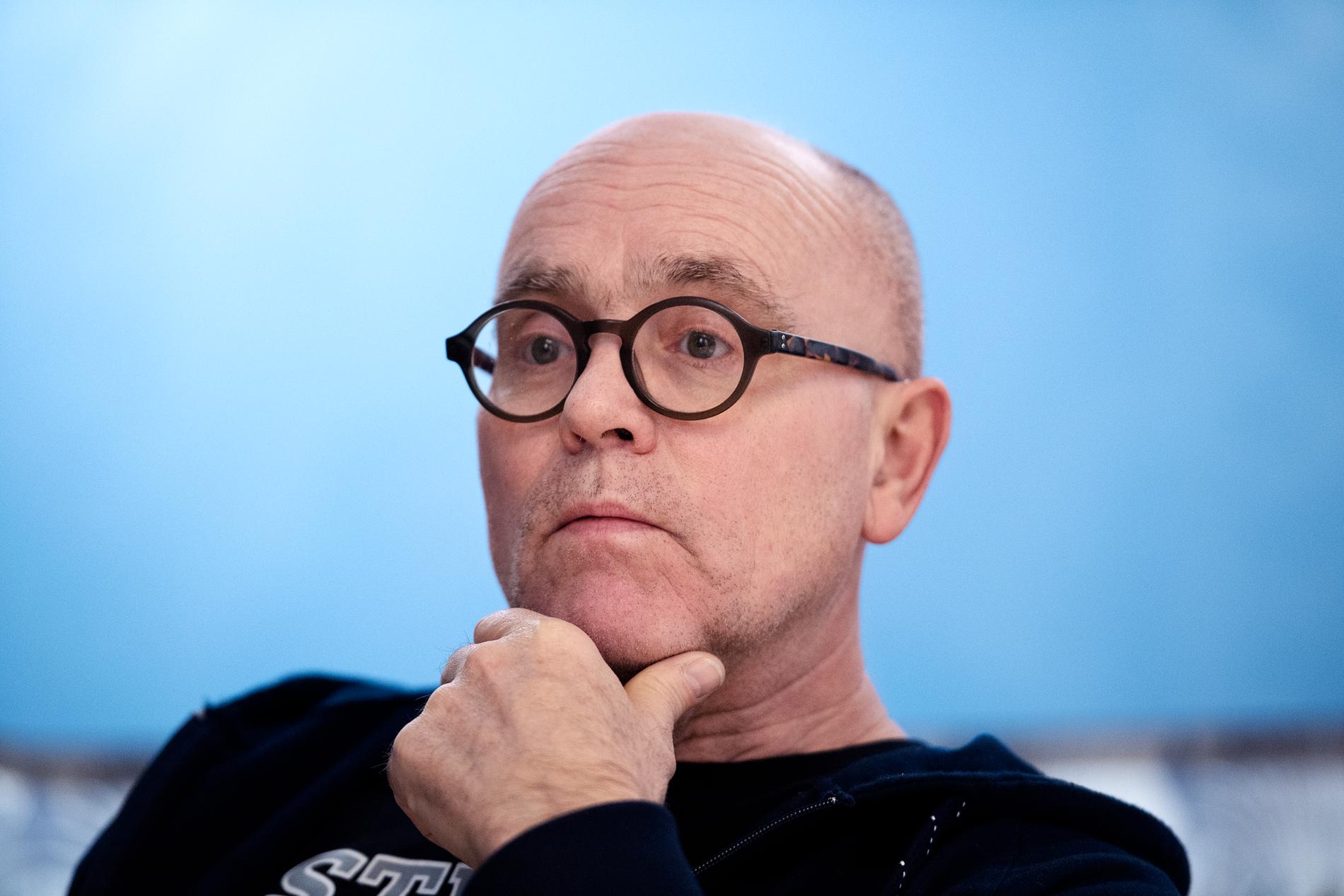
- It is not certain that it is wrong, perhaps on the contrary it is quite good, says John Hassler, professor of economics.
It sounded gloomy when the European Commission released its new winter forecast for 2023 on Monday. Sweden once again ended up at the bottom of the list in terms of growth among the 27 EU countries,
The European Commission expects the Swedish economy to shrink by 0.8 percent in the coming year, as the only country in the Union with a deficit.
But
"Not unwanted"
On the contrary, he believes, this is proof that the
- This is not unwanted. The recession we are already in is something we have largely driven forward ourselves, and on purpose. We want demand to fall below what the economy can produce. It is so that inflation does not take hold, he says.
Raising the policy rate to combat inflation simply leads to a reduction in growth.
- This is exactly what the Riksbank wants to happen to the economy. It cannot be achieved without a decline in housing prices, an increase in unemployment, and lower growth. That's exactly what you have to do in this situation.
Facts
Growth in the EU
This is how the European Commission sees growth in the EU in 2023:
Ireland: 4.9 percent
Malta: 3.1
Romania: 2.5
Luxembourg: 1.7
Cyprus: 1.6
Slovakia: 1.5
Spain: 1.4
Bulgaria: 1.4
Greece: 1.2
Croatia: 1.2
Portugal: 1.0
Slovenia: 1.0
Netherlands: 0.9
Italy: 0.8
Belgium: 0.8
France: 0.6
Hungary: 0.6
Austria: 0.5
Poland: 0.4
Lithuania: 0.3
Germany: 0.2
Finland: 0.2
Denmark: 0.1
Czech Republic: 0.1
Latvia: 0.1
Estonia: 0.1
Sweden: -0.8
Eurozone: 0.9
The whole EU: 0.8
Source: EU Commission/TT
"Suppress the economy"
However, what can be discussed, Hassler believes, is whether the Riksbank's increases are going too fast.
Last week, when the Riksbank raised the key interest rate by 50 points to 3 percent, criticism was directed at the increase being too large. For example, LO's chief economist Laura Hartman said that the Riksbank is cracking down on already stressed households.
John Hassler describes the Riksbank's work right now as a balancing act.
- The Riksbank wants to depress the economy, but not completely. You will probably succeed with that. But it can also go wrong.
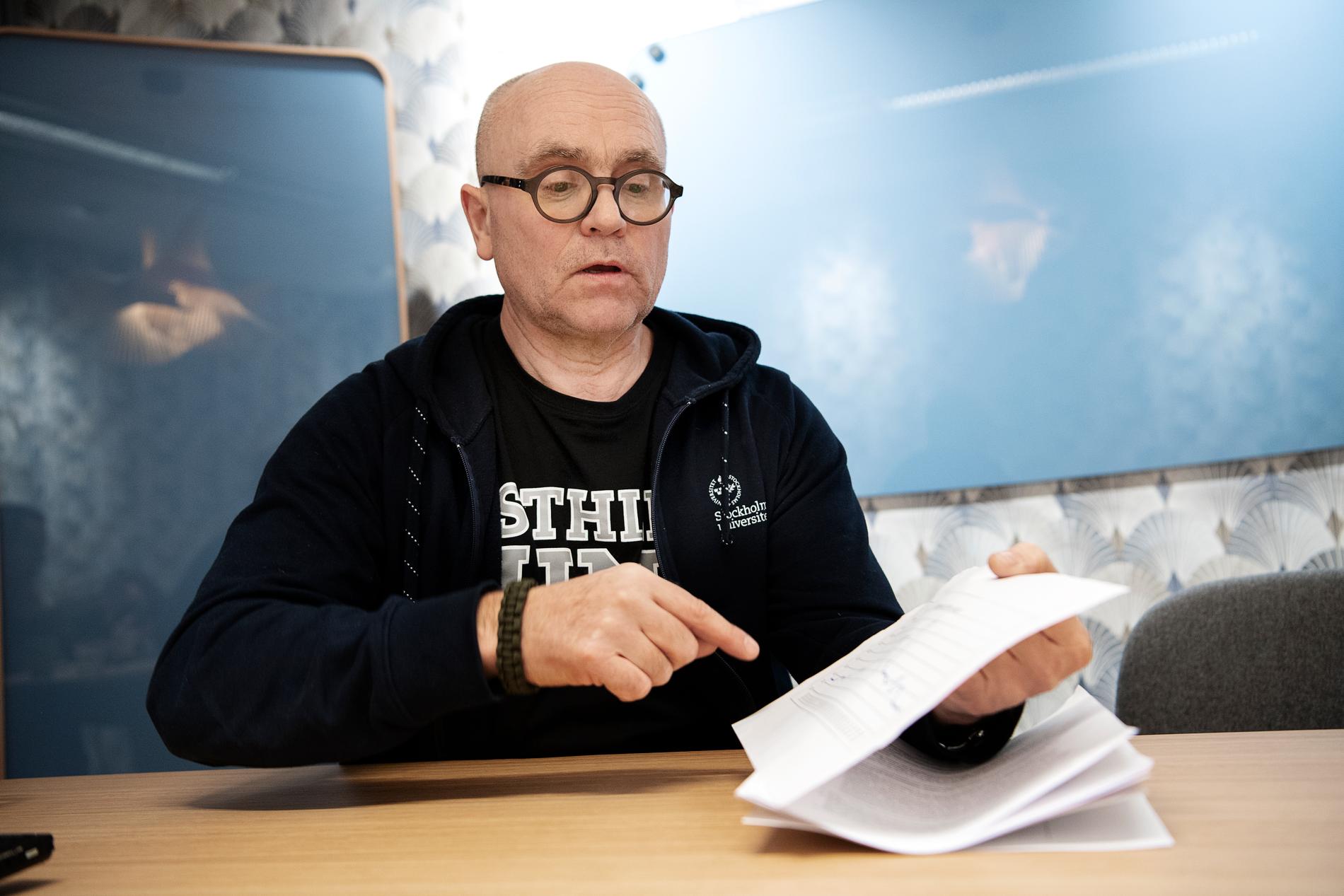
"The recession we are already in is something we have largely driven forward ourselves, and on purpose," says John Hassler. Photo: JERKER IVARSSON
Inflation is expected to decrease
He also takes note of what the European Commission writes in its forecast regarding Swedish inflation, which in December was 10.2 percent according to CPIF (consumer price index with fixed interest rate) and 12.3 percent according to CPI (where changes in housing interest costs are also included ).
It is expected to decrease in the future, according to the forecast.
To 6.3 percent already this year, and 1.8 percent in 2024, writes TT. Within the EU, calculations are always based on the CPI measure.
Although the figures are uncertain, John Hassler states that the Swedish labor market remains strong for many groups and that the financial sector continues to do well.
- We do not see a total crash ahead.
- If there were signs that inflation was really taking hold, then it would have been worrying.
Facts
Decline in the first half of 2023
The decline in Swedish growth is linked in the EU forecast to the first half of 2023. Then Swedish households need to adapt to thinner wallets and rising unemployment.
Above all, the construction sector will feel the new economic climate with rising costs and reduced demand as a result of the interest rate increases, writes the EU Commission.
During the beginning of the year, Swedish companies will also become more cautious with investments due to the general uncertainty in the economy and the changed interest rate climate.
At the same time, energy prices are expected to drop significantly in 2023, writes the EU Commission.
Source: TT.

Inga kommentarer:
Skicka en kommentar