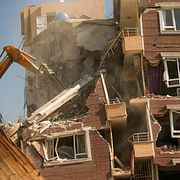
Building demolished in Samandag after the earthquake. Emrah Gurel / AP
The earthquakes in Turkey and Syria
Survived the earthquake: "The dust is killing us"
The next big challenge for those who survived the Turkish earthquake disaster in February is the dust, writes AFP. When the remains of demolished buildings are cleared away in affected areas in southern Turkey, large dust clouds containing hazardous substances are created.
According to Michel Atik, who founded an environmental protection organization in the city of Samandag, the residents may suffer from respiratory diseases and lung cancer in the future.
- We survived the earthquake, but the dust will kill us, he says.
Five months after the earthquake, the work to rebuild the cities is ongoing and extensive. Close to 2.6 million buildings have been destroyed, according to Turkey.
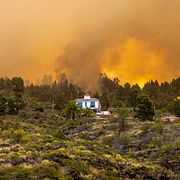
The fire. AP
Climate threat Europe's heat waves
The fire on La Palma spreads - 4,000 have been evacuated
More than 4,000 have now been evacuated from their homes because of the forest fire that is now raging on the Spanish island of La Palma, writes The Guardian. 4,500 hectares are on fire and about ten houses are beyond saving.
The fire is said to spread quickly due to the weather conditions: Wind and heat wave. Fernando Clavijo, who leads the regional government of the Canary Islands, says according to the BBC that the most important thing is to save lives.
- People come first, then the houses and then get the fire extinguished.
On the nearby islands of Tenerife and Gran Canaria there is also a high risk of fires.
Migrants in the Mediterranean, 17 June.
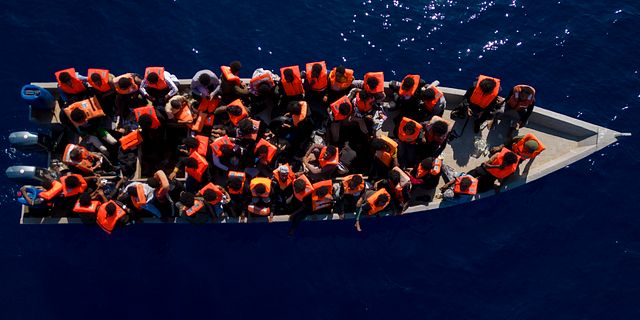
Joan Mateu Parra / AP
The flight to Europe
More fleeing in the Mediterranean - approaching the 2015 level
The number of people fleeing across the Mediterranean is approaching the number that came during the refugee crisis in 2015, writes SvD in a report from the Italian Lampedusa. After the levels have decreased for several years, 2,000 refugees can now arrive on the island in one day.
Already early this spring, the voluntary organization Sea-Watch noticed an escalation - regardless of weather conditions, people tried to get in boats from Africa, many from south of the Sahara via Tunisia and Libya.
29-year-old Ruach Biel Mabor, who fled from South Sudan, tells the newspaper about the boat trip:
- For us, everything went well the first day, but when we got out into international waters we saw bodies floating around next to a boat that had capsized, another boat was floating around, empty, a little further away.

Inga kommentarer:
Skicka en kommentar