
Wolfgang Hansson
This is a commenting text. Analysis and positions are the writer's.
Posted at 3:33 p.m
Columnist
For the rest of the world, it appears that Sweden is sending double signals.
First, a Swedish authority, the police, gives permission for Koran burning. Then the same act is condemned by another authority, the Ministry of Foreign Affairs.
It is naive to believe that Sweden can educate the outside world in Swedish freedom of expression.
Sweden and Swedish courts can decide what Swedish freedom of expression should look like and then try to deal with the problems that arise in the form of, for example, Easter riots. But we cannot influence or take care of the reactions in the outside world.
It doesn't matter how much we try to explain what Swedish freedom of expression looks like. Large parts of the outside world still cannot understand how we can allow with one hand an act that is seen by Muslims all over the world as a gross provocation and with the other hand condemn it.
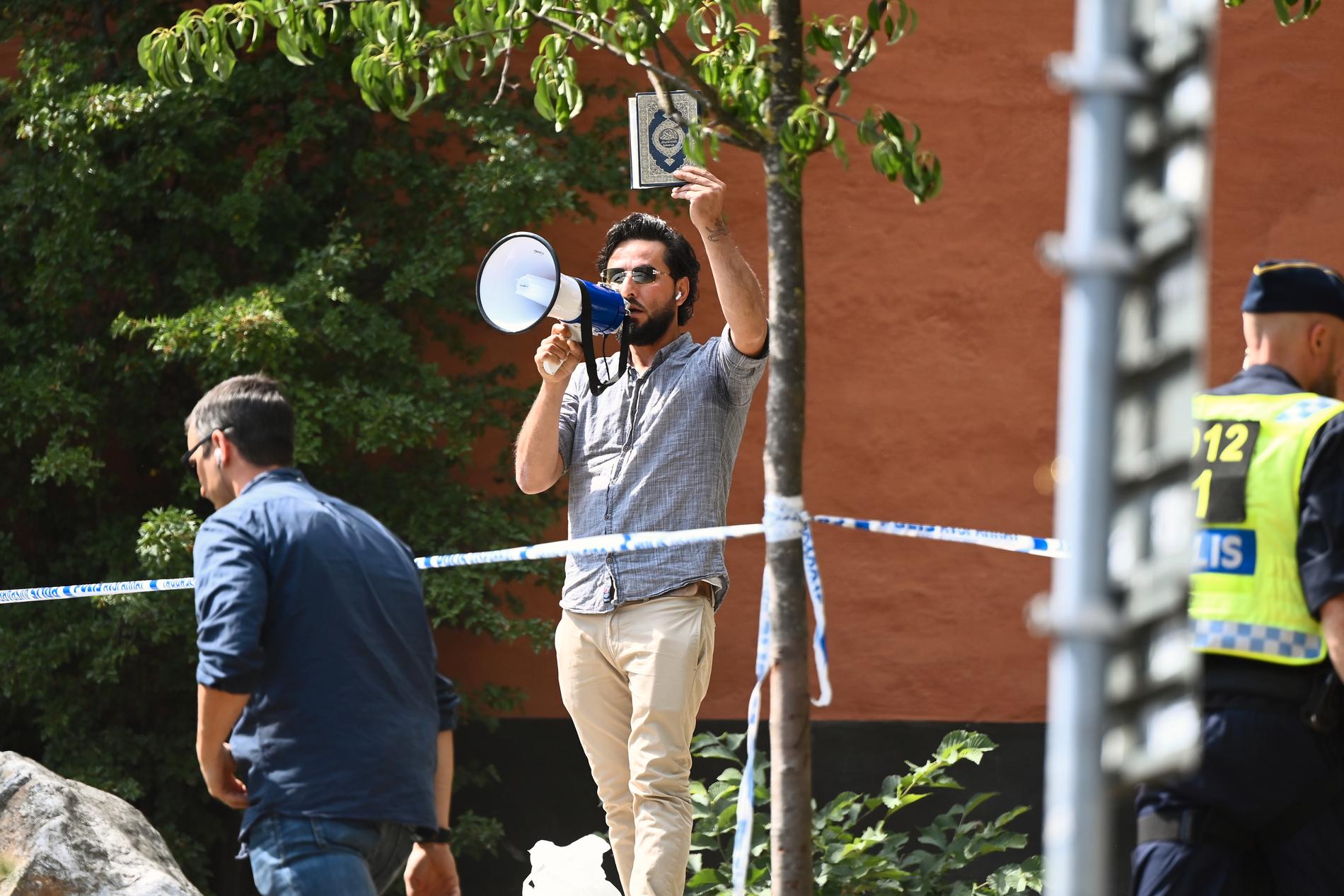
"The police could have stopped the latest Koran burning outside the mosque on Medborgarplatsen". Photo: Peter Wixtröm
International consequences
We can send an army of PR consultants 50 laps around the world and they still won't get people in the majority of the world to understand or accept how Swedish freedom of speech works.
The police had been able to stop the latest Koran burning outside the mosque on Medborgarplatsen, carried out during one of the Muslims' biggest holidays. It could have been moved to another location or banned with reference to the fire ban.
My impression is that the police wanted to give the courts a reminder after two judgments that Koran burnings could not be banned by referring to a generally increased security threat to Sweden. What happens can happen.
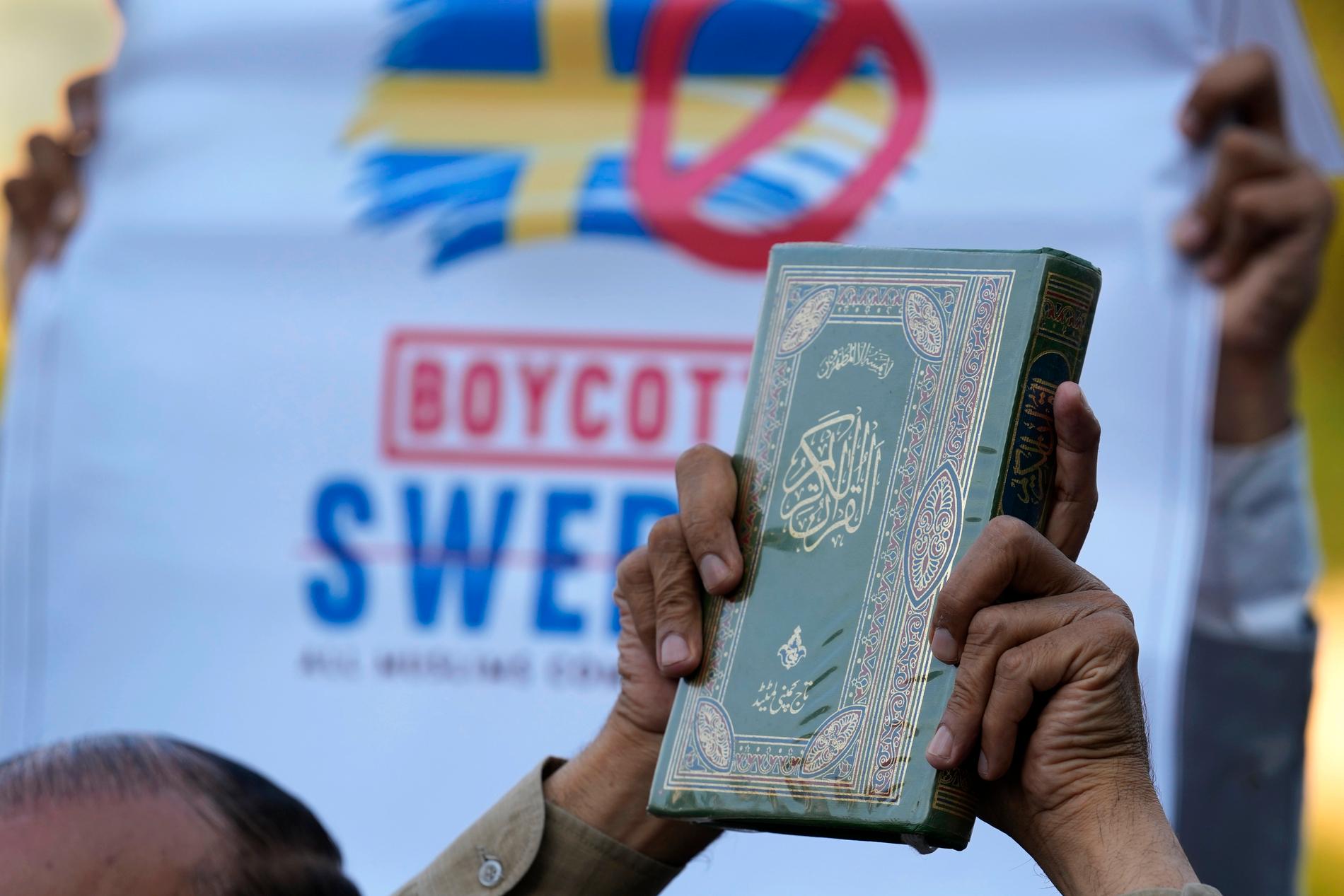
Protests against Sweden's Koran burnings in Islamabad, Pakistan. Photo: Anjum Naveed/AP
Last year's Koran burnings in Sweden are now beginning to have international consequences. The Pope in the Vatican demands that Sweden put an end to Koran burnings as well as a united alliance of the world's Muslim countries who want to see binding international legislation.
Hostile atmosphere
Morocco, Saudi Arabia, Qatar and Iran are among the countries that have either recalled their ambassadors or called up the Swedish ambassadors in the respective countries to receive a protest note.
The UN Human Rights Council calls for an extraordinary meeting.
The Koran burnings have made a big impression on social media in the Muslim world, which increases the risk of terrorist threats directed at Swedes and Swedish interests abroad. Calls have been heard for boycotts against Swedish companies and Swedish products.
We
can be quite sure that this hostile mood towards Sweden will be
exploited in disinformation campaigns by forces that want to harm and
weaken Sweden, for example Russia.
For
militant Islamist groups such as al-Qaeda and the Islamic State, this
is exactly the fuel they need to ignite the radicalization of young,
would-be terrorists.
Many of the countries that condemn Sweden are dictatorships where freedom of expression is extremely limited. We
may think that we don't need to care about what they say, but we cannot
close our eyes to the consequences that the criticism of the Koran
burnings has.
Therefore,
I can understand that the Swedish Ministry of Foreign Affairs feels the
need to try to reduce the damage and explain itself to the outside
world.
Conflicting signals
But the double signals become very confusing for foreign countries.
First, the police give permission for a Koran to be burned outside Stockholm's largest mosque.
Subsequently, the Foreign Ministry and the government condemn the same act.
"The burning of the Koran or any other holy scripture is an offensive and disrespectful act and a clear provocation. Expressions of racism, xenophobia and related intolerance have no place in Sweden," writes the Foreign Ministry.
In
the outside world, the natural question then becomes how the Swedish
police could give permission for the burning of the Koran from the very
beginning.
In
a world where more or less authoritarian states dominate, it is
incomprehensible to them how Sweden can send such conflicting signals. Who really decides?
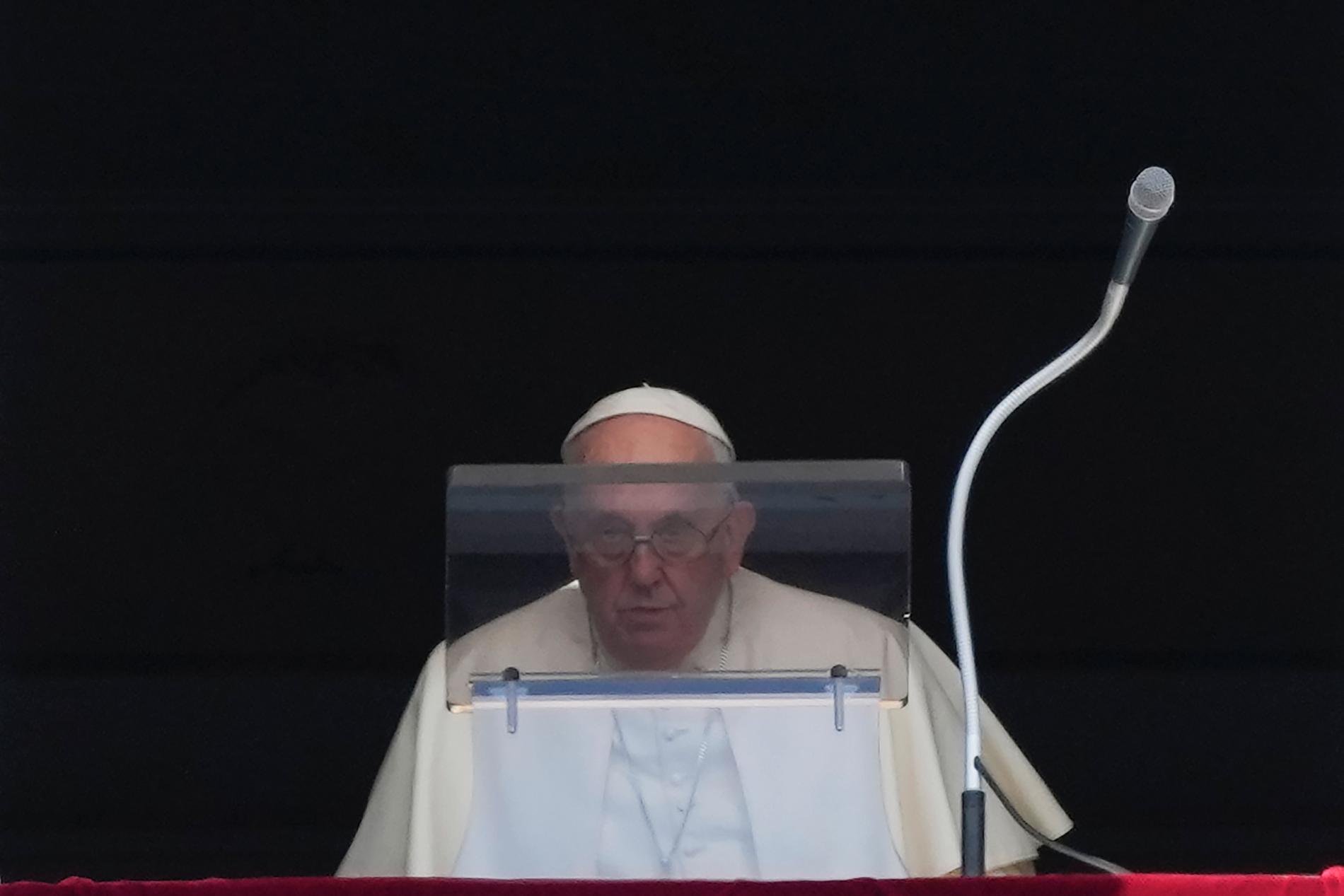
The Pope demands that Sweden put an end to Koran burnings. Photo: Alessandra Tarantino/AP
Many Swedes see Sweden as the right country. Intermediate milk all the way. But abroad we are actually seen as extreme. Extreme in everything from the fact that it is almost no longer possible to use cash, our view of equality to freedom of expression.
We can feel proud that in many ways we are ahead of other countries and thus appear extreme. But it is dangerous to live with a distorted self-image. Not least when Swedes now risk becoming targets in many Muslim countries.
New permits?
The experience from previous similar crises is that, after all, they blow by rather quickly. At best, the outside world will not associate Sweden with Koran burnings in a year or two.
I believe that the Koran burnings have played their role as a form of protest for a long time to come.
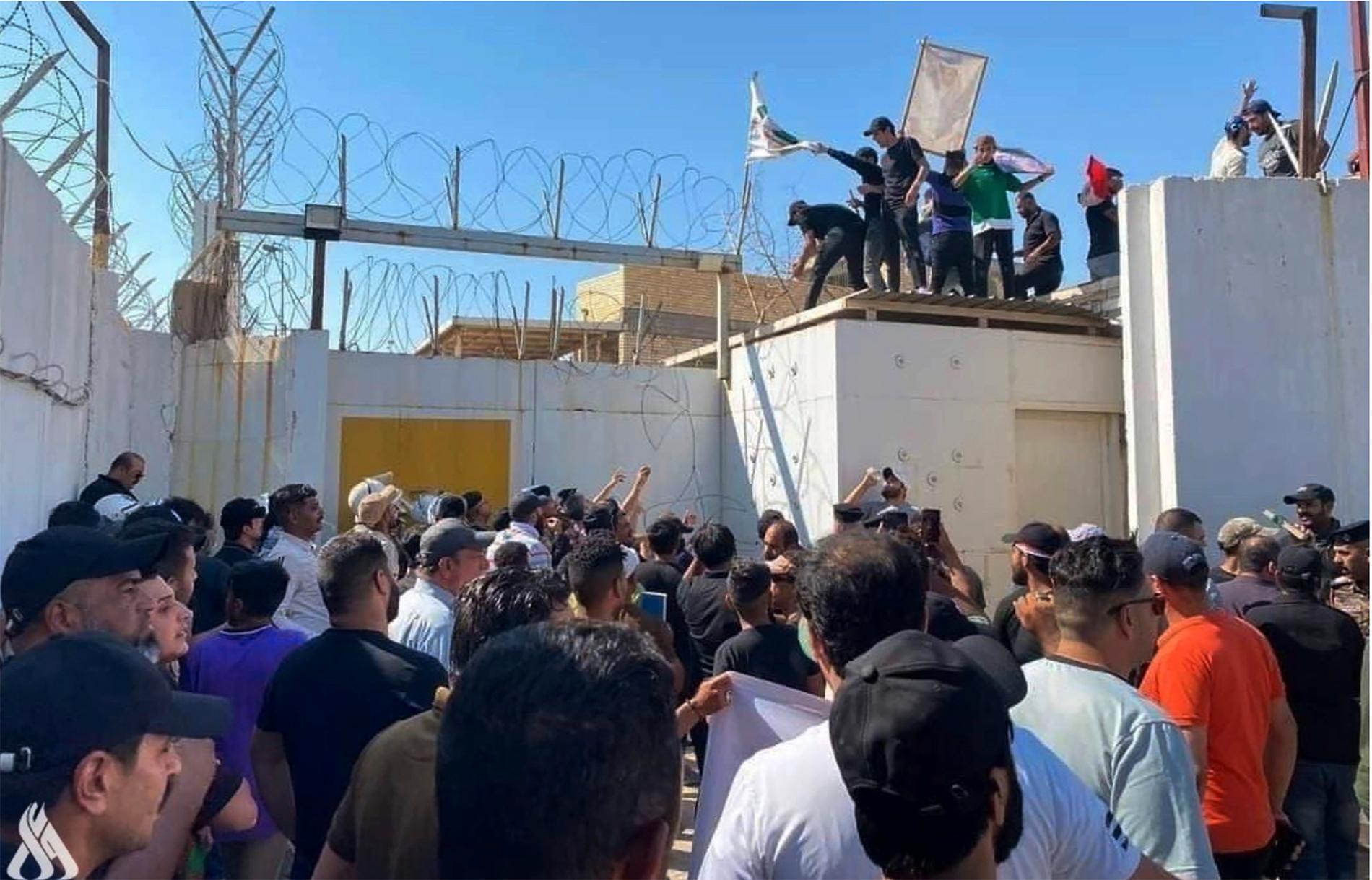
Protests against the Swedish embassy in Baghdad. Photo: AP
When the satirical Muhammad cartoons were published in Denmark in 2005, it became a one-off until the French satirical magazine Charlie Hebdo republished them ten years later. It felt like a relevant criticism of Islam to push with the Prophet Muhammad once but the strong reactions and threats that followed dampened the desire and desire to repeat the provocation.
I would like to see the Swedish police authority, after what happened, issue new permits for Koran burnings or courts that judge strictly according to the letter of the law instead of even applying a shred of common sense.

Inga kommentarer:
Skicka en kommentar