
Moscow
The Kremlin's countermoves during the coup - traveled to Syria
Niklas Gustafsson
Updated 09:08 | Published at 07:16
News
At the same time as Prigozhin marched on Moscow, Russian officers traveled to Syria.
At the Russian military base in Syria, they tried to prevent an international spread of the rebellion.
Several people from the Wagner group there are said to have refused to sign contracts with the Russian army and were then flown out to unknown destinations in Russia, writes the ISW think tank.
Prigozhin described the whole thing as a "march for justice" where he would hold the Russian military leadership accountable.
Russian President Putin chose to call the action a betrayal and a "dagger in the back of the nation".
After talks with Belarus leader Aleksandr Lukashenko, Prigozhin chose to stay in Lipetsk, 45 miles south of Moscow. According to the Wagner leader, to "avoid a bloodbath".
In a report from the American think tank Institute for the Study of War, there is information that another international operation was going on at the same time. Russian commanders are said to have traveled to Syria soon after the uprising began.
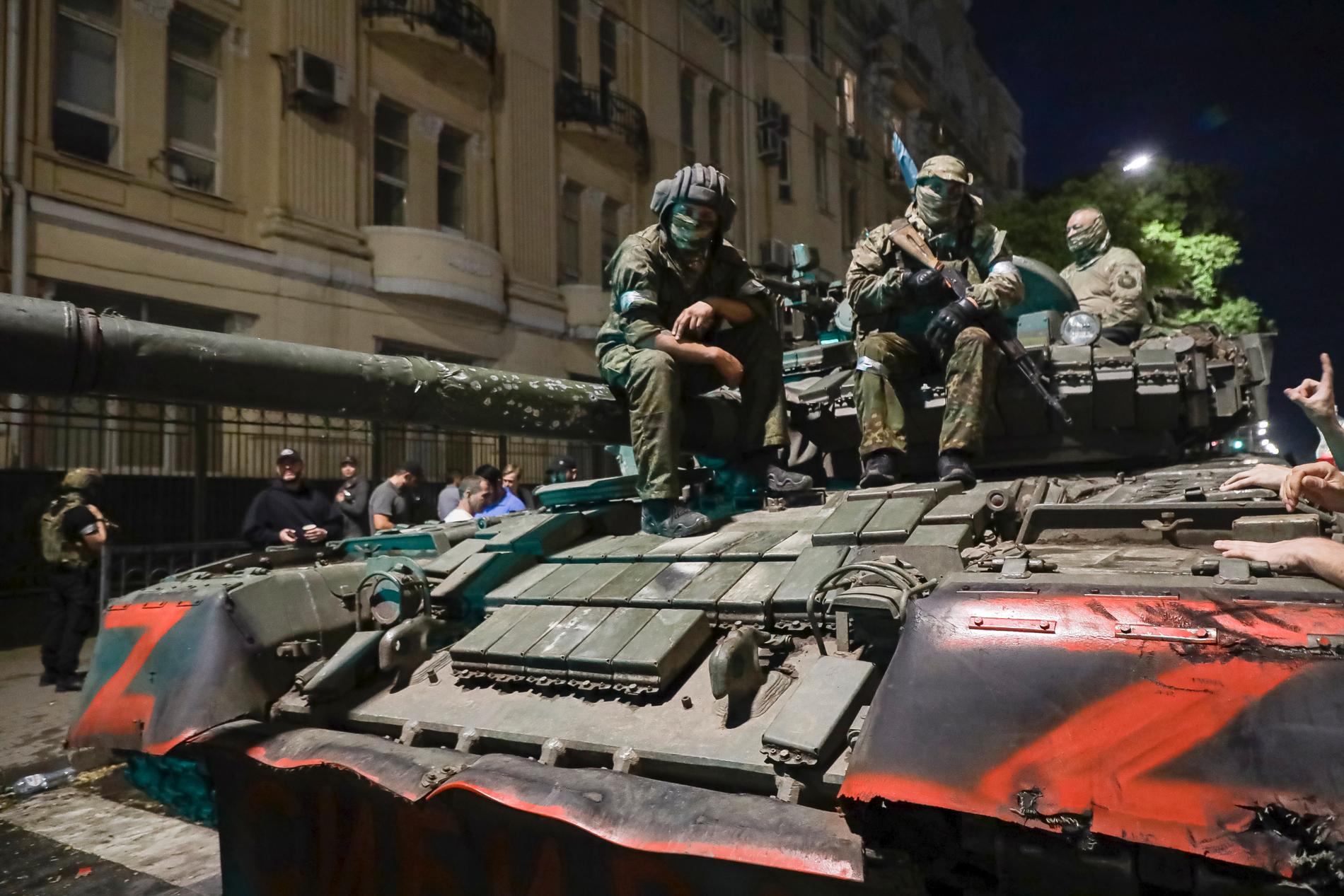
Soldiers from the Wagner group on their march towards Moscow. Photo: TT NEWS AGENCY
Wanted to avoid an international uprising
The Wagner Group has soldiers and personnel in both Syria and several African countries. According to the ISW think tank, the Kremlin took swift action to prevent the armed rebellion from spreading to Syria.
"Syrian security officials, sources close to Russian forces, and regional officials reported that Syrian and Russian commanders took swift action to prevent the spread of the armed insurgency among the Wagner forces in Syria," the think tank writes in its report.
According to information, the group of commanders was sent to Syria to "take command" of the Wagner forces in Syria.
A dozen or so Wagner commanders are said to have been summoned to the Russian military base in Hmeimim.
There they are said to have been ordered to sign contracts with the Russian Ministry of Defense.
According to the information, Wagner personnel who refused to sign the contracts must have been flown to Russia. Where in Russia is currently not known, but the aircraft must have been Russian and the trips must have taken place under the Russian Ministry of Defense.
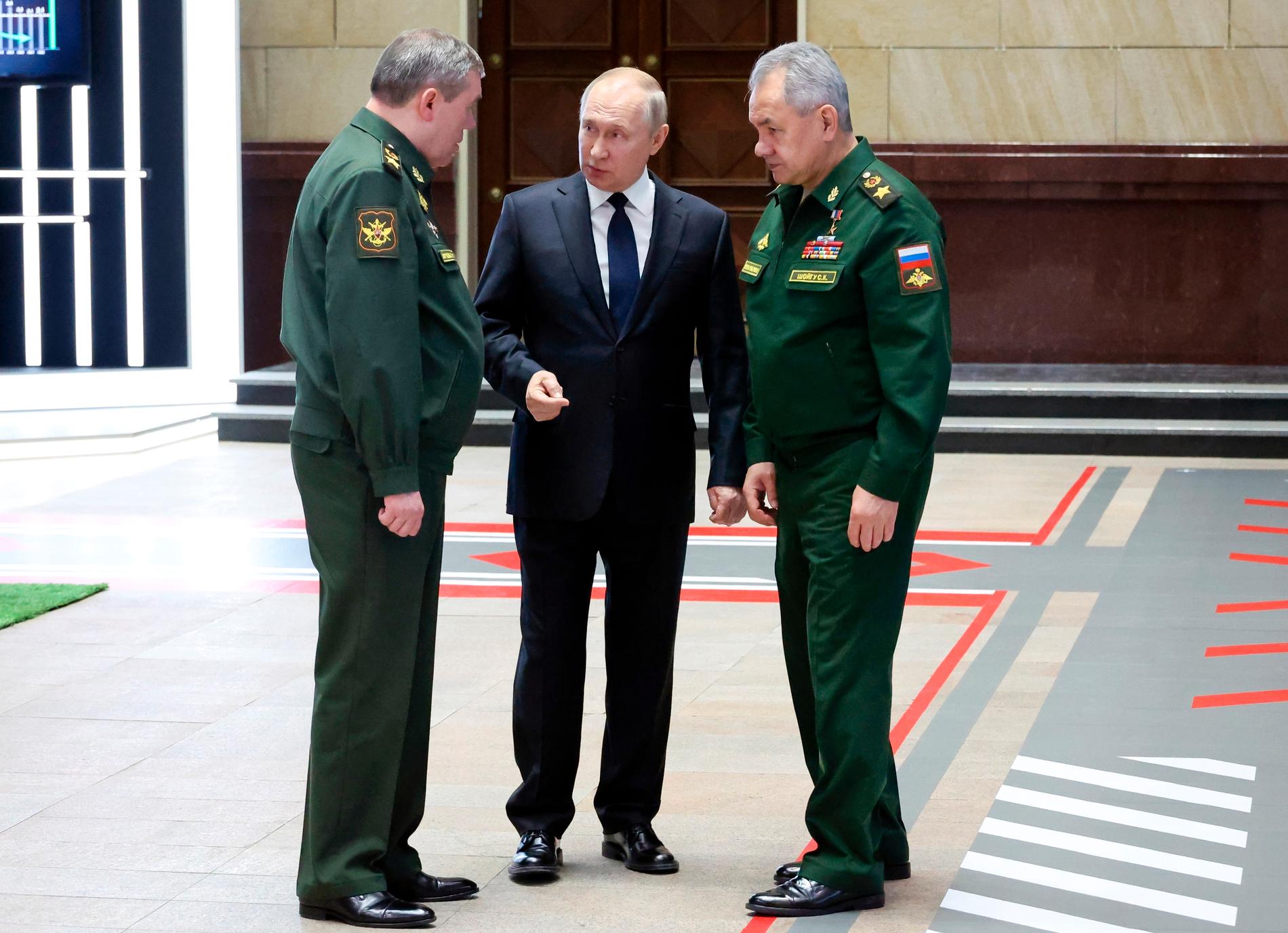
Russian commanders made their way to Syria. Pictured here are Valeri Gerasimov, Vladimir Putin and Sergei Shoigu. Photo: Mikhail Klimentyev / AP
Movements in the Central African Republic
In images obtained by NBC News, things also appear to have happened in the Central African Republic after the Wagner Rebellion.
More than 600 Wagner soldiers are said to have left the country via an airport in the country's capital, Bangui.
It is currently unclear whether the troop movement is a routine rotation, or part of the Kremlin's operation to take control of the Wagner group.
Officials from the Central African Republic believe that there has been no change in the Wagner group's presence in the country. But in its report ISW writes that:
"It is possible that some Wagner personnel in the Central African Republic will leave after they refused to sign the contracts with the Russian Ministry of Defense."
In its report, the think tank ISW points out that the events may indicate a certain uncertainty within the Kremlin. The move to act so quickly may indicate that the Russian leadership believes Wagner may pose a threat to Russian forces abroad.

Inga kommentarer:
Skicka en kommentar