
American economy
The US is playing with fire – China is buying gold
Andreas Cervenka
Reporter and economic commentator
This is a commenting text. Analysis and positions are the writer's.
Published 2024-05-20 22.16

The question that hangs like a shadow over the world economy.
Nothing can pulverize an accurate analysis as effectively as time.
In the mid-2000s, a prudent but calculating man pressed the alarm button. His name is David Walker and he was then the US equivalent of the auditor general.
"We are suffering from an economic cancer. It grows within us. And if we don't address it, it will have disastrous consequences for our country."
What worried David Walker was the tower of debt that the US government had built up over a long period of time.
To say he was right is an understatement. In 2005, the government's debt amounted to approximately 12,000 billion dollars, or the equivalent of 435,000 kroner per American citizen. The other day it passed 34,500 billion dollars or 1.1 million kroner per person.
As a share of the US economy, the debt has risen from 90 percent of GDP to 120 percent (in Sweden it is below 20 percent).
Yet David Walker was dead wrong. In the almost twenty years that have passed since he became a merchant traveler in dystopia, no doomsday has been seen. He's not the only one who wears stupid shit.
If there was a Hall of Fame for forecasting failures, all those who predicted a US debt crash would be given a booth the size of an airplane hangar.
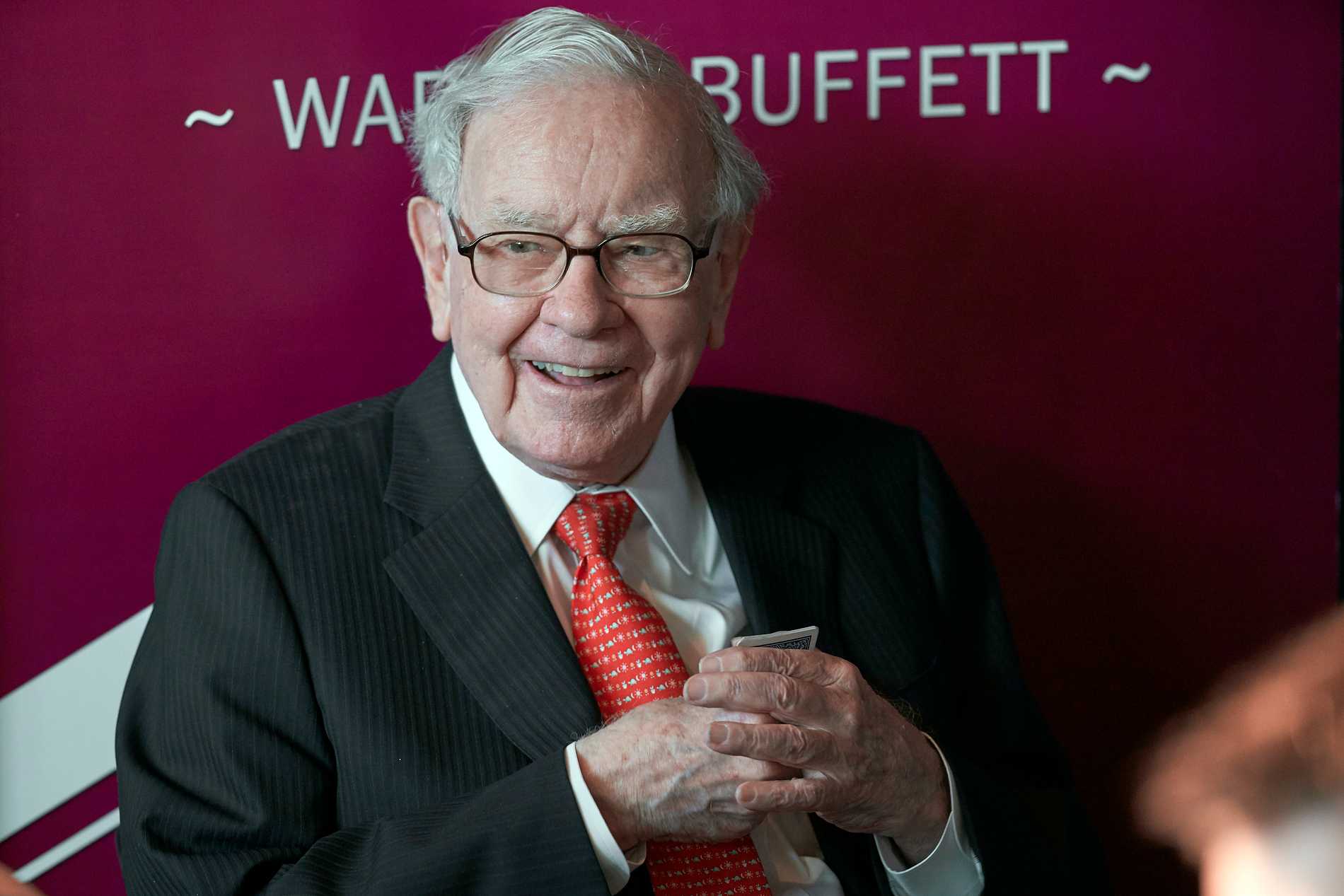
In fact, one of the worst deals by far in the last 70 years is to speculate on the impending doom of the United States of America. The legendary Warren Buffett, who in practice has built his entire career on doing the opposite, is today worth SEK 1,500 billion.
In the financial market, being too early is the same as being wrong. Namely, it means losing money and no one can tolerate losses for any length of time.
But it also contributes to the fact that problems can be underestimated for a long time, for the simple reason that they have not yet had consequences (the climate is a good example).
Anyone who wants to get a quick introduction to the mathematical phenomenon of the exponential function is recommended to take a look at the curve of the development of the US national debt. Since the early 1980s, the slope has steadily increased, with some short breaks.
The debt has risen under both Democratic and Republican presidents, albeit for slightly different reasons. During Barack Obama's eight years, the government borrowed another 11,000 billion dollars, mainly as a result of the financial crisis. During his four years, Donald Trump indebted the country with 7,000 billion, first due to tax cuts and then the pandemic.
And under Joe Biden it has continued in the same style, with an acceleration of late. So far in 2024 alone, the US debt has increased at a rate of over 100 billion kroner a day, or 4 billion an hour. For every hundred bucks that the American government spends this year, 25 kroner must be borrowed.
And it will get worse. A forecast from the US congressional budget office CBO this spring showed that if nothing changes, the US will not only run with historically high deficits for the next decade, they will gradually increase. According to the CBO, the debt will reach $54 trillion by 2034 and a staggering $152 trillion by 2054, or 179 percent of GDP.
Forecasts are forecasts and of course it can be better than what CBO thinks, but also significantly worse. The Bloomberg news agency had a computer do a million simulations of different scenarios for the US economy. In 88 percent of the cases, the result was an unsustainable debt explosion.
But this is how it has sounded for a long time. Why should anyone care this time?
First, the world economy has changed quite radically. If it was painless to be in debt a few years ago, it is much less pleasant now, something that all Swedish mortgage borrowers have noted.
Next year, US interest spending relative to GDP will pass post-WWII record levels. The US is already spending more this year on interest than on its defense.
Within ten years, America's largest social security systems, Social Security and Medicare, will run out of money.
On Wall Street, the debate about the US budget deficit usually elicits yawns. It usually works out.
But lately, more and more influential people have started to screw up nervously. Ray Dalio, founder of the world's largest hedge fund Bridgewater, recently came out and warned that the US's escalating debt risks scaring off buyers of US Treasuries. He advised investors to spread their risks to other countries.
The second thing that has happened is that the world is at war, with the US and the West on one side and Russia and China on the other. To keep the loan machinery going, the US depends on borrowing money abroad. China was for a long time the largest creditor. But the country has been selling US paper for a long time and during the first quarter of this year the rate increased. Instead, China has replenished its gold reserves. Several other countries have done the same.
If the US economy were to fall into a recession and the US suddenly couldn't find new buyers for its debt notes, the entire financial system would fall down an empty elevator shaft.
The US thus takes rather high risks not only with its own economy but with the whole world.
There are those who think this is alarmist nonsense and that the US national debt is a non-issue. They may well be right. After all, they've had it for fifty years.
But if a few thousand years of economic history can teach us anything, it's that right today can be wrong tomorrow. It's usually just a matter of time.

Inga kommentarer:
Skicka en kommentar