
Culture
Defense policy
Has gone from being the defender of peace to the most warmongering country in Europe
This is a cultural article that is part of Aftonbladet's opinion journalism.
Updated 09:38 | Published at 05:00
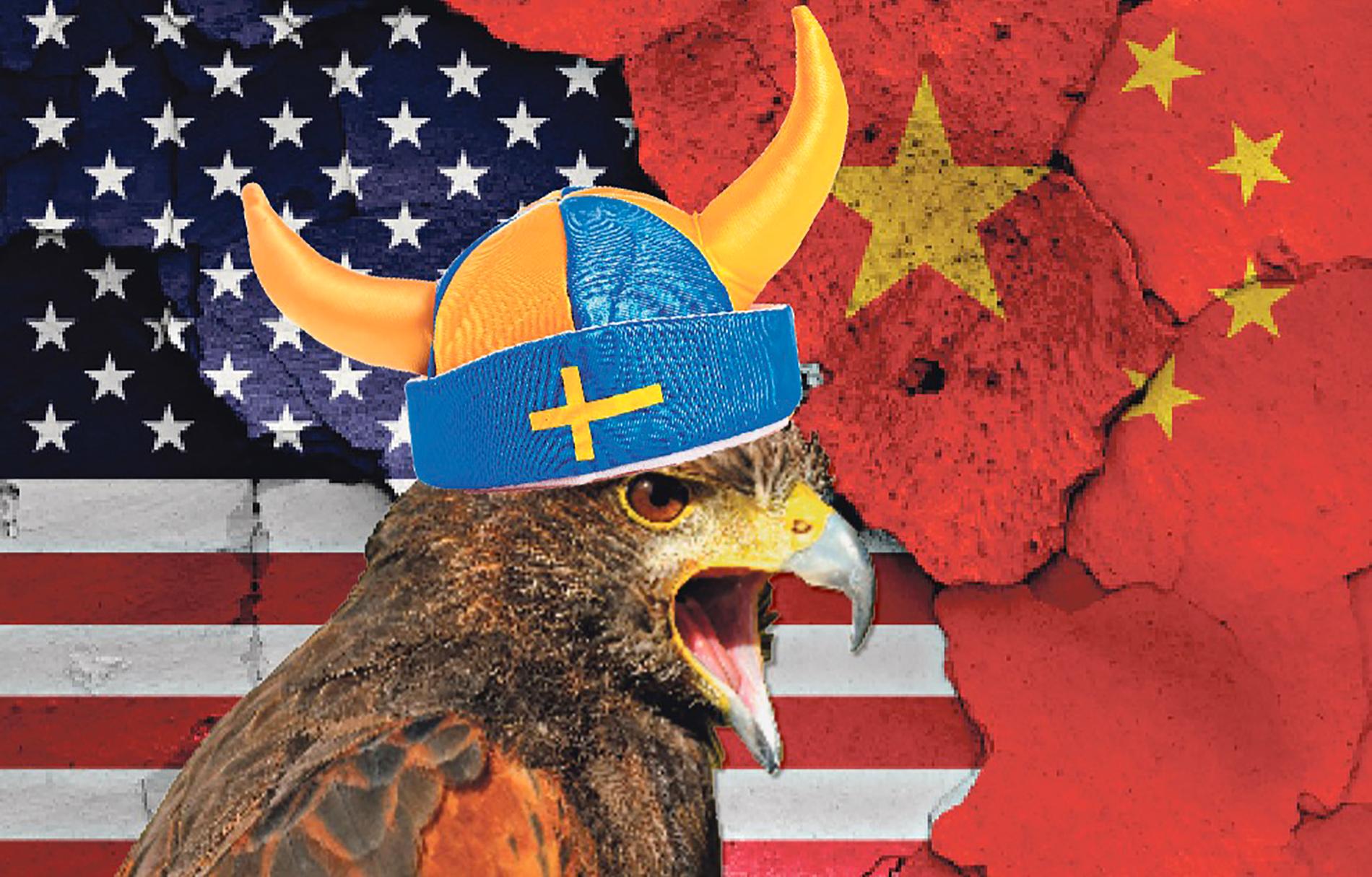
Sweden has moved from being a voice for diplomacy and international legal principles to becoming one of the most hawkish countries in Europe in a very short time.
Not least this applies to our approach to China. In a recently published report from the defense committee, it was possible to read that China is now defined as a global threat that challenges the rules-based order in which the United States is the dominant power. China is mentioned 317 times in the report, but the climate threat only 53 times.
Compare that to the German defense report also published this month. There the threat picture seems to be reversed; the climate threat is mentioned 71 times and China a paltry six times. But more importantly, the Germans define China as both a competitor and rival, but also an inevitable partner in solving the climate crisis, while the Swedish report only defines China as a threat - despite the fact that the defense committee admits that "China does not pose a direct military threat to Sweden ".
And according to a new survey from ECFR, Sweden is the country that has the most hawkish view of how we should relate to China. Amazingly, more citizens in Sweden than in any of the other ten European countries studied even support the idea of going to war with China over Taiwan. We are talking about the bloodiest war humanity has ever experienced.
For a country that has stayed out of war for more than 200 years and played a critical role in trying to end war through dialogue, this is both baffling and deeply troubling.
There is no doubt that China's rising power poses significant challenges, and its treatment of its population is deeply troubling. The country's potential ambitions and opportunities to influence the global order obviously make it necessary to be vigilant about the possible threats that China's rise may pose. But an equally urgent insight to factor into the analyzes to be made and strategies to be devised is what a colossal disaster a direct confrontation with China would entail.
We are talking about the bloodiest war humanity has ever experienced.
Surprisingly, the Swedish population seems to be solely focused on the threats that deal with a possible Chinese dominance but to a much lesser extent understand how a confrontational stance on both sides leads us to move towards a devastating war with China. According to ECFR's survey, other Europeans largely want to remain neutral in the geopolitical competition that is now flaring up between the US and China. And people are largely unwilling to increase tensions.
While only 23 percent of Europeans are ready to join the United States in a war with China over Taiwan and 62 percent prefer to remain neutral, the numbers in Sweden are significantly higher. As many as 35 percent of Swedes (more than in any other country) support the idea of contributing to a possible American war with nuclear-armed China in such a scenario. Only 49 percent prefer to stay out.
The explanation for getting us here is not to be found in any democratic-authoritarian divide in Europe, in the sense that the least democratic nations would also be the least likely to support a confrontation with China. In fact, Austria has the least hawkish population vis-à-vis China. In Austria, which like Sweden has a history of neutrality, 80 percent of the population prefers to stay out of a war between the US and China, while only 9 percent support a military conflict (compared to 35 percent in Sweden). The answer to the surprising hawkishness of the Swedish population probably lies elsewhere.
Vi talar om det blodigaste kriget mänskligheten har upplevt.
Seeing the world through such glasses simplifies reality in a dangerous way
One explanation is reasonably the state of debate in Sweden, in which it has become almost impossible to constructively analyze the world situation and the areas of conflict based on different perspectives and scenarios. The hastily pushed NATO application process and the unfamiliarity of being in an acute security policy crisis have locked the debate. We have found ourselves in a situation where any form of critical analysis that does not directly accept the official Swedish stance or the dominant media narrative about the world is condemned.
The flawed debate has created a situation where the Swedish public is not provided with a deeper picture of the enormous geopolitical changes taking place in the world or the dangers of a large-scale superpower war if peaceful solutions are not pursued. With regard to the geopolitical changes in the world, space is instead only given to understand Sweden's (and Europe's) possibility of action, such as that we either help the United States to restore the American glory

Inga kommentarer:
Skicka en kommentar