Christina Nordh
Updated 18.34 | Published 17.03
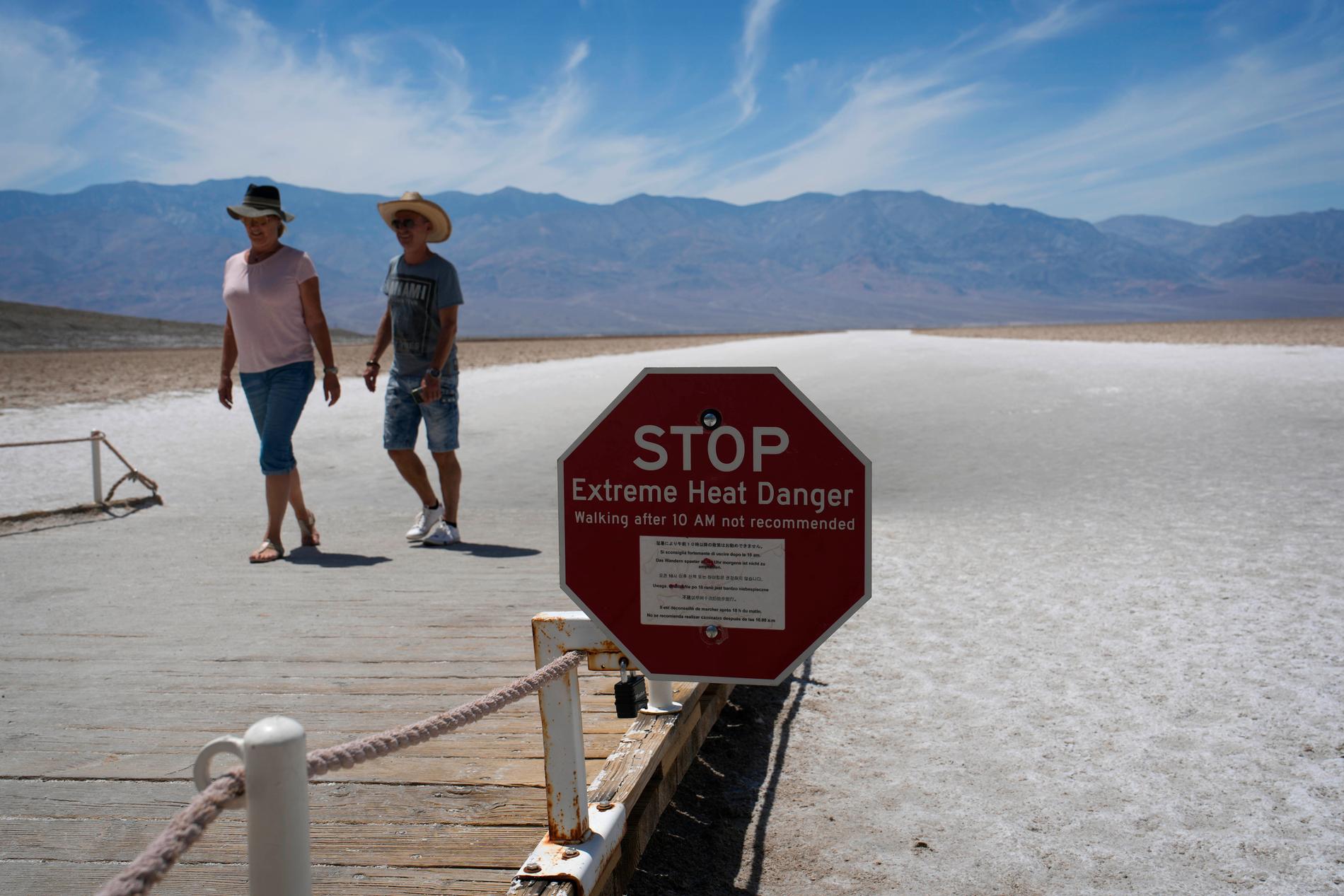
Death valley in California July 16 last year. Here, a hiker collapsed and died in the heat wave. Photo: John Locher/AP
UN raises red flag after all heat records in 2023.
This year it could be even worse, according to the World Meterological Organization (WMO).
The concern mainly concerns the temperatures in the sea and the melting sea ice.
The United Nations Weather Service says in its annual State of the Global Climate report that the average temperature last year was at its highest level in 174 years, reaching 1.45 degrees above pre-industrial levels, according to Reuters.
Ocean temperatures in 2023 were the warmest according to 65 years of statistics, with over 90 percent of the oceans affected by a heat wave condition during the year and damaging the food chain, according to the WMO.
- What we witnessed by 2023, especially with the unprecedented sea temperatures, the shrinking glaciers and the loss of Antarctic sea ice is particularly worrying, says WMO Secretary-General Celeste Saulo, who took over the job in January.
She later told reporters that the rising sea temperatures were particularly worrying because they were "almost irreversible".
- The trend is very worrying - and it is because of the water's properties, which can retain heat longer than the atmosphere, she says.
Climate change, driven by the burning of fossil fuels coupled with El Niño, has caused heat records to be broken in 2023.
According to Climate Analyzer, the surface temperature of the world's oceans is currently record warm, 1.07 degrees warmer than normal compared to the period 1991–2020.
*********************
Six gloomy climate records - and a glimmer of hope
Sofia Eriksson/TT
Published 2024-03-19 14.07


The situation of the sea ice in Antarctica is unprecedented. Archive image.
1 / 2Photo: Natacha Pisarenko/AP/TT
It was record warm on land and in the seas – but 2023 also saw records for sea level rise, shrinking glaciers and the loss of sea ice in Antarctica.
The sirens are wailing, warns the UN Secretary-General. But there is a glimmer of light.
The world is stumbling close to a global warming of 1.5 degrees – albeit temporarily. The long-term temperature target in the Paris Agreement, which almost all countries have signed, is an attempt to slow down the most devastating effects of climate change.
2023 was the warmest year on record, with a global average temperature 1.45 degrees higher than in pre-industrial times, the UN Meteorological Organization (WMO) confirms in its report "State of Global Climate". 2014–2023 was the warmest decade on record.
But those weren't the only record entries.
Record warm seas
It has been so warm in the surface waters of the world's oceans that scientists have struggled to find the words to describe the records. On an average day, nearly a third of the world's oceans experienced a marine heat wave. By the end of 2023, over 90 percent of the oceans had experienced heat waves at some point during the year, according to the WMO.
In western North America and in Europe, the glaciers were melting at a rate that the WMO describes as extreme. All told, the glaciers globally lost the largest amount of ice on record to date, according to preliminary data. In Switzerland, the glaciers have lost around 10 percent in the last two years.
A warmer ocean takes up more space, and with the help of melting glaciers, sea level rise also reached new record levels in 2023. In the last decade, the rise has been more than twice as fast as it did in the first decade for which satellite data is available (1993–2002).
The situation in Antarctica is unprecedented. There, sea ice extent was by a wide margin the lowest on record, which worries scientists because the ice has a cooling effect on the planet. When the Antarctic winter reached its peak and the sea ice reached its annual maximum, it was one million square kilometers smaller than previous record years. That corresponds to the combined size of France and Germany, according to the WMO.
- The sirens are wailing, says UN Secretary-General António Guterres in a comment.
Flash of light
But sun, wind and water give hope, according to the WMO. The renewable energy types grew by 50 percent globally in 2023 compared to the previous year, which corresponds to 510 gigawatts.
It is still possible to keep long-term global warming below 1.5 degrees, according to Guterres:
- By hastening the inevitable end of the fossil fuel era, with the G20 countries at the forefront of a just global energy transition.
Cocoa trees take a beating from climate change
Christina Nordh
Published 2024-03-19 11.15
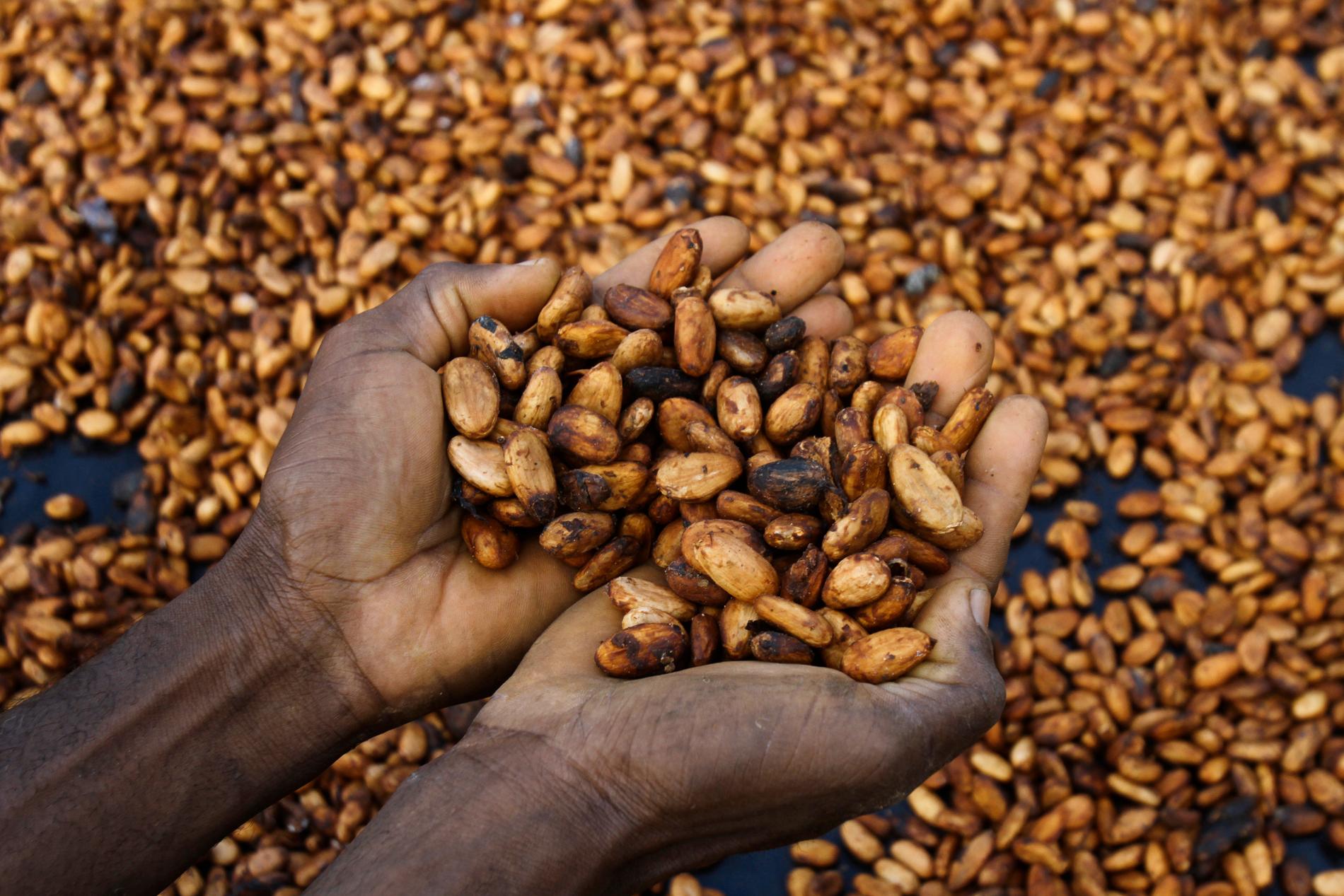
Poorer harvests have made chocolate prices historically high.
That's because of climate change, according to a report from Wells Fargo.
By the end of last month, the world price of cocoa had more than doubled in the past year, breaking the previous record set in 1977. In two months, from January 8 to March 6, the world price of cocoa rose by more than 75 percent.
Threatening the harvest
Changes in the weather have threatened the cocoa tree's condition and production, according to the new report. More and longer rains during the last harvest season caused disease to increase among the cocoa trees.
Now tree growers in West Afrika are faced with drought and heat and extreme winds from this year's El Niño, writes USA Today.
Constant price increases
Cocoa trees are incredibly sensitive to climate change and grow in a narrow band within 20 degrees around the equator. The majority of global cocoa production is concentrated in West African countries such as Ghana, Ivory Coast, Cameroon and Nigeria.
Cocoa prices have steadily increased as supply has gradually dwindled. This is the third year that the cocoa harvest has been small, according to the report. Between October last year and February this year, the cocoa cargo from the Ivory Coast was 32 percent lower than the same period last year.

Inga kommentarer:
Skicka en kommentar