
Russia
The Russian opposition in exile is in a state of shock
Wolfgang Hansson
This is a commenting text. Analysis and positions are the writer's.
Published 10.15
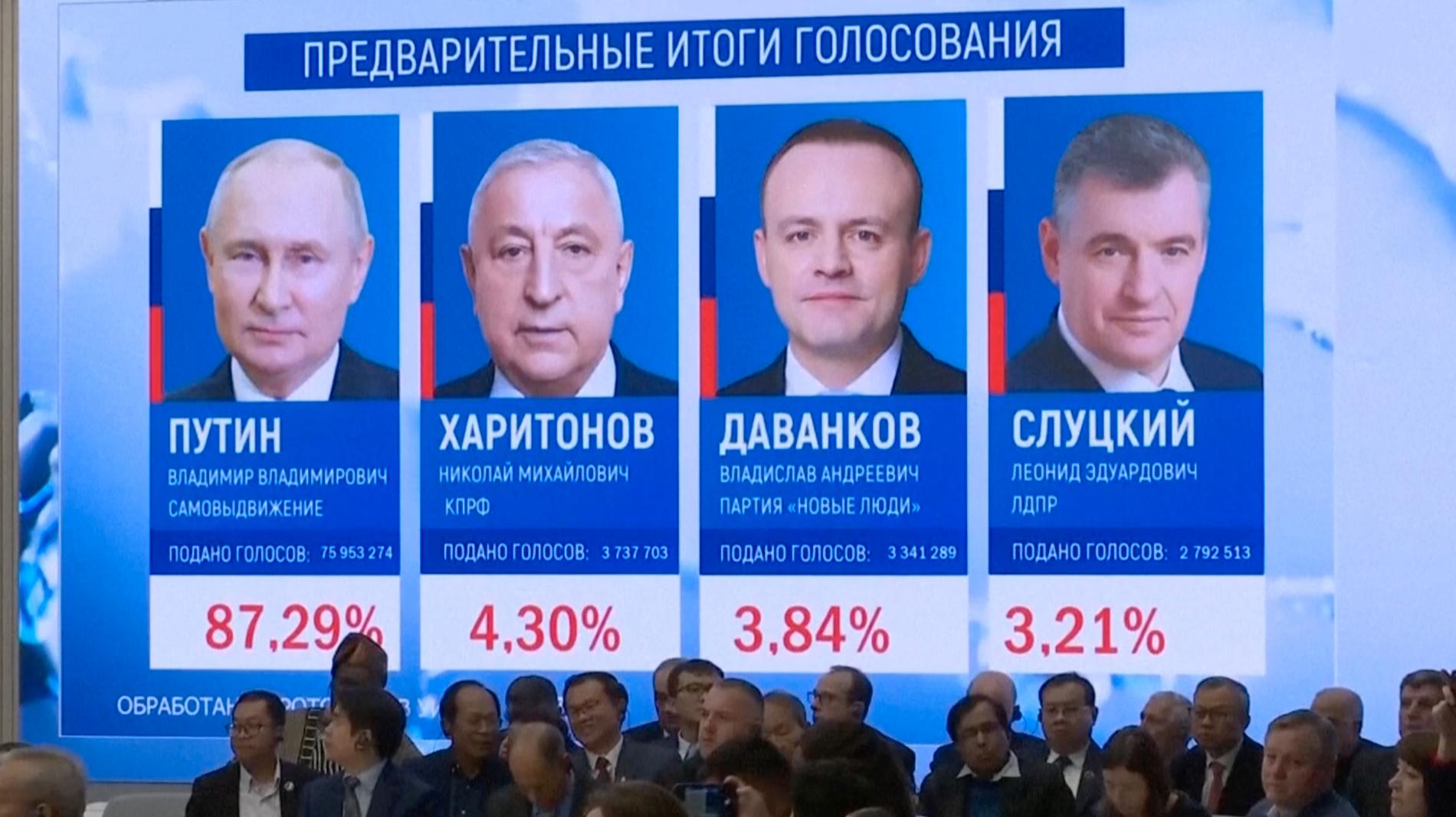
Putin won the "pretend election" with 87.3 percent.
In the hope of finding some kind of glimmer of light for democracy and freedom in Russia, I participated in a "secret" meeting with Russian oppositionists who had taken refuge in Sweden.
Unfortunately I was disappointed.
The meeting rather reinforced the impression of how weak and scattered to the wind the opposition is.
The invitation from Stockholm's Center for Eastern European Studies already showed evidence of the straitjacket Putin's opponents work under.
For security reasons, none of the opposition parties who would participate in the meeting were named in advance.
Once there, most of them seem to be quite young. A striking number are women.
The meeting begins with the admonition that none of the participants may be photographed without their permission. None of those who speak at the meeting may be quoted by name without their permission.
Even when they are in Western democracies abroad, many Russian oppositionists do not dare to appear openly.
Unfortunately I was disappointed.
The meeting rather reinforced the impression of how weak and scattered to the wind the opposition is.
The invitation from Stockholm's Center for Eastern European Studies already showed evidence of the straitjacket Putin's opponents work under.
For security reasons, none of the opposition parties who would participate in the meeting were named in advance.
Once there, most of them seem to be quite young. A striking number are women.
The meeting begins with the admonition that none of the participants may be photographed without their permission. None of those who speak at the meeting may be quoted by name without their permission.
Even when they are in Western democracies abroad, many Russian oppositionists do not dare to appear openly.
The participants at the meeting testify about how the Russian embassy in Stockholm and other Russian embassies in Western Europe monitor the opposition, harass them and try to sabotage their activities.
It involves attempts to infiltrate the opposition, disinformation, threats against relatives in the home country and the like.
Since Putin invaded Ukraine just over two years ago, 150 organizations in Russia have been labeled as "undesirable". This means that it is enough to participate in the activities of these groups to be sentenced to several years in prison.
Is in shock
Negotiations with the regime are also not seen as a feasible path.
- Putin lies about everything, says one of the participants. The regime cannot be trusted. They don't keep contracts.
The Russian opposition testifies that Sweden is one of the countries where they have received the most support from the surrounding civil society.
- We feel we can make ourselves heard, says a woman from the organization "Russians against war". In many other parts of Europe, we do not feel the same support at all.
Negotiations with the regime are also not seen as a feasible path.
- Putin lies about everything, says one of the participants. The regime cannot be trusted. They don't keep contracts.
The Russian opposition testifies that Sweden is one of the countries where they have received the most support from the surrounding civil society.
- We feel we can make ourselves heard, says a woman from the organization "Russians against war". In many other parts of Europe, we do not feel the same support at all.
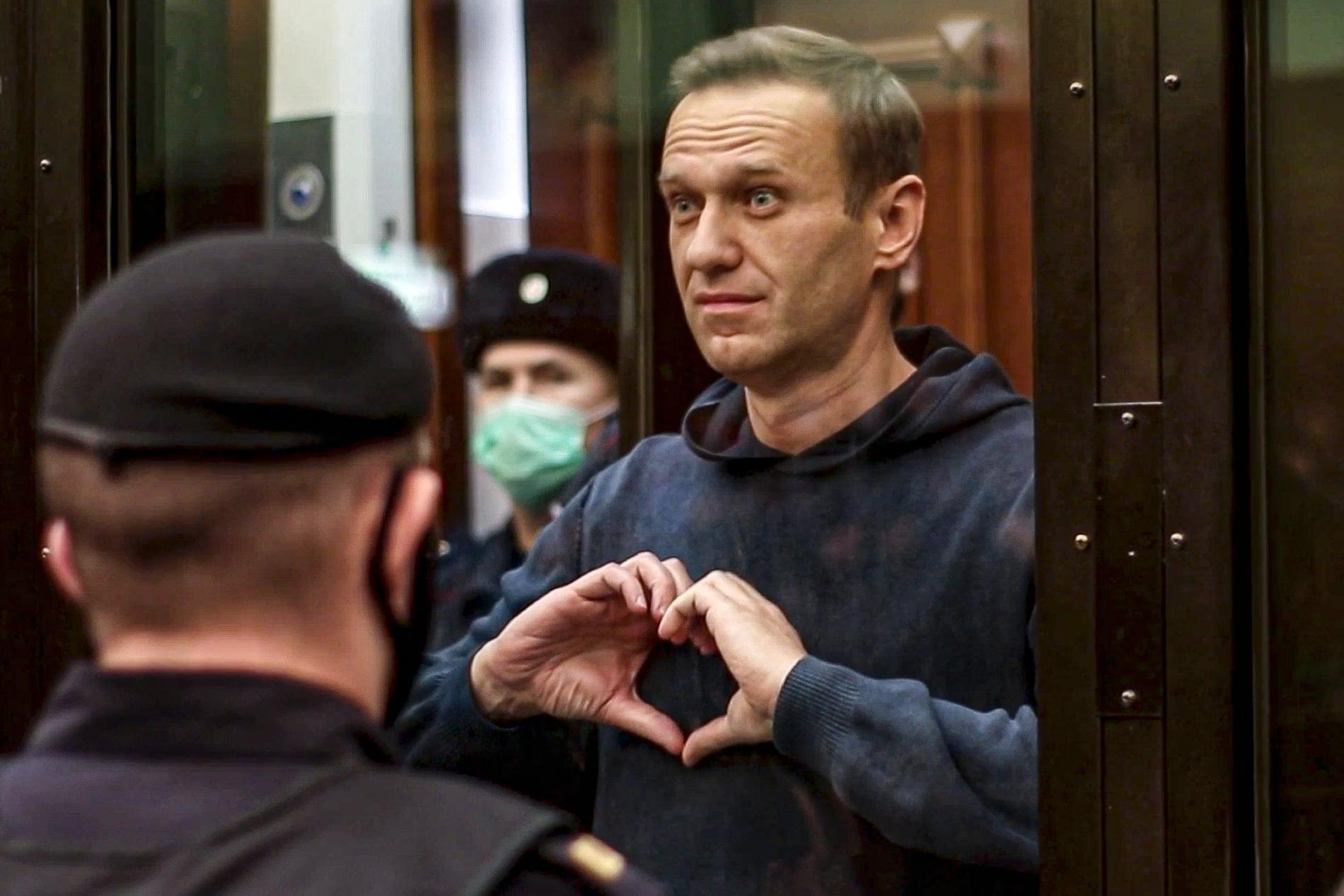
Opposition leader Alexei Navalny died in prison in mid-February. Photo: AP
My impression is that the Russian opposition is still in shock over the sudden death of leader Alexei Navalny in a Siberian prison and the Putin regime's utterly ruthless treatment of the slightest opposition speech.
The opposition has not only lost its leader. They are also spread in a large number of countries around the world. It could be a strength if it led to the strengthening of resistance to Russia's war of aggression across Europe. If powerful alliances were formed. So far, the development instead seems to be a sharp weakening of the opposition.
When Vladimir Putin in his post-election victory speech mentioned Navalny by name for the first time and emphasized that he should never have returned to Russia, it was no accident.
The opposition has not only lost its leader. They are also spread in a large number of countries around the world. It could be a strength if it led to the strengthening of resistance to Russia's war of aggression across Europe. If powerful alliances were formed. So far, the development instead seems to be a sharp weakening of the opposition.
When Vladimir Putin in his post-election victory speech mentioned Navalny by name for the first time and emphasized that he should never have returned to Russia, it was no accident.
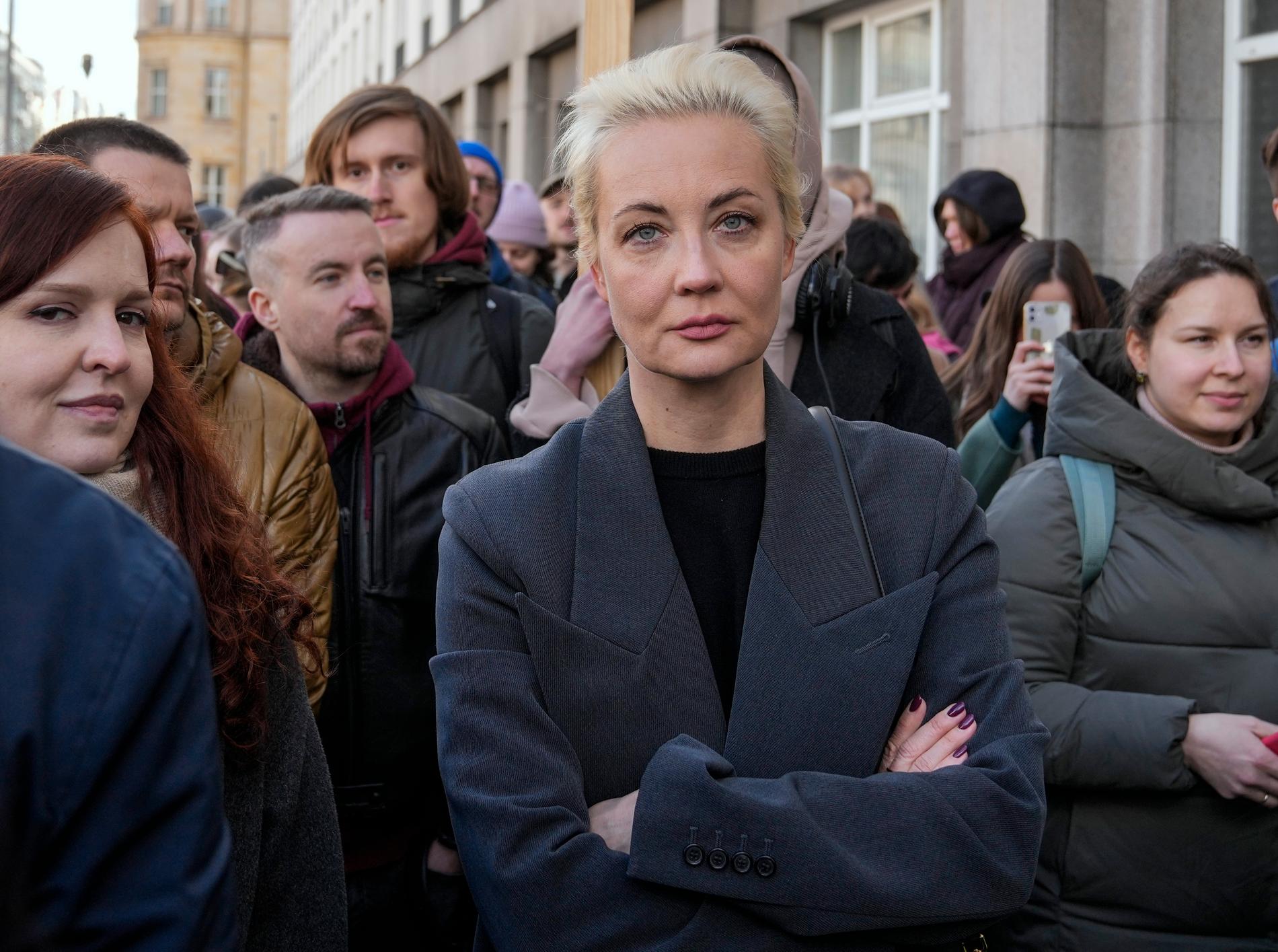
Alexei Navalny's widow Yulia Navalnaya during a demonstration against the Russian election on March 17 in Berlin. Photo: Ebrahim Noroozi / AP
Not seen as a threat
It was a warning to the opposition who fled not to try to return. Then it may suffer the same fate. But it was also confirmation that Putin does not see the opposition in exile as the same threat as the one at home.
Which does not prevent the Russian embassies from acting against the opposition who fled Russia.
Abroad, the opposition is even more toothless than in Russia. They have no channels to reach out to the Russian population because the Kremlin controls all media inside Russia.
One of the opposition's representatives at the meeting in Stockholm pointed out that social media was also not a viable platform because Facebook, Twitter and others are banned in Russia. Others are heavily monitored by the regime.
A few days after the meeting, the official numbers from the mock presidential election will be released. Putin has won with 87.3 percent. That is ten percent more than at the last election. But ten percent less than what the margin of victory used to be in Soviet times. Big enough to single out Putin as the undisputed leader, but just about big enough to cast a shadow of ridicule over the whole thing. Coincidentally, exactly what Putin needs.
It was a warning to the opposition who fled not to try to return. Then it may suffer the same fate. But it was also confirmation that Putin does not see the opposition in exile as the same threat as the one at home.
Which does not prevent the Russian embassies from acting against the opposition who fled Russia.
Abroad, the opposition is even more toothless than in Russia. They have no channels to reach out to the Russian population because the Kremlin controls all media inside Russia.
One of the opposition's representatives at the meeting in Stockholm pointed out that social media was also not a viable platform because Facebook, Twitter and others are banned in Russia. Others are heavily monitored by the regime.
A few days after the meeting, the official numbers from the mock presidential election will be released. Putin has won with 87.3 percent. That is ten percent more than at the last election. But ten percent less than what the margin of victory used to be in Soviet times. Big enough to single out Putin as the undisputed leader, but just about big enough to cast a shadow of ridicule over the whole thing. Coincidentally, exactly what Putin needs.
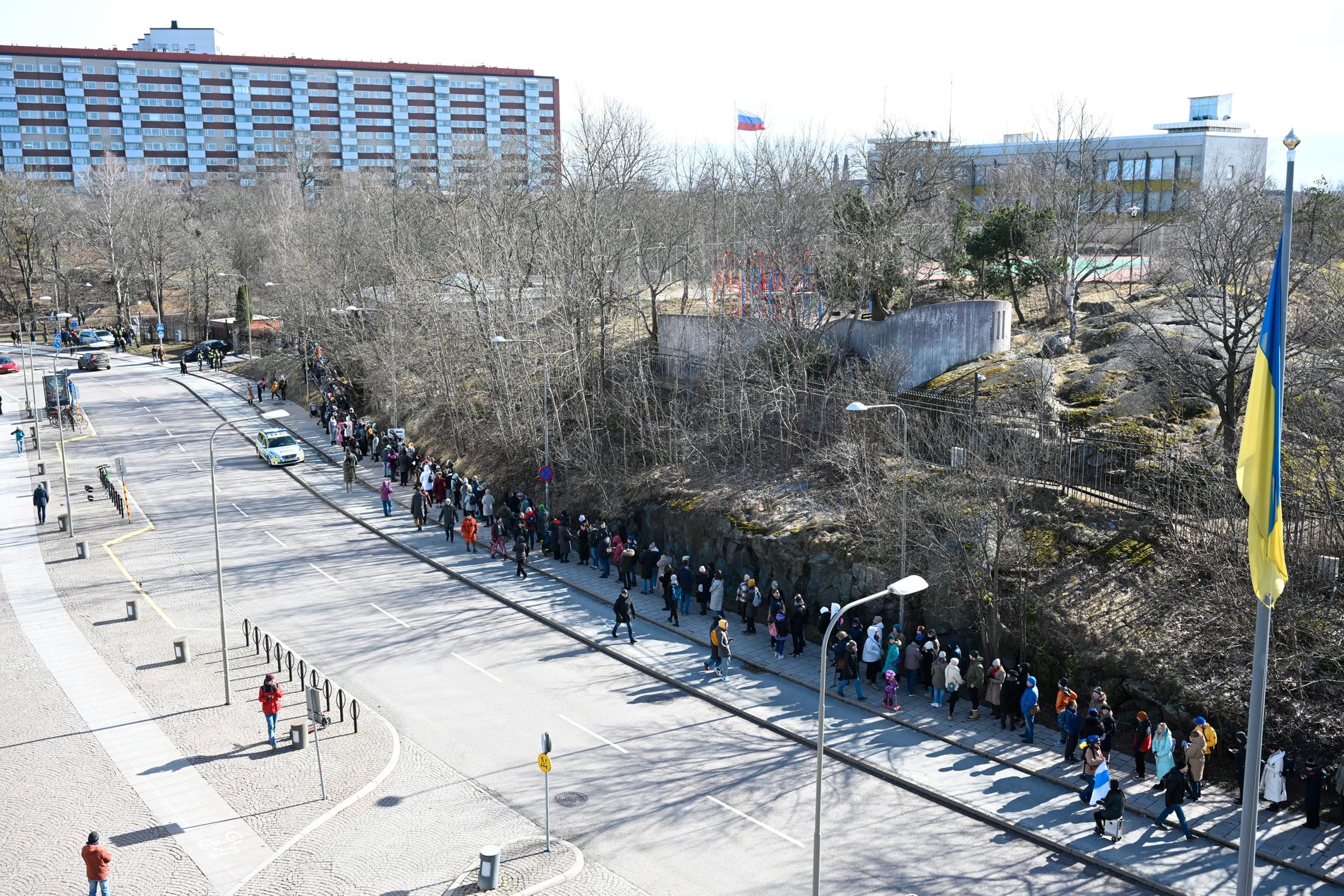
On the last day of the Russian election on March 17, there were long queues at the embassy in Stockholm at 12 o'clock. Photo: Jessica Gow/TT
The only hope
The opposition's move to get people to vote at exactly 12 noon was in some ways a success. A striking number of people participated in this silent protest, both in Russia and abroad. It certainly also helped to strengthen the opposition's shattered self-confidence.
But it had no impact whatsoever on the result.
Therein lies the Russian opposition's dilemma. How are they going to make themselves relevant? How will they raise hope that a democratic Russia is possible?
Right now, Putin appears to have an iron grip on power in his home country. He does not appear to be threatened by discontent within his own apparatus of power and even less by a potential uprising.
The hope is that when dictatorships fall, it usually happens very suddenly and unexpectedly. Without warning.
The opposition's move to get people to vote at exactly 12 noon was in some ways a success. A striking number of people participated in this silent protest, both in Russia and abroad. It certainly also helped to strengthen the opposition's shattered self-confidence.
But it had no impact whatsoever on the result.
Therein lies the Russian opposition's dilemma. How are they going to make themselves relevant? How will they raise hope that a democratic Russia is possible?
Right now, Putin appears to have an iron grip on power in his home country. He does not appear to be threatened by discontent within his own apparatus of power and even less by a potential uprising.
The hope is that when dictatorships fall, it usually happens very suddenly and unexpectedly. Without warning.

Inga kommentarer:
Skicka en kommentar