
Mark Rutte
Time for the next NATO row
Wolfgang Hansson
This is a commenting text. Analysis and positions are the writer's.
Published 2024-04-03 20.22
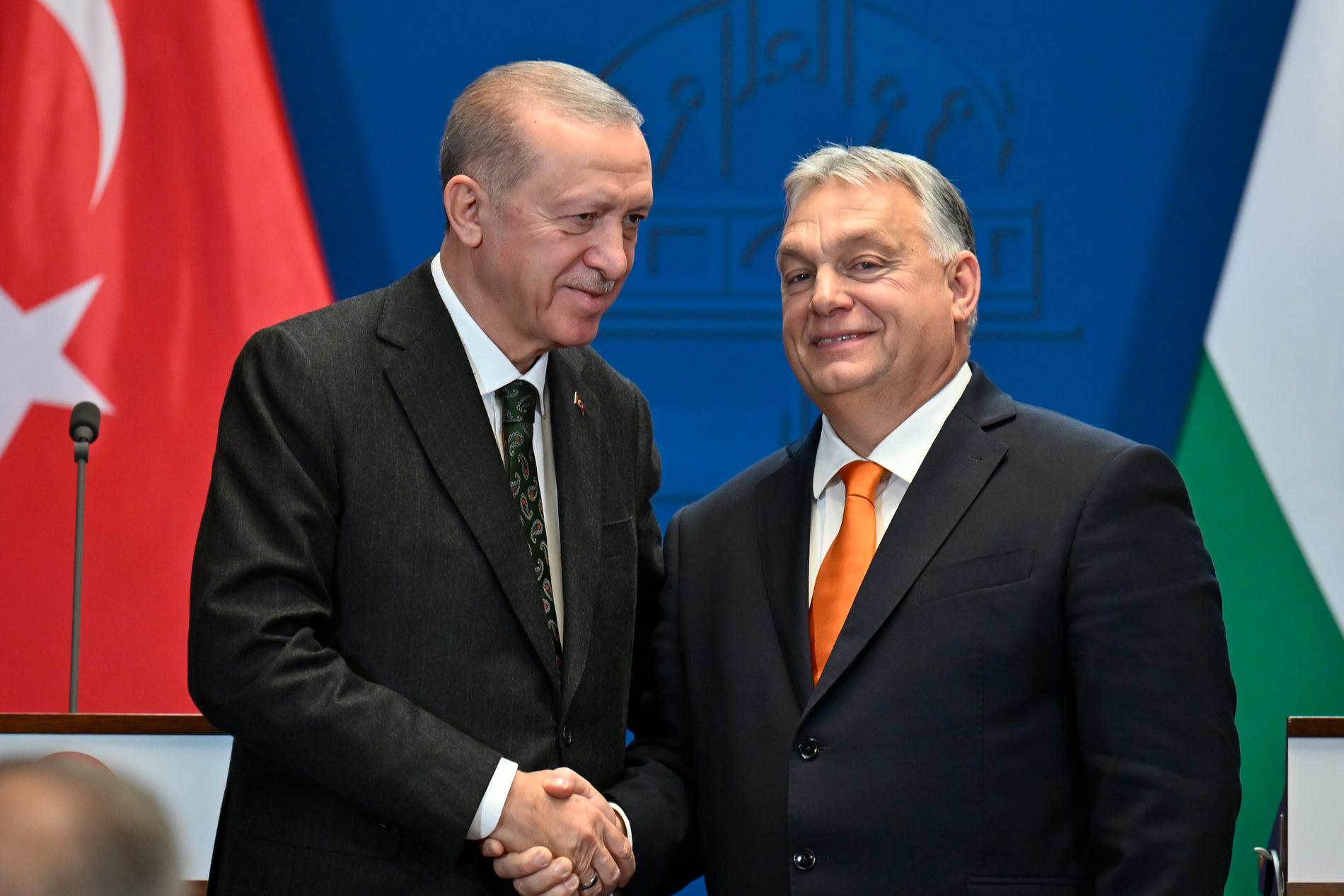
Erdogan and Orbán. Photo: Denes Erdos / AP
After prolonged internal fighting, NATO has barely succeeded in approving Sweden and Finland as new members before it is time for the next NATO quarrel.
Who will succeed Jens Stoltenberg as head of the military alliance?
Unsurprisingly, it is also this time Turkey's Erdogan and Hungary's Orbán who act as brake pads.
The issue is decided behind closed doors. All 32 NATO countries must agree. Exactly the same rules that applied when Sweden was to be approved as a new member state.
57-year-old Mark Rutte,longtime prime minister of the Netherlands, appeared to be on his way to the job by leaps and bounds. Up until now.
He has received the outspoken support of most of the major NATO countries, the United States, France, Germany and the United Kingdom. Even many of the smaller countries give him the green light. Including Estonia, whose Prime Minister Kaja Kallas herself was a candidate for the job but has now backed Rutte.
Hungary, on the other hand, has flatly said no to Rutte. He and Viktor Orbán are not exactly good friends after Rutte had very public views on the state of Hungary's democracy.
Even Turkey hesitates. President Erdogan has made it clear that he will only approve a new NATO chief who is responsive to Turkey's interests.
We don't know exactly what Erdogan wants. Turkey would have submitted a list of demands to Rutte, but as far as is known, this has not yet happened. But it is believed to be about, among other things, that Turkey must not be disadvantaged compared to EU countries and that the new NATO chief does not favor the interests of archenemy Greece and Cyprus over Turkey's.
In both cases, one can sense the same horse-trading ways as when it came to approving Sweden's and Finland's NATO applications.
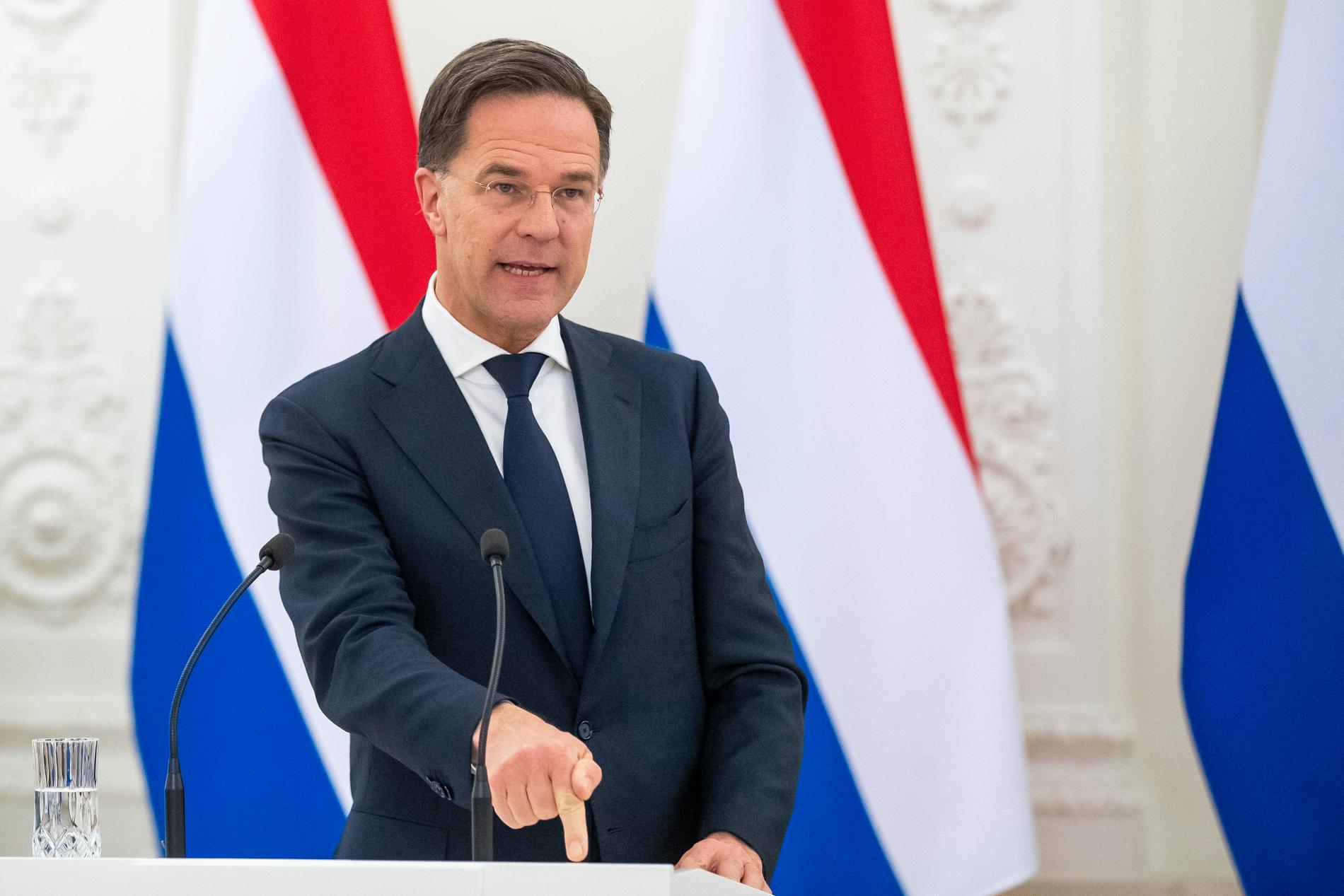
Mark Rutte has already received the support of many of the NATO countries. But now he runs into patrol. Photo: Mindaugas Kulbis / AP
Erdogan and Orbán are simply trying to push for concessions in exchange for giving up their opposition to Rutte. It has been learned that it works.
Both know that the United States and the major European allies are very keen that the appointment of a new secretary-general should exude great unity. You absolutely do not want any open quarrel that Russia's Vladimir Putin can take advantage of.
Hungary instead appears to be giving its support to the only remaining real contender, Romanian President Klaus Johannis, whose candidacy was thrown out at the eleventh hour.
A few months ago, the expectation was that it would be possible to agree on Rutte at the NATO meeting that begins in Brussels today. The first meeting with Sweden as a full member.
Now that doesn't seem to be the case. Instead, the hope is that Rutte will be appointed at the big NATO summit in Washington in July when the organization celebrates its 75th anniversary.
But then both Orbán and Erdogan must first align themselves.
Apart from exploiting the recent NATO enlargement for their own purposes, they also have close and apparently warm relations with Vladimir Putin. I have previously called them Putin's Trojan horses in NATO. That concern and analysis remains.
It cannot be ruled out that Orbán or Erdogan, or both, refuse to give up their opposition to Rutte. Then, in the end, there could be a completely new compromise candidate as NATO head.
Erdogan and Orbán are simply trying to push for concessions in exchange for giving up their opposition to Rutte. It has been learned that it works.
Both know that the United States and the major European allies are very keen that the appointment of a new secretary-general should exude great unity. You absolutely do not want any open quarrel that Russia's Vladimir Putin can take advantage of.
Hungary instead appears to be giving its support to the only remaining real contender, Romanian President Klaus Johannis, whose candidacy was thrown out at the eleventh hour.
A few months ago, the expectation was that it would be possible to agree on Rutte at the NATO meeting that begins in Brussels today. The first meeting with Sweden as a full member.
Now that doesn't seem to be the case. Instead, the hope is that Rutte will be appointed at the big NATO summit in Washington in July when the organization celebrates its 75th anniversary.
But then both Orbán and Erdogan must first align themselves.
Apart from exploiting the recent NATO enlargement for their own purposes, they also have close and apparently warm relations with Vladimir Putin. I have previously called them Putin's Trojan horses in NATO. That concern and analysis remains.
It cannot be ruled out that Orbán or Erdogan, or both, refuse to give up their opposition to Rutte. Then, in the end, there could be a completely new compromise candidate as NATO head.
The change in the leadership position takes place at a sensitive time. Russia's war of aggression against Ukraine is in its third year. It was recently reported that Russia has taken 500 square kilometers of Ukrainian territory since last fall.
At the same time, Ukraine complains that it is suffering from a severe shortage of ammunition, especially artillery ammunition.
The new NATO chief's most important task will be to ensure that the military alliance's support to Ukraine is stepped up and becomes more effective.
The presidential election in the United States is a major uncertainty factor in that equation. The new NATO chief may be forced to deal with Donald Trump as the new president. A Trump who recently declared that he did not intend to defend NATO countries that do not "pay" at least two percent of their GDP to NATO.
Rutte is one of the European leaders who is considered to have had the best relations with Donald Trump during his previous stay in the White House.
At the same time, Ukraine complains that it is suffering from a severe shortage of ammunition, especially artillery ammunition.
The new NATO chief's most important task will be to ensure that the military alliance's support to Ukraine is stepped up and becomes more effective.
The presidential election in the United States is a major uncertainty factor in that equation. The new NATO chief may be forced to deal with Donald Trump as the new president. A Trump who recently declared that he did not intend to defend NATO countries that do not "pay" at least two percent of their GDP to NATO.
Rutte is one of the European leaders who is considered to have had the best relations with Donald Trump during his previous stay in the White House.
At the security conference in Munich a few months ago, Rutte tactically did not join the chorus of condemnations of Trump's statement that he intended to let Putin do "whatever the hell he wants" with NATO countries that do not spend enough money on defense.
Instead, Rutte urged Europe's leaders to stop whining

Inga kommentarer:
Skicka en kommentar