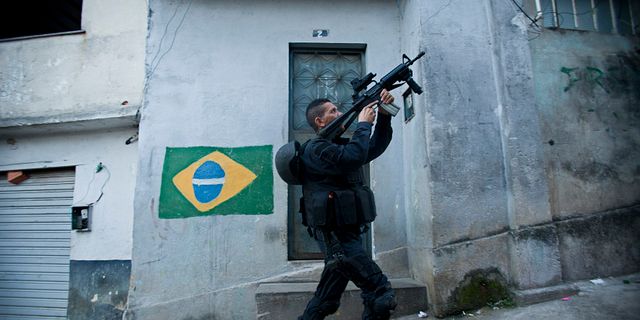
Archive image. In the last five years, Brazilian police have shot dead an average of 6,000 people. Victor R. Caivano Police violence in Brazil
Police violence in Brazil
Five-year-old girl and 17-year-old boy - the latest victims
Two more children – five and 17 years old – have been killed in connection with the intervention of Brazilian military police.
Thus, three children have been shot dead by police in Rio in less than a week, writes the Brazilian website Noticias. The five-year-old girl Eloá Passos died from a stray bullet in her own home, the newspaper writes.
- Unfortunately, I have no choice but to move on with my life and take care of the two girls I have left, says the father Gilgres Santos to the newspaper.
An hour before Eloá Passo's death, 17-year-old Wendel Eduardo was shot dead while sitting on the back of a motorcycle on Avenida Paranapuã.
Just as in the case of Thiago Menezes Flausino earlier this week, there are divided opinions about what preceded the shooting.
Military police say Wendel was shot in an exchange of gunfire, while his relatives say he was shot as he put his hands up.

Thiago Menezes Flausino and Lula da Silva. Private/TT
Lula: "Must be able to distinguish between criminal and poor"
That 13-year-old Thiago Menezes Flausino was shot dead during a police intervention in Rio this week is now causing Brazilian politicians to react. That after the boy was buried in front of over 200 mourners, writes The Guardian.
"That a 13-year-old teenager dies from a government bullet is a serious sign that we have failed as a society," writes politician Renata Souza on X, formerly Twitter.
On Thursday, President Lula da Silva addressed the case in a speech:
- (The police) must know how to tell the difference between a criminal and a poor man walking the street.
Several profiles from the same favela that the boy lived in have expressed disgust at the police - not least at the fact that the military police denied any crime and instead portrayed the 13-year-old as a criminal.
- State security forces need a way to legitimize this kind of absurdity, so what do they do? They criminalize and tarnish the image of the person who was killed, says João Luis Silva, social coordinator at the organization Rio de Paz.
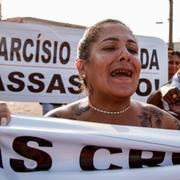
A woman protests against police violence. Tuane Fernandes / AP
Protest against police violence: "Don't want to pay for the bullets"
Violent clashes between police and citizens have escalated in Brazil recently, Reuters reports.
A week ago, nine people were killed in an attack in Rio. Earlier that week, 16 people were killed in a similar action in Sao Paolo.
Brazil has the highest homicide rate in the world, but it is also the country in the world where police officers are most likely to kill. The police defend their actions and say that it is difficult to get at crime in the country, without innocent people being harmed.
At the same time, criticism from the people is growing. Last week, protests were held, including in Guaruja.
- We do not agree to pay for the bullets that kill our children, said one female protester, among other things.

Inga kommentarer:
Skicka en kommentar