
My economy
Dry
After the chaotic weather: Higher food prices are expected
Erik Melin
Updated 19:08 | Published 18:59
This year's grain harvest is expected to be significantly smaller than last year.
It depends on the summer's mixed weather: First dry and then wet.
- This will not push down prices for consumers directly, but at the same time there is pressure on food chains not to push up prices, says Ulf Mazur at Matpriskollen.
Quick version
* This year's grain harvest is expected to decrease by 15 percent compared to last year, according to a new forecast from the Swedish Agency for Agriculture.
* The reduced harvest is due to the summer's mixed weather, consisting of an initial dry period followed by rain.
* The decline in the harvest can affect food prices.
4.9 million tons.
That's how big this year's grain harvest is expected to be, according to a new forecast from the Swedish Board of Agriculture. It sounds like a lot, but the estimate would mean a 15 percent reduction compared to last year's harvest. Compared to the average harvest of the last five years, this year's harvest would result in a reduction of 5 percent.
The expected harvest of winter wheat amounts to 2.8 million tonnes – 6 percent less than the 2022 harvest.
Spring wheat is the second largest crop, and the Swedish Agricultural Agency expects a 28 percent smaller harvest than last year, a total of 1 million tons. The oat harvest is believed to decrease even more, down to 0.5 million tons, which would mean a 33 percent less harvest than last year.
Behind the forecasted low numbers is the initial drought of the summer, followed by a longer period of rainfall.
- I would like to describe it as that there are challenges above all linked to the unfavorable weather situation. But also that we had several years in the past that were messy, like with the drought in 2018, says Andreas Mattisson, deputy head of department at the agriculture and analysis department at the Swedish Agency for Agriculture.
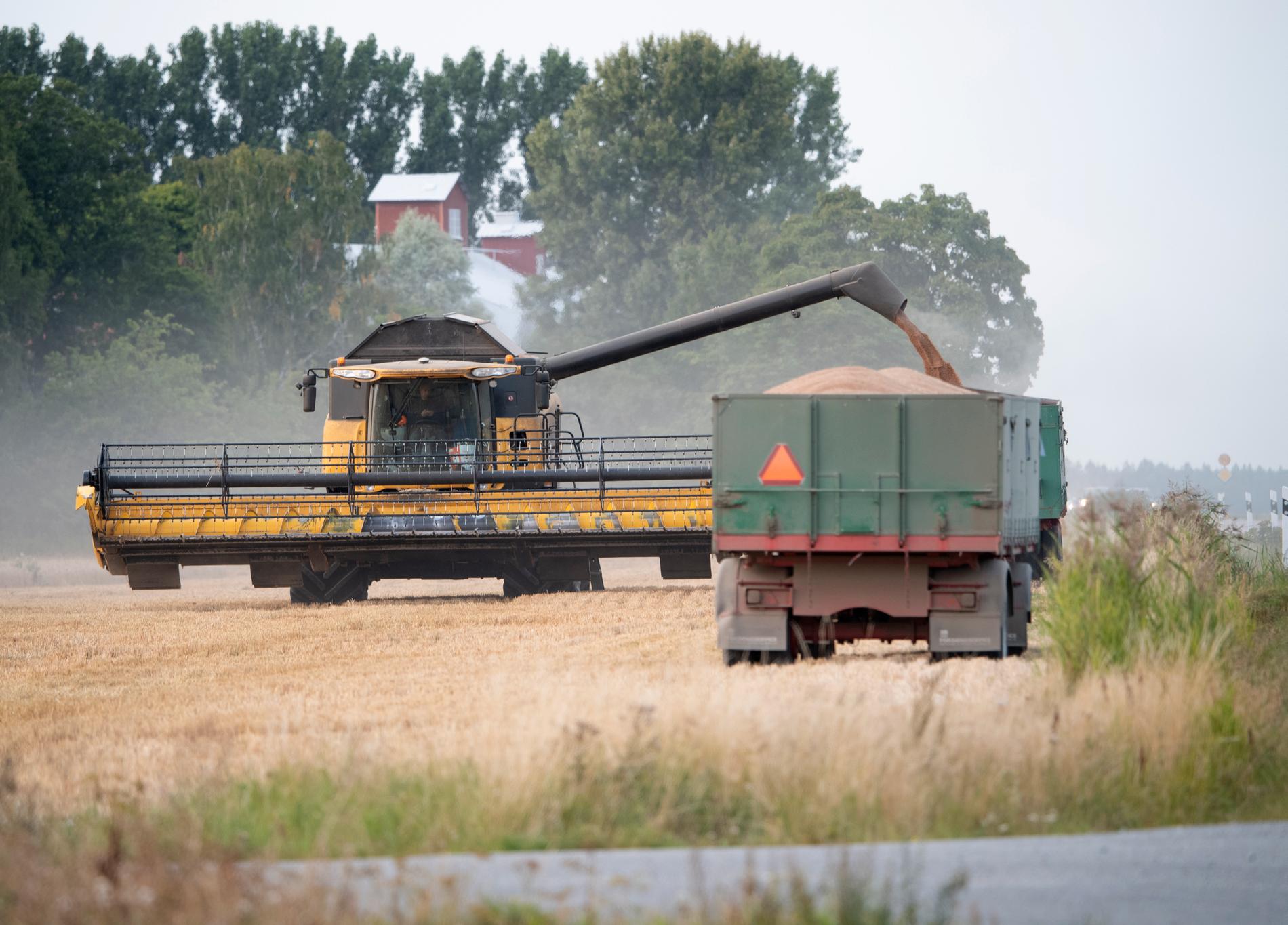
In some parts of the country, it has not been possible to go out into the fields with heavy machinery because of the wet conditions. Photo: Fredrik Sandberg/TT
His not included
But the prognosis is uncertain. Above all, because this year's weather cannot be compared so easily with previous years. But the forecast also only counted on the weather conditions up to and including July 31. This means that the storm Hans is not included in the calculations.
- It has been a tough situation. In some areas, you cannot go out with heavy machinery if the ground is saturated with water. You need to get it a little dry first, says Andreas Mattisson.
For consumers, the difficult conditions for the country's farmers are becoming apparent on store shelves.
- Prices will continue to rise somewhat, so that the producers do not produce at a loss. At the same time, there is this great consumer pressure not to raise too much. They are looking for cheaper stores all the time, so it holds back the rate of increases, says Ulf Mazur at Matpriskollen.
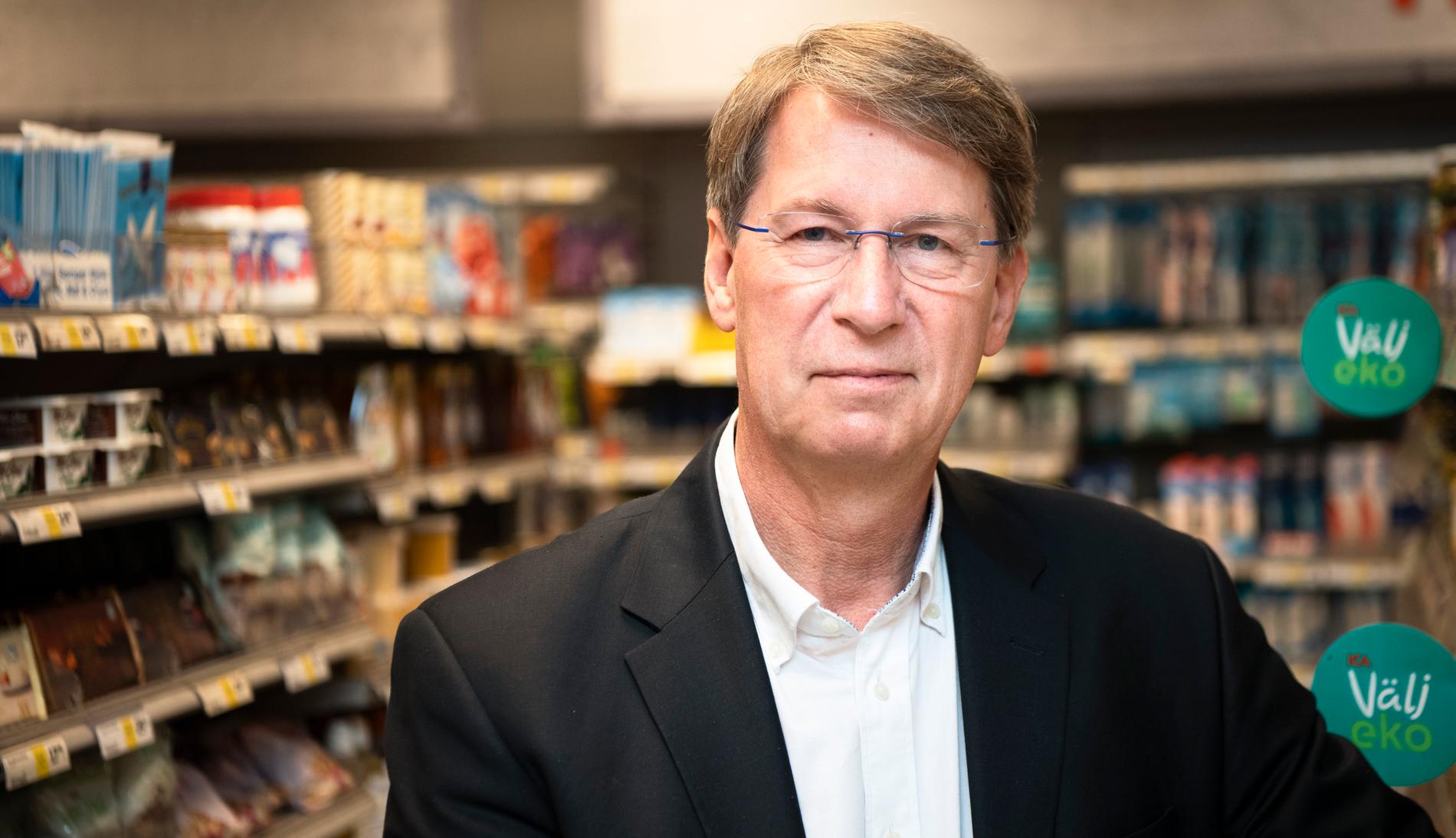
Ulf Mazur at the comparison service Matpriskollen predicts rising food prices this autumn. Photo: Caisa Rasmussen/TT
"Not optimal conditions"
For products where grain is an input, the final prices are determined by raw material prices on the world market.
- There have not been optimal conditions for good harvests and harvests of good quality. Dry in southern Europe and drought and late rain in the northern parts, says Carl Eckerdal, chief economist at Livsmedelsföretagen.
Good quality harvests are just as important as getting a large harvest, says Carl Eckerdal.
- It is worrying that the quality of some of the wheat that is harvested will not live up to the requirements that are set for, for example, baking bread with.
Exactly how food prices will be affected by this year's harvest is too early to say anything about.
- We don't have a conclusion yet. We don't know exactly what the weather will bring. And the same applies to fruit and vegetables as it does to grains. But it's no secret that the feeling now is that the weather has a negative impact if you want to keep food prices down, says Carl Eckerdal.

Carl Eckerdal, Chief Economist at Livsmedelsföretagen. Photo: DAVID THUNANDER

Inga kommentarer:
Skicka en kommentar