
This is a commenting text. Analysis and positions are the writer's.
Posted 21:33
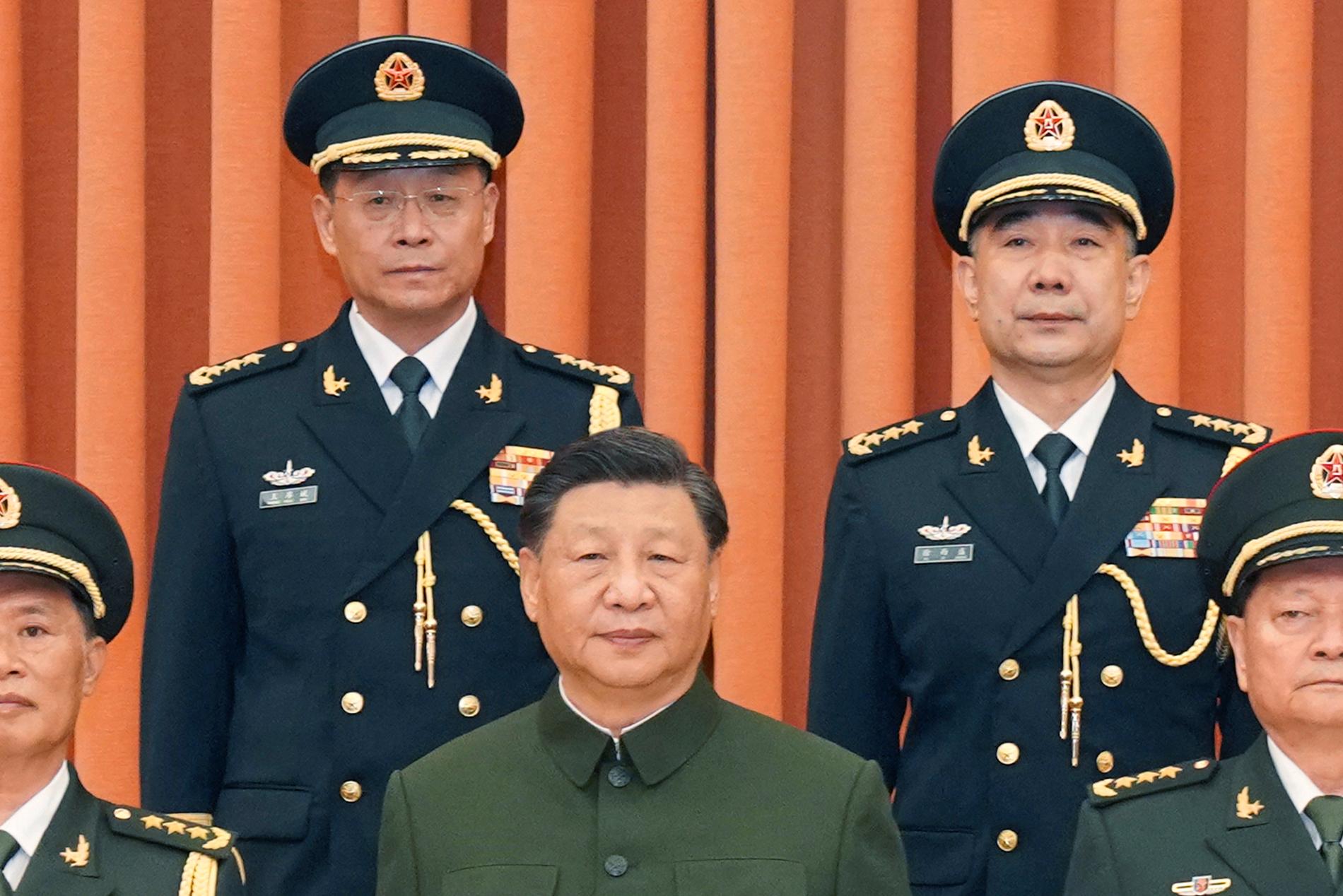
Xi Jingping. Photo: Li Gang/AP
News
Zunyi is named after one of China's many megacities that most people have never heard of. With 6.6 million inhabitants, more people live there than in Estonia, Latvia and Lithuania combined.
A newly built six-lane highway runs through the city. However, no cars are visible, the Bloomberg news agency noted during a visit last summer. The road has been unfinished for four years, one of several large infrastructure projects in Zunyi that were never completed.
Joggers and people walking their dogs on a deserted highway are a telling picture of the problems in the world's second largest economy.
Figures came this week which showed that China, unlike much of the rest of the world, had no inflation in July. Instead, prices fell.
That things become cheaper, or economic deflation, can look like good news. But in a country with huge debts, it's a bit of a nightmare.
The loan amount remains what it is, but the income to cover interest and repayments falls.
And if there's one thing China has plenty of, it's loans.
One way to measure this is the amount of money circulating in an economy (money is created by banks when they issue loans). Since the turn of the millennium, that number has increased 15 times in China, probably the largest production increase in money in human history (In the US, the amount of money rose 4.5 times during the same period).
But it was when the economy slowed down in 2008 that the money taps were fully opened. China's increase in debt from the financial crisis to today is unprecedented, doubling as a ratio to GDP in just fifteen years.
A large part of the money has gone to various regional infrastructure projects and a housing boom. These were ventures that were camouflaged as "market economy" but were in fact a form of Potemkin scenery.
The large investments boosted China's growth on paper in the short term but have often turned out to be wasted money.
All over the country there are "ghost towns" with empty newly built residential areas and deserted streets.
The bubble actually burst several years ago, but China's politicians have managed to delay and drag out the consequences, because the money was lent via state banks.
Banking crisis, falling house prices and rising unemployment mean popular discontent, and popular discontent is the Chinese regime's biggest fear.
Now it doesn't seem to go any further. The economy has lost momentum and the real estate market is shaking. Last week, one of China's biggest housing developers, Country Garden, missed paying the interest on its loans.
And on Monday, the crisis appeared to have spread to the financial sector, with problems at a major fund that invests people's money in the real estate industry.
Trouble in China, which accounts for much of the world's economic growth, is bad enough. But worse is what it can lead to.
In the past year, Xi Jinping has both strengthened his grip on power and raised the tone towards the outside world.
Some analysts believe that a weak economy increases the risk of China becoming more aggressive, for example by invading Taiwan.
A dictator under pressure is a dangerous dictator.
A war in Taiwan would mean that the curtain was pulled down on the world economy. Not only that Taiwan produces 90 percent of all advanced semiconductors, the sanctions against China that will follow would be just as hard a blow. The West is still dependent on China in a wide range of areas.
In Beijing, the leaders seem to welcome such a development.
New laws enacted in the past two years allow China to confiscate the assets of foreign companies in the country and punish anyone who in any way "threatens China's national interests," deliberately vague wording that gives Xi Jinping free rein to use the economy as a weapon.
One who fears the worst is American fund manager and China critic Kyle Bass, who made headlines this week when he predicted an invasion of Taiwan as early as next year. If that happens, there is no doubt about who has funded the war, Kyle Bass recently explained in a podcast interview: the West.
"The country shows no respect for basic human rights. If China had not been an economic superpower, we would never have traded with them. There is only one reason why we do it. Greed

Inga kommentarer:
Skicka en kommentar