
Columnists
Gaza
The sympathy war intensifies after the hospital attack
Wolfgang Hansson
This is a commenting text. Analysis and positions are the writer's.
Published 13.57
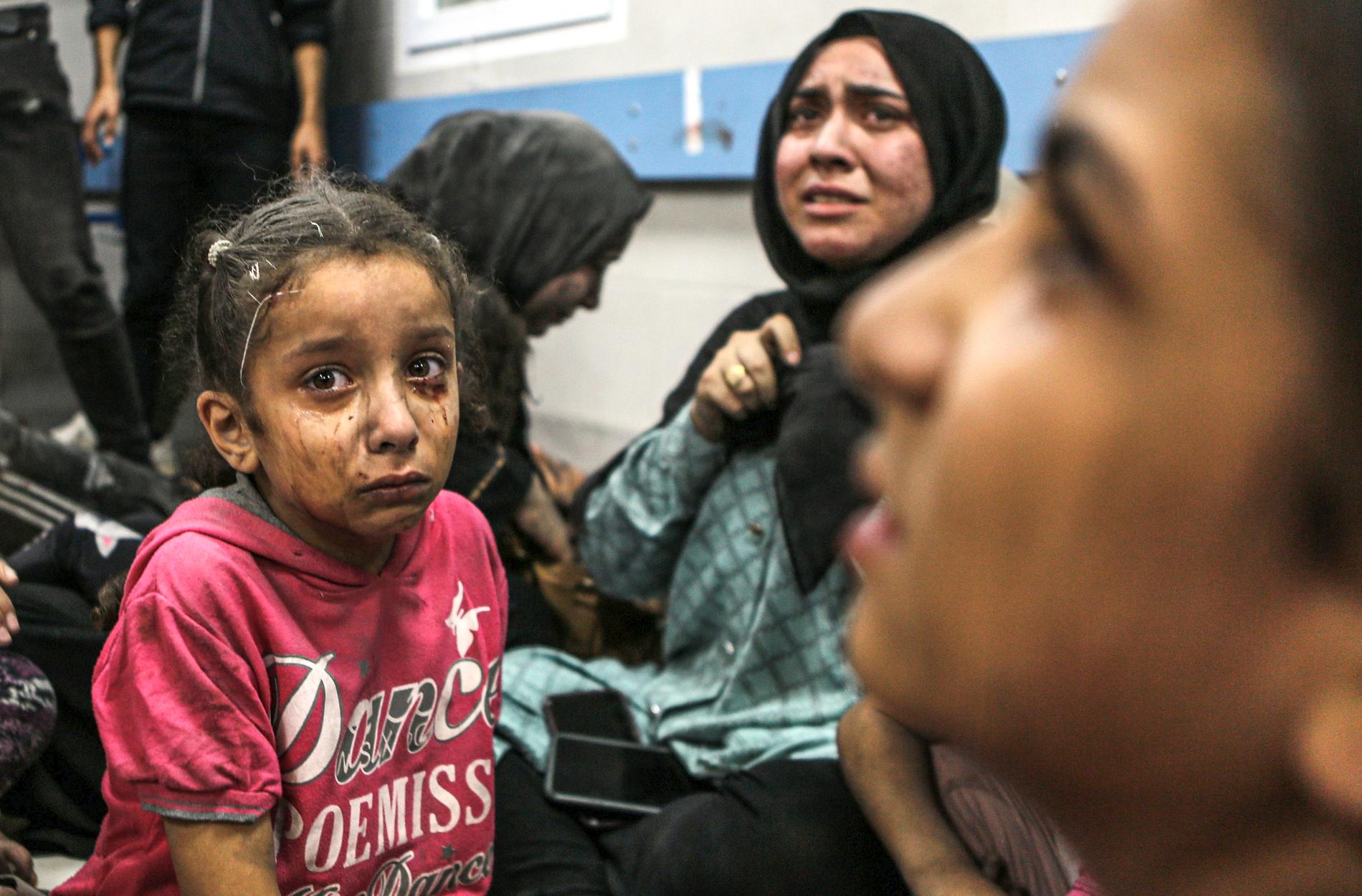
The rocket against the hospital is said to have killed somewhere between 300 and 500 Gazan civilians. Photo: Abed Khaled / TT
News
Agency
Regardless of who was behind the attack on the hospital in Gaza, Israel risks losing some of the sympathy in the outside world that flowed towards the country after Hamas's brutal attack on Israeli civilians.
The Arab world has already decided that it was Israel's fault.
Something that increases the risk of a second front being opened in the war and reduces the chance that Joe Biden's visit can pour oil on the waves.
The war of words over who fired the rocket that allegedly killed somewhere between 300 and 500 Gazan civilians who were at al-Ahli hospital is already in full swing.
Naturally, most immediately assumed it was an Israeli attack, the single deadliest of the war so far, which was at best a mistake, at worst a deliberate act.
However, Israel claims that it has evidence that it was Islamic Jihad, an organization that participates alongside Hamas in the rocket fire on Israel, that fired the rocket that failed and hit the hospital with catastrophic consequences.
Great anger in the Arab world
Among other things, Israel has published an audio recording that it claims is a conversation between two Hamas operatives who say that the rocket was fired from a burial ground behind the hospital. Israel also claims that Hamas is deliberately exaggerating the death toll, which is difficult to confirm by independent sources.
An international commission of inquiry is the only thing that can present an independent truth that can be trusted. German Chancellor Olaf Scholz is among those who have already demanded one. The question, however, is how international experts will be able to gain access to the hospital in the middle of a raging war.
The question is also how big a role the truth really plays when it can possibly be established in a few weeks or months.
The anger in the Arab world over the attack is great.
Already last night, large-scale demonstrations were held in Lebanon and Jordan, among others, where crowds shouted "Death to Israel, death to the USA".
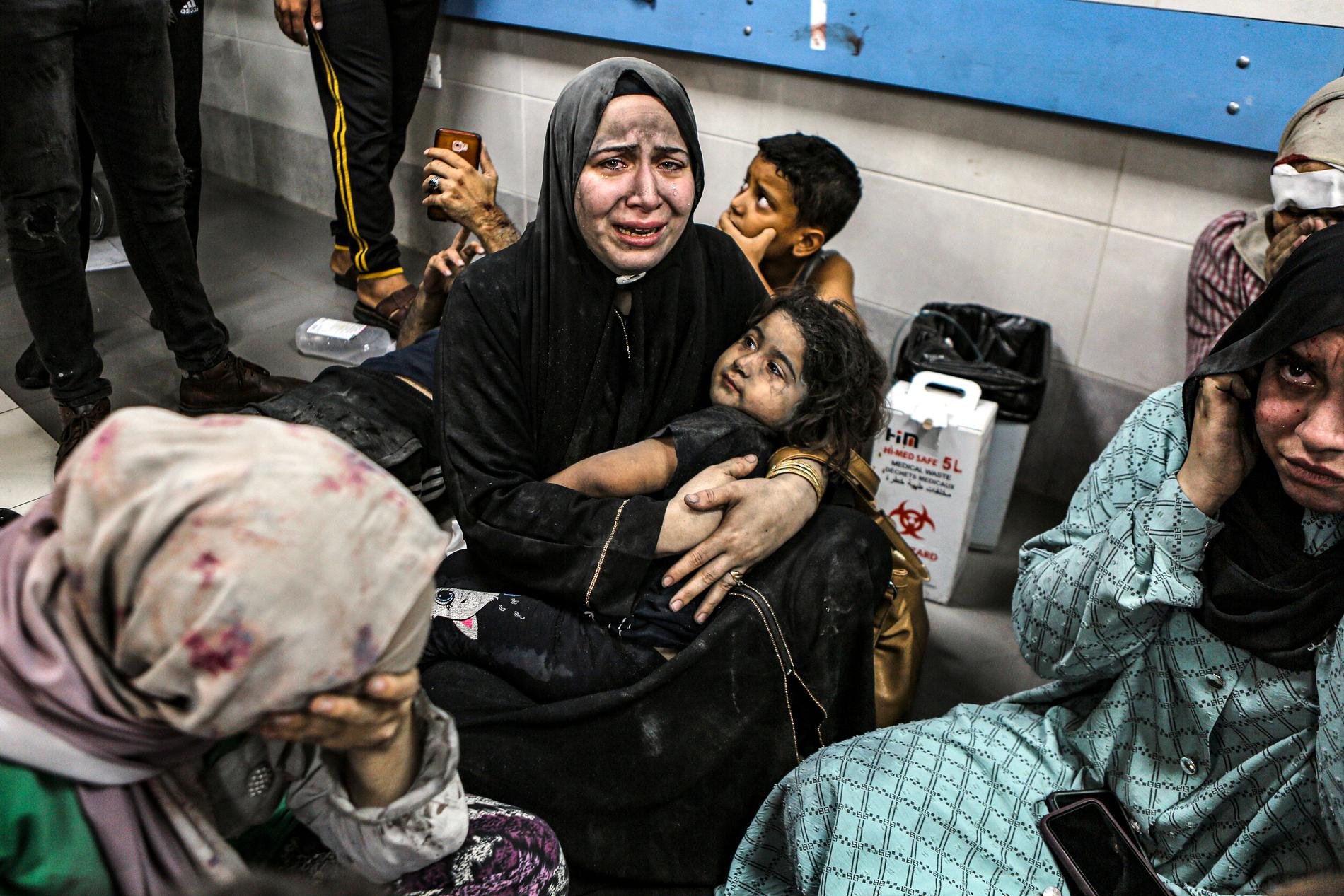
In one fell swoop, the sympathy of the outside world has been replaced by uncertainty or anger directed at Israel. Photo: Abed Khaled / AP
Canceled summit
The governments of a number of Arab countries, including the more moderate Egypt, Jordan and Saudi Arabia, quickly placed the blame on Israel.
President Sisi, King Abdullah and Palestinian President Mahmoud Abbas immediately canceled a planned summit in the Jordanian capital Amman with US President Joe Biden, who is visiting Israel today.
For Biden's attempt to calm the mood and reduce tensions in the area, the hospital attack came with the worst possible timing.
Hezbollah, Iran's proxy militia in Lebanon, is trying to whip up the mood further by declaring a "day of wrath".
The fear is that the hospital massacre increases the risk of a second front being opened in the war. Hezbollah has already attacked northern Israel with rockets but has yet to seriously side with Hamas.
One reason why many even outside the Arab world are skeptical of Israel's denials of guilt is that it has happened several times in the past that the Israeli military has denied involvement in various acts only to admit in the end that they were behind it.
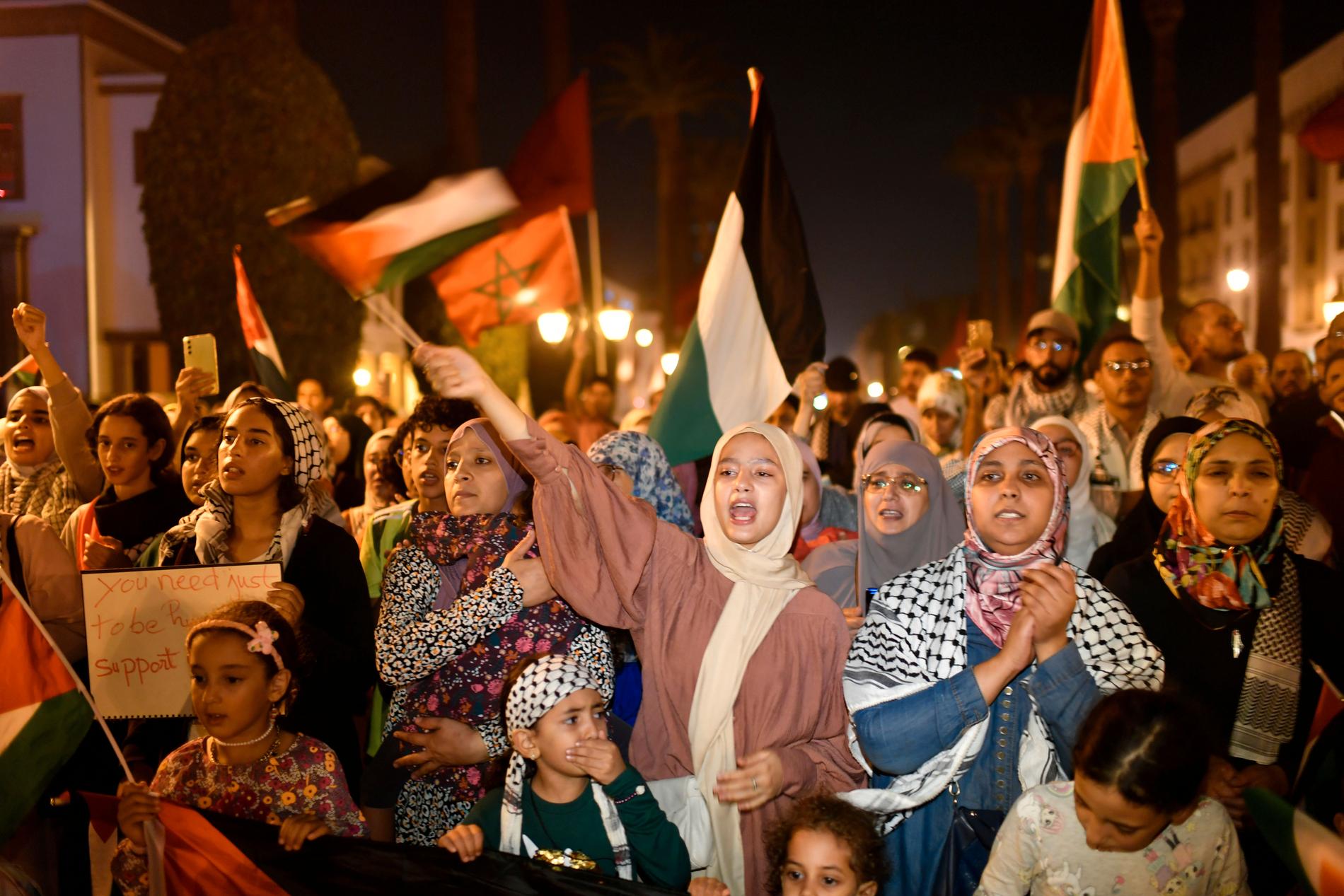
People in Morocco protest after the bombing of the hospital. Photo: Str / AP
War is changing its face
This was the case, for example, when the female Palestinian journalist Shireen Abu Akleh from the channel Al-Jazeera was shot dead last May while she was covering an Israeli military operation in the West Bank.
For Israel, the hospital tragedy, regardless of the question of guilt, means that you lose the momentum you had in the outside world where the understanding of an Israeli revenge against Hamas was great. Israel has felt that this time it can therefore go to great lengths than in previous wars to "exterminate the enemy".
We have seen this in the extremely heavy bombings that have already taken place against Gaza and where one or two Hamas leaders have been involved, but where it is mainly Palestinian civilians who have been killed, including hundreds of children.
Now, in one fell swoop, the sympathy of the rest of the world has been replaced by uncertainty or anger directed at Israel.
The war has changed its face from a narrative where Hamas is the villain and Israel the victim to a situation where Israel is also at risk of playing a villainous role.
Sympathy from the outside world
This is already before any ground offensive has started.
Israel's dilemma is that it has been attacked by an enemy against which it cannot easily fight back. Bombardments from the air do not help against the tunnel system where Hamas has its command centers, weapons depots and where many of the group's fighters hide.
This requires troops on the ground who can physically enter the tunnels. But in such an operation, many civilians also risk being killed who could not or did not want to listen to Israel's call to flee to southern Gaza.
The war for the sympathy of the outside world is at least as important as the military operations. Especially for Israel, which is the stronger party and runs the risk that their own allies in the US and Europe will finally say that enough is enough. Self defense or not.
Although we are not there yet.

Inga kommentarer:
Skicka en kommentar