
A girl fills water containers in Senegal. Leo Correa / AP
The global challenges
Researchers questioning: How can one year stand out so much?
The record high September temperatures, which follow several more months of record highs, are described in big words by leading scientists, The Guardian reports.
"September was, in my professional opinion as a climate scientist, completely shockingly crazy," writes Zeke Hausfather, researcher at the Berkeley Earth climate data project, on the X platform.
The Finnish climate scientist Mika Rantanen also comments on the statistics in an X post. He writes that he is "still trying to understand how a single year can stand out so much compared to previous years".
The EU's climate monitoring service Copernicus announced on Thursday that the Earth's average surface temperature was 16.38 degrees in September. That is 0.93 degrees above the September average between 1991 and 2020.
June, July and August this year also saw record high temperatures. July was the warmest month ever recorded.

Illustration image. Jae C. Hong / AP
Record warm September – biggest deviation in 83 years
After the hottest June ever recorded, the hottest July and the hottest August, the EU's climate monitoring service Copernicus now announces that this year's September was also the hottest ever recorded.
The Earth's average surface temperature was 16.38 degrees, which is 0.93 degrees above the average for September between 1991 and 2020.
It is the largest deviation compared to a monthly average temperature in 83 years. It is also 0.5 degrees higher than the previous warmest month of September in 2020.
- This is not fancy weather statistics. It is a death sentence for people and ecosystems. It destroys assets, infrastructure and crops, climate scientist Friederike Otto of Imperial College London told the AP.

Illustration image. Ariana Cubillos / AP
Threats to biodiversity
Rare turtle find in the Coral Sea reassures scientists
Researchers
have discovered a gender balance in the proportion of turtles hatching
at a coral island off Papua New Guinea, despite increased sand
temperatures which usually means an increased proportion of females. The Guardian reports.
Turtles are sexed based on the temperature of the environment when the eggs are laid. The warmer it is, the greater the proportion of females. The balance is described as pleasing for a species that is otherwise characterized by an extremely large proportion of females.
- Climate change does not affect that population in a threatening way right now, says co-author Christine Madden Hof.
The researchers note at the same time that it is unusual.
A study from 2018 showed that the percentage of females at a coral island 85 miles away was over 99 percent. The explanation probably lies in the fact that that island lacks shade.
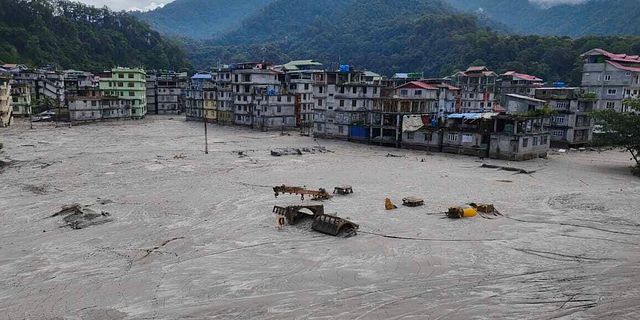
Masses of water rush forward in the Sikkim region of northern India. Prakash Adhikari / AP
At least 40 dead after glacial lake bursts in India
The death toll rises after a glacial lake burst in northern India. At least 40 people have now been confirmed dead, local authorities told Reuters.
Dozens are still missing.
The
disaster is described as one of the worst in the area in over 50 years,
while it is one of a series of events related to extreme weather that
have wreaked havoc in the Himalayan mountain range in recent years.
It was last Wednesday that Lhonaksjön flooded, after a large hydropower dam collapsed. Already several years ago, officials, researchers and activists warned that the dam could become dangerous, AP writes.

Inga kommentarer:
Skicka en kommentar