
The floods in Libya
Local authorities: Over 5,000 people dead
More than 5,000 people have been confirmed dead in the flood disaster in Libya, according to the government that rules the eastern part of the country, according to Al Jazeera.
The latest figures from the emergency services are 2,300 dead, 7,000 injured and 5,000 missing.
Minister Hisham Chikouat equates storm Daniel's effect in the city of Darnah to a tsunami, according to Reuters.
- Bodies are everywhere - in the sea, in valleys, under buildings [...] I am not exaggerating when I say that a quarter of the city is gone.
According to Tamer Ramadan, Libya head of the International Federation of the Red Cross and Crescent (IFRC), a total of around 10,000 people are missing.
Several countries have now offered aid to the war-torn country after what a UN representative calls "a disaster of epic proportions".
The rescue work is complicated by the political division in Libya and the fact that the country is ruled by two governments.
Darnah, Libya
map
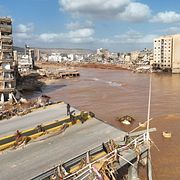
Picture from Darnah. Jamal Alkomaty / AP
Dual governments slow aid in Libya
The political chaos in Libya is hampering the rescue effort after the catastrophic floods in the eastern part of the country. This is what the Libyan journalist Abdulkader Assad tells the BBC.
- There are no rescue teams, there are no trained rescue workers. The last twelve years have been all about war.
Since Muammar Gaddafi was deposed and killed in 2011, the country has been marked by violence and division.
Today,
there are in practice two governments in the country – an
internationally recognized one that rules from the capital Tripoli in
the west, and another that rules in the east where the disaster
occurred.
This leads to aid efforts from abroad being slowed down "because it is so confusing", says Assad.
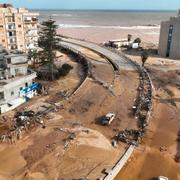
Picture from Darnah. Jamal Alkomaty / AP
Experts: Warm seas made the rainstorm worse
The
unusually high water temperatures in the Mediterranean contributed to
the enormous amounts of rain that storm Daniel brought over the affected
areas, experts told The Guardian.
-
The warmer water not only makes these storms more intense in terms of
rainfall, it also makes them more powerful, says Karsten Haustein,
climate scientist at the University of Leipzig.
At
the same time, the experts emphasize that a lack of infrastructure and
weather forecasts in war-torn Libya is a major reason why so many died.
At
a stage when the climate is changing and extreme weather events are
becoming more common, it is of the utmost importance that communities,
businesses and individuals learn to plan and adapt, says Kevin Collins
at the British Open University.

Inga kommentarer:
Skicka en kommentar