
Donald Trump
One thing explains Trump's madness
Niclas Vent
Reporter
This is a commentary text. Analysis and positions are the writer's.
Published 2025-02-20 21.44
It looks like madness, idiocy and self-harm.
From one perspective, everything Donald Trump is doing now is completely logical and understandable.
He is trying to carry out the coup of the century.
That he will fail is the least of the problems.
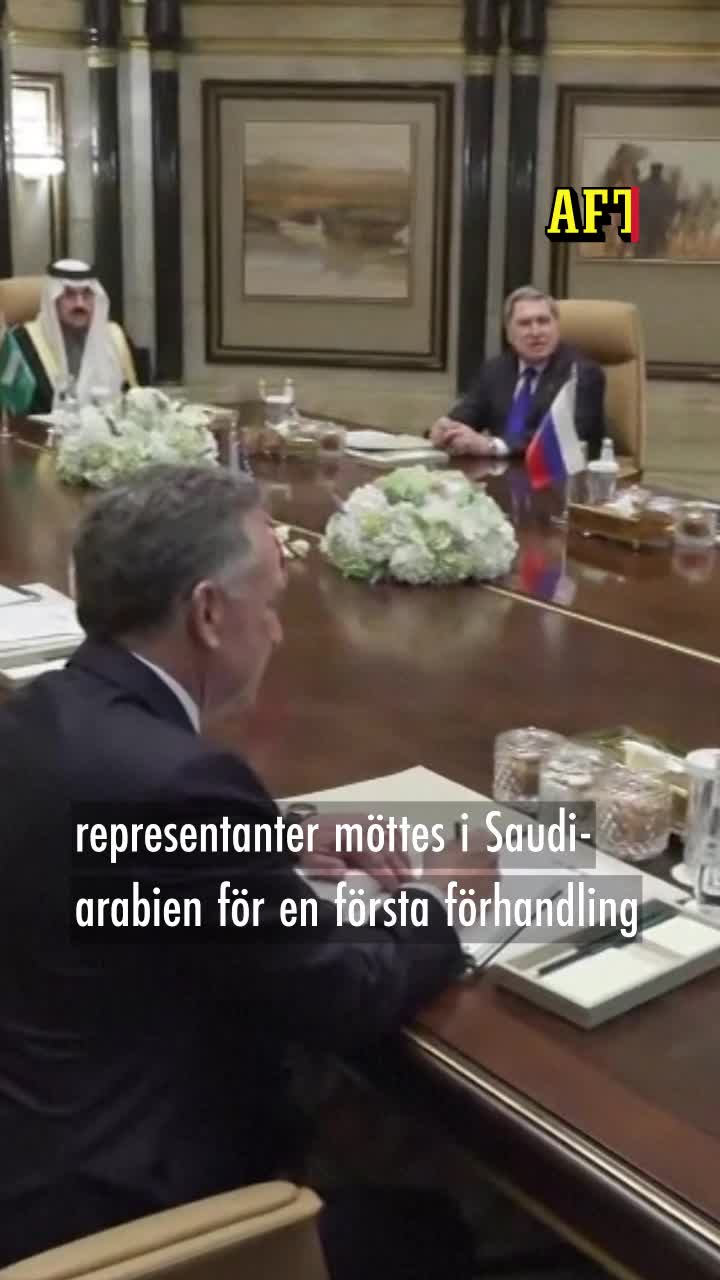
His foreign minister is negotiating with Russia. His vice president is attacking his allies. He himself accuses Ukraine of starting the war, and calls the country's president Zelensky a dictator.
Donald Trump's actions over the past week may seem difficult to understand, as they clearly run counter to the United States' own interests.
Continuing to support Ukraine has many advantages:
- You defend democracy and a rules-based world order.
- You keep your allies together.
- For a pittance, you contribute to the depletion and devastation of the military resources of a major geopolitical rival.
The United States has given Ukraine $65 billion in military aid during three years of war – which is equivalent to just over 2 percent of the United States' defense budget over the same period.
At the same time, Russia has lost at least 11,800 armored vehicles and perhaps up to 850,000 dead or wounded.
In stark terms, it is difficult to imagine more value for money than that.
So why desperately want to end a conflict on bad terms that only disadvantages your enemy?
If the answer is difficult to understand, it is because the question is asked incorrectly.
Trump simply does not consider Russia his enemy.
There is only one explanation that makes Donald Trump's actions over the past week logical and understandable. Still stupid and dangerous – but understandable:
He wants to enlist Russia on his side in the geopolitical showdown with China.
Exactly what Richard Nixon did with his trip to Beijing in 1972 – “the week that changed the world” – but in reverse.
Then the US pryed China away from its main rival, the Soviet Union. Now Trump wants to pry Russia away from China in the same way.
A rapprochement with Russia is an old dream in some Republican circles, and Trump worked intensively on it already during his last presidential term, when, among other things, he wanted to join forces with Putin to “knock the crap out of” ISIS.
There is much to suggest that his plan is still alive, and that he is prepared to throw Ukraine – and perhaps more countries than that – under the bus to get there.
– What you never want to happen is for Russia and China to unite. I'm going to have to un-unite them, and I think I can do it, Trump said in October.

Secretary of State Marco Rubio also hinted at the matter, in some not-so-noticeable comments after the meeting with his Russian counterpart Sergei Lavrov on Tuesday.
He described the work ahead as a three-stage rocket, where stage two is ending the war in Ukraine:
- That issue is going to be difficult to resolve, but I think it is absolutely necessary for the third part to be possible, which is our ability to work together on other geopolitical issues where we have common interests and some quite unique, possibly historic economic partnerships. The key that opens the door to these opportunities is an end to the conflict, says Marco Rubio.
If the world were a board in a strategy game, there would be a lot to support the idea.
With a friendly Russia, Trump would in one move close his own European front, and thus be free to concentrate US military resources in the Pacific.
At the same time, increased Russian-Chinese antagonism would put pressure on China along the long border between the countries.
But there is no indication that Trump will succeed.
Russia and China are now too close to each other, and economic normalization between Russia and Europe cannot even be offered by Trump. Putin also knows that Trump may be gone in a few years. He thanks and accepts what the US gives – but Xi Jinping still seems to be a more stable partner.
Trump's upcoming fiasco is not the big problem.
The path he has taken alone does enormous damage in itself.
Many have spoken of Trump’s negotiations with Russia as a repeat of Munich in 1938, when Britain and France gave up parts of Czechoslovakia to Nazi Germany in exchange for what they thought would be peace.
That analogy seems increasingly wrong.
British Prime Minister Neville Chamberlain may have acted wrongly in Munich, but for a good purpose and with good intentions.
Something similar cannot be said about Trump.
What the US president is now opening up for is more like the Molotov-Ribbentrop Pact, the agreement in which Hitler and Stalin divided Europe between themselves.
What was signed a week before the Second World War began.
FACTS
This is how much the US has given to Ukraine
The US defense budget is approximately $895 billion in 2025.
Military aid to Ukraine has so far amounted to $65.9 billion since February 24, 2022.

Inga kommentarer:
Skicka en kommentar