
Wolfgang Hansson
The latter are crucial details that neither Europe or Russia can control.
Published: Less than 3 hours ago
Updated: Less than 3 hours ago
This is a commenting text. Analysis and positions are the writer's.
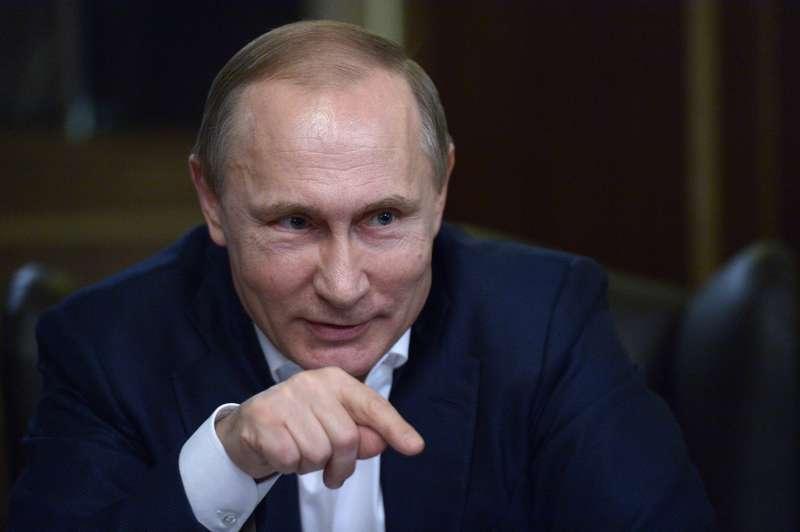
Photo: Alexei Nikolsky/AP
COLUMNISTS
The
EU is playing a high stakes game to try to wrest the gas weapon out of
Vladimir Putin's hands and at the same time reduce his war coffers.
If you succeed, it means that the price of electricity can drop significantly.
If not, an already difficult situation this winter will worsen further.
A
central part of the EU's plan is to set a price ceiling on Russian gas.
In other words, the EU would decide how much the Russian gas can cost.
According to the EU Commission, this is possible because Russia has few
alternative recipients of the gas that normally goes to Europe.
To
transport the gas, pipelines such as Nordstream 1, which runs on the
bottom of the Baltic Sea to Germany, are required. There are very few
alternative pipelines that allow Russia to export to others instead.
Building new ones for China, for example, takes many years.
Today, Russia is said to be burning up the gas that would normally go to Europe in Nordstream 1 without getting a penny for it.
Even
if Russia's war is unjust, it is natural for Putin to use the weapons
at his disposal to try to win and for Europe to counter as best it can.
Similarly,
the world's seven richest countries, the G7, have promised a price cap
on Russian oil. This is thought to be possible because a large part of
the world's fleet of tankers insures its cargo via Western insurance
companies.
The
tankers are simply prohibited from transporting oil sold above the
price ceiling. The price ceiling is to be introduced from the turn of
the year.
In
addition to reducing Russia's income, the price caps have the advantage
of dampening the galloping inflation that is currently destabilizing
the economies of the West.
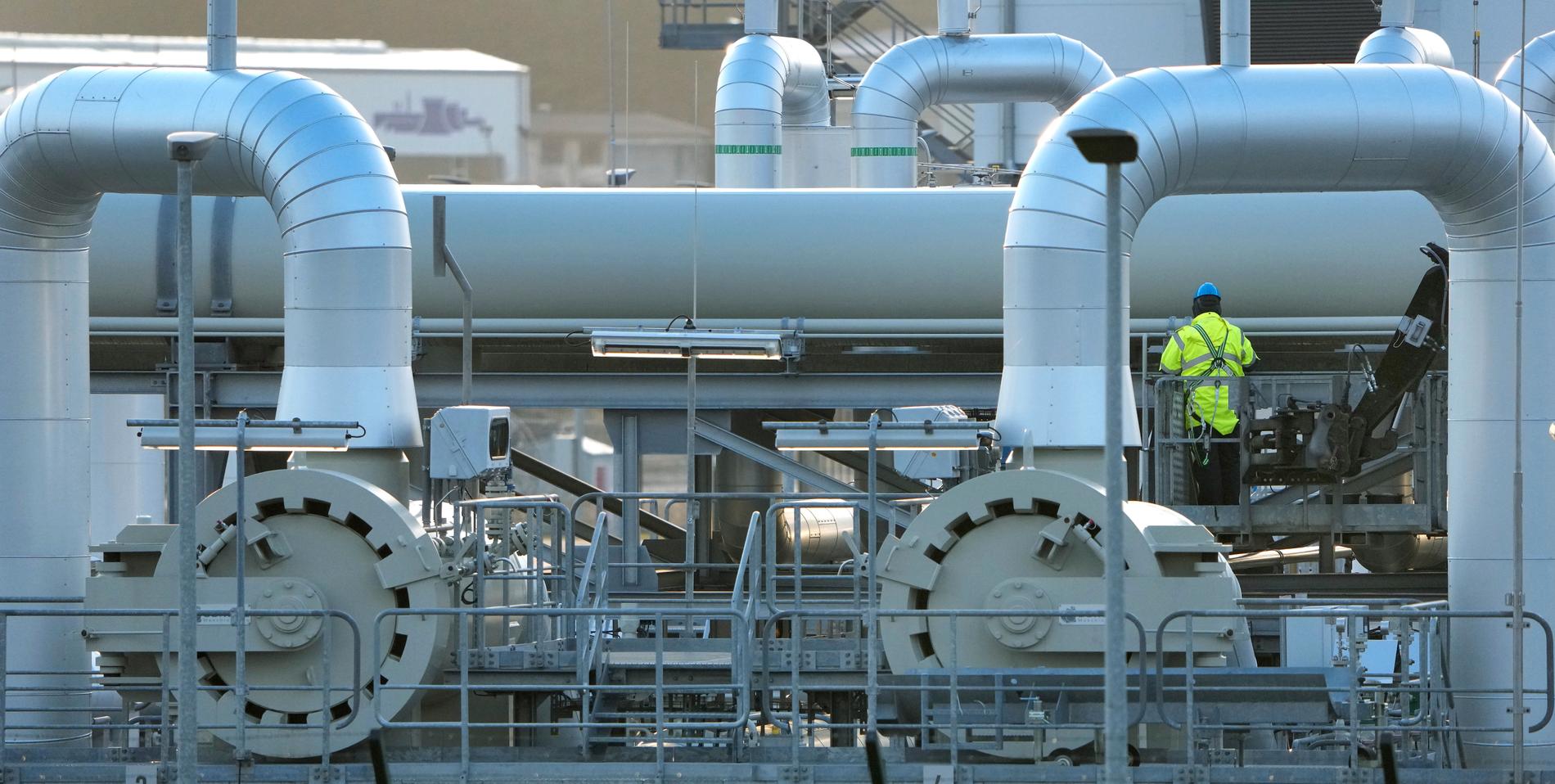
A facility for Nordstream 2 in Germany. Photo: AP TT NEWS AGENCY
Close all faucets
But
the Russian president made it clear yesterday that he does not intend
to tacitly accept the EU's and G7's attempts to regulate the prices of
Russian energy.
-
We will not deliver anything if it goes against our interests, Putin
claimed at an economic summit in Vladivostok. We will not deliver oil,
gas, coal or heating oil. We will not deliver anything.
Of
course, Russia can close all taps to Europe, but then they also miss
out on large revenues. Europe is the largest importer of Russian gas. In
that case, Putin would effectively be targeting sanctions against
himself because he cannot resell the gas to anyone else.
Today,
Russia has continued large revenues from gas exports to the EU because
the shortage causes the gas price to rise all the time. But if Russia
stops exporting, the income disappears completely.
So what we are seeing between Russia and the EU is a chicken race where both sides play high to get the other to back down.
Putin
may choose to let Europe "freeze like wolves' tails", as he himself put
it, and hope that he can thereby split the EU. Something he expects
will lead to a reduction in Europe's military and financial support for
Ukraine and an easing of sanctions against Russia.
If the tactic succeeds, it may be worth partially draining the Russian treasury.
If it fails, Putin's opportunities to carry the war on are weakened.
Reduced dependence
The
EU, for its part, coldly expects that Russia will be forced to accept
the lower price and continue to supply gas to a certain extent. Enough
to see Europe through the winter.
They
dare to play high because Europe's dependence on Russian gas has
decreased after all. EU chief Ursula van der Leyen claims that Russia
now only accounts for nine percent of the gas the EU imports, compared
to 40 percent when the war started. Among other things, the EU has
signed contracts with Qatar, Algeria, Azerbaijan and the United States
to replace the Russian gas.
If
it works, an additional benefit of the EU's bold tactics is that Russia
will receive less money from its energy exports and thus find it harder
to finance the war in Ukraine.
If
the EU's strategy does not succeed, it will be even more difficult and
painful for Europe's citizens and businesses to get through the winter.
The
EU has a few more instruments in its toolbox. Proposals that will also
be discussed when the EU's energy ministers meet tomorrow, Friday.
"Solidarity tax"
A
"solidarity tax" on the energy companies that today make profits "they
could never dream of" because the high gas price also drives up the
price of electricity produced from wind, solar and nuclear power. The
income from the tax must be distributed to needy companies and consumers
in the Union.
Mandatory
savings on electricity during the hours where consumption is at its
highest. In a worst-case scenario, rationing may become relevant.
Will it work?
The truth is, no one knows. There are so many uncertainties.
How will Russia act?
How windy is it this winter? How cold will it be?

Inga kommentarer:
Skicka en kommentar