
News
Iceland
New volcanic eruption in Iceland - the lava has reached Grindavík
Nelly Kronstrand,
Ebba Torstensson,
Nora Fernstedt
Updated 17.31 | Published 09.06
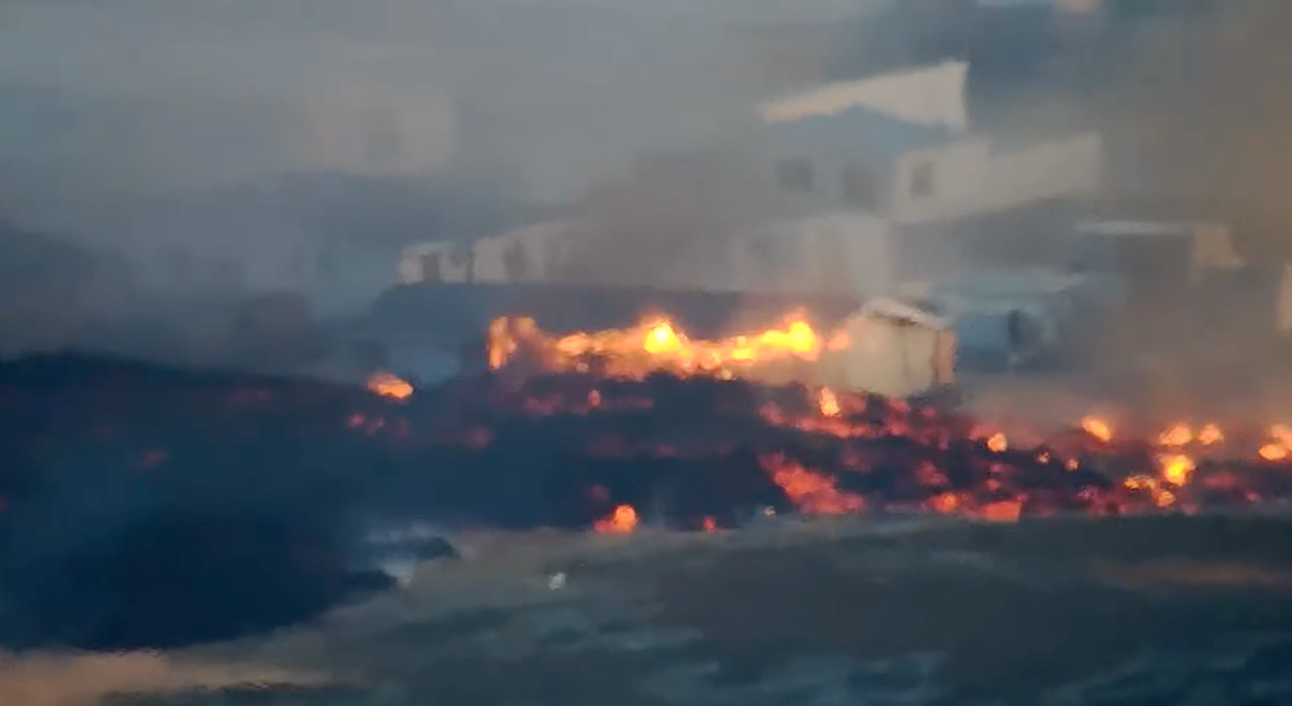
The lava has reached the first houses in the fishing town of Grindavík.
Nothing can now be done to stop its progress.
- This could have major consequences, says Björn Lund, seismologist at Uppsala University.
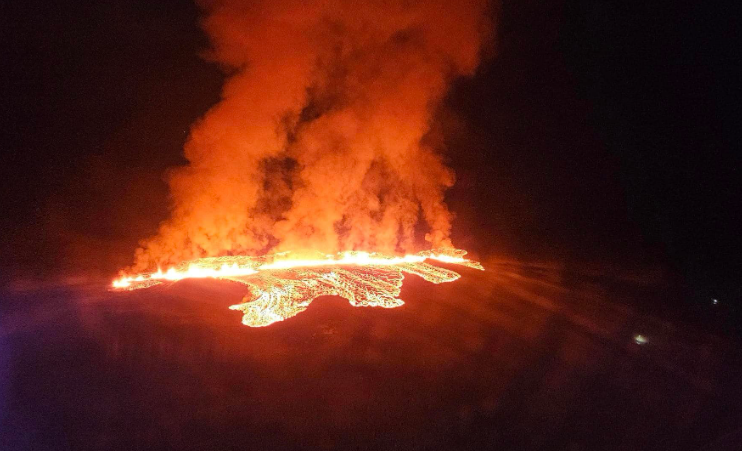
After a new fissure opened at lunchtime, the lava has now reached the northernmost part of the town of Grindavík in Iceland. Two houses have already caught fire and the lava is now flowing through the buildings.
- It just fell a bit away from the house. It must be terrible for those who live there, says seismologist Björn Lund.
Sheep trapped
No people are left in Grindavík anymore.
On the other hand, 30 sheep are trapped in a stable in the city - and more sheep are feared to be trapped in another five houses.
- The animals are in captivity and it is very important that they are saved if possible, says Linda Karen Gunnarsdóttir, president of Iceland's animal protection association, to Rúv.
The crack occurred only 50–100 meters from the city limits. It is estimated to be 150 meters long - but could be even longer.
The entire city is at risk and the government has declared a national emergency again.
- It seems to come from deep inside the earth. It may very well continue for a longer period – several months to come, says Lund.
Electricity and water lines have already been damaged.
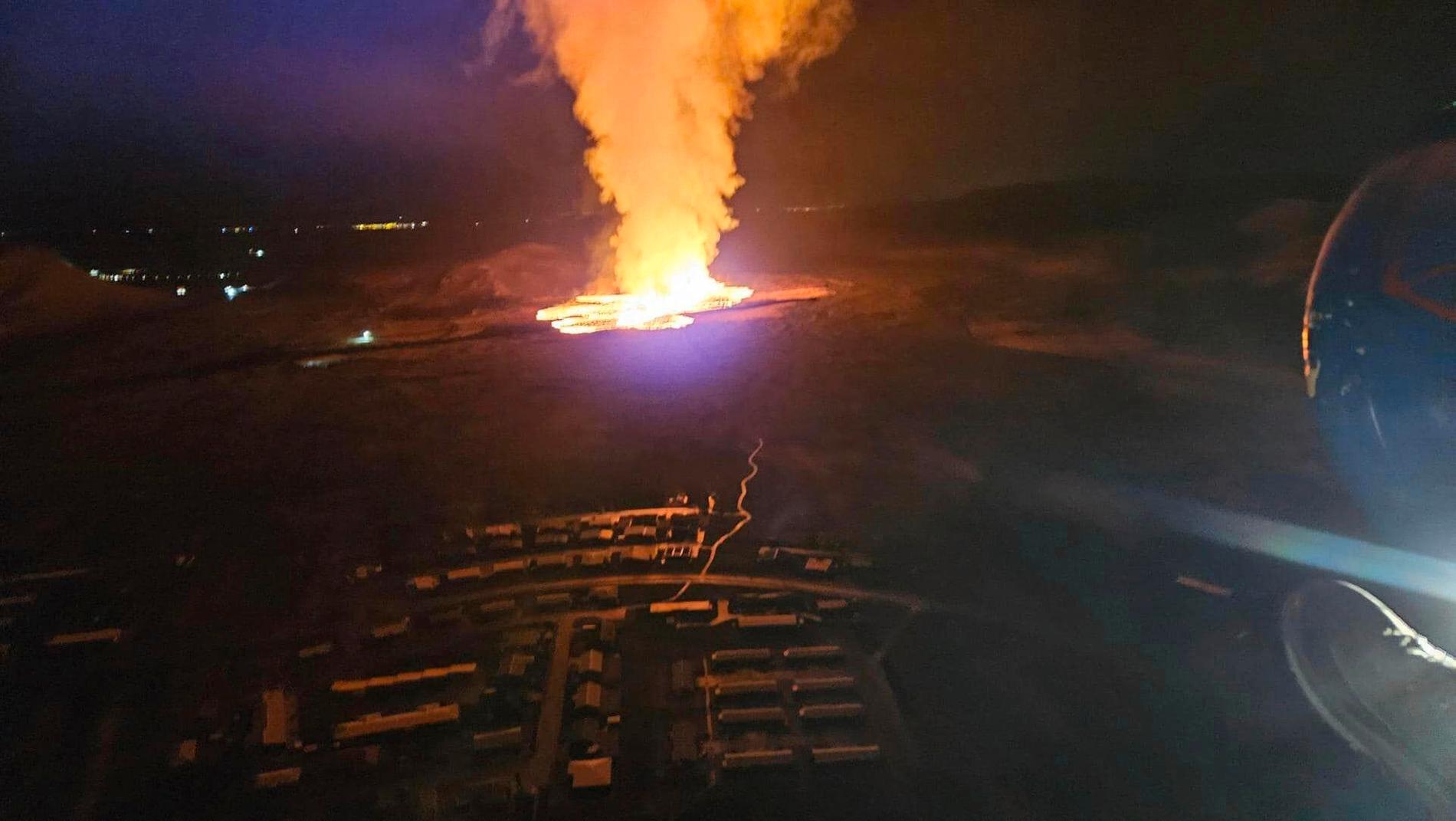
Helicopter image of the crack. Photo: Icelandic Civil Protection Via AP
Woke up by sirens
The Icelandic Coast Guard has located the volcanic eruption to the south of Hagafjell, a location north of Grindavík. Early on Sunday morning, upwards of 200 minor earthquakes were registered, writes TT.
Several of the residents of the fishing town woke up to the sound of sirens. The approximately 200 people who were there were forced to evacuate. At eight o'clock in the morning the volcanic eruption came.
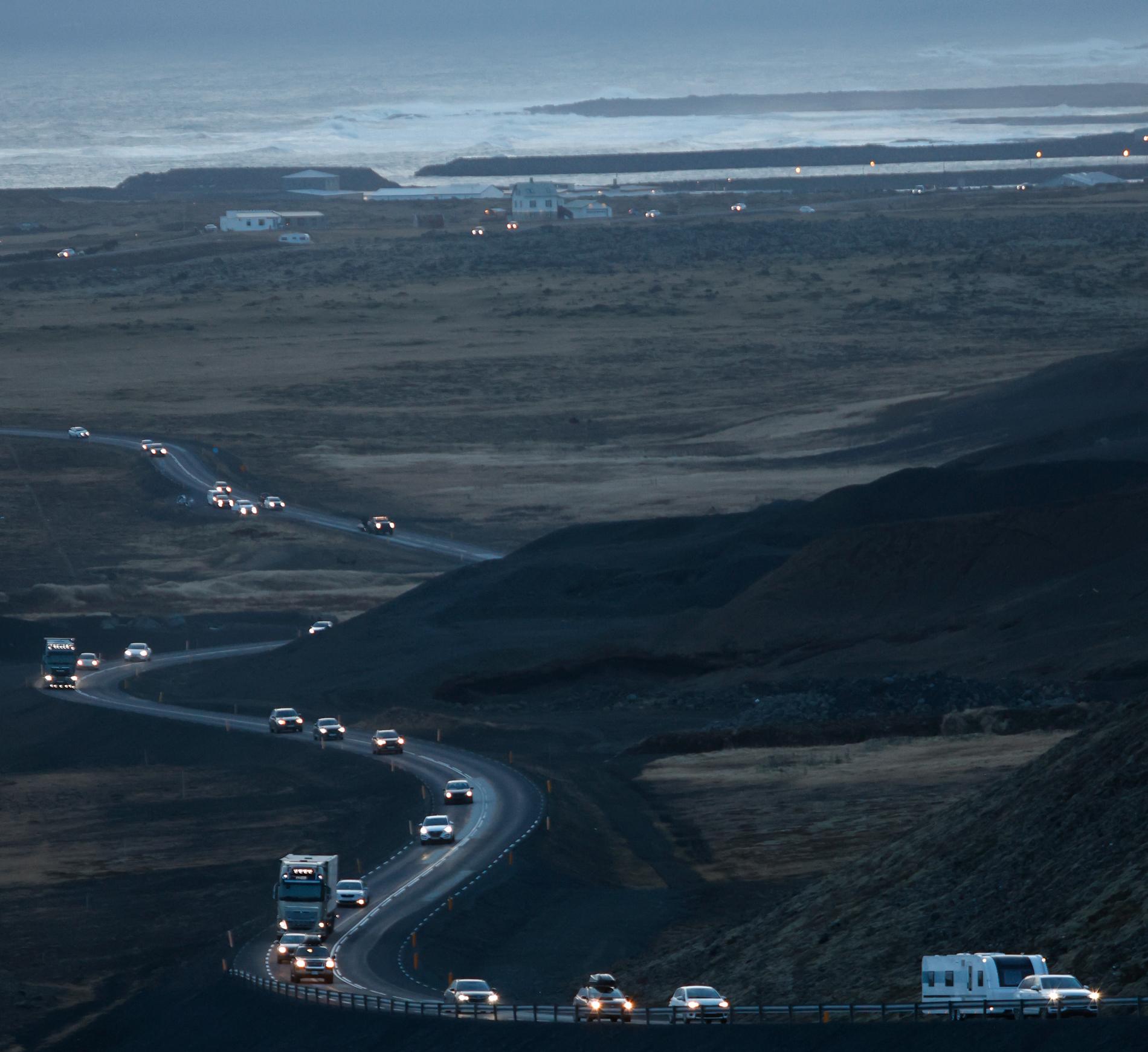
Residents leave Grindavík after the alarm went off on Sunday morning. Photo: Brynjar Gunnarsson / AP
Whether the residents will be able to return or not is uncertain.
- This is possibly one of the worst places we can have an eruption at because it puts Grindavík in danger if the eruption continues, says volcanologist Thorvaldur Thordarson.
Just before 5 p.m., the seismic activity had begun to decrease, according to geophysicist Benedikt Ófeigsson. But he tells Rúv that it is still too early to predict the future.
At 21.00 tonight, Swedish time, Iceland's president Guðni Th. Jóhannesson giving a speech to the nation.
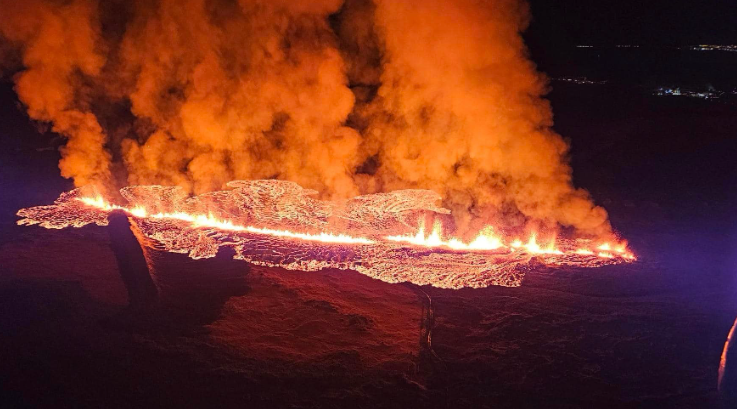
1 / 2Photo: Iceland's Civil Defense
Almost four weeks ago, the Reykjanes peninsula was hit by a volcanic eruption.
- The outbreak in December went very quickly. About 90 minutes after a swarm of earthquakes came the actual eruption. Residents were also urged to leave the city before this new outbreak, which shows that they had a good grasp of the situation, says Björn Lund.
He sees no risk of a repeat of the Eyjafjallajökull volcano eruption in 2010, when an ash cloud paralyzed air traffic in large parts of Europe.
- No, this type of eruption does not generate ash and sulfur dioxide in the same way as the 2010 eruption, so there will most likely be no similar problems.
FACTS
Volcanic Iceland
The boundary between the North American and Eurasian continental plates runs right through Iceland. This means that the island has an extremely high level of geological activity.
Volcanic eruptions are frequent, but most are minor, occur in sparsely populated, mountainous parts of the country, and do not cause major damage.
But from time to time larger eruptions occur.
One of the worst in living memory occurred in the 18th century and killed a quarter of the island's population.
In the spring of 2010, Eyjafjallajökull exploded on the south coast. The eruption caused a huge ash cloud that knocked out air traffic over Europe for several weeks.
(TT)

Inga kommentarer:
Skicka en kommentar