Biggest - but still not sure of becoming prime minister
Of:
Wolfgang Hansson
Published: Less than 40 min ago
NEWS
COPENHAGEN.
When the results of the election survey are announced, the cheering is a
bit half-hearted at the Danish Social Democrats' election vigil.
-
It is so even that it is impossible to know who gets to form a
government, says Magnus Heunicke, Minister of Health in the Social
Democratic government.
People
stand tightly packed at the party's vigil despite having been allocated
the largest room in the Norwegian Parliament, the Danish Riksdag.
Everyone knows that the Social Democrats will become the largest party.
The interesting thing is how it goes for the others.
The
television cameras and many people's eyes are directed at the Minister
of Health, who is one of the most prominent guests at the vigil so far.
-
I hope we can form as broad a government as possible, but it may be
difficult, he says while holding his wife's hand all the time.
Big cheer
Magnus Heunicke does not want to point out which parties the Social Democrats might consider cooperating with.
- It must become an issue for the negotiations.

Then
suddenly a great cheer breaks out. Significantly larger than when the
party's own figures appeared on the television screen.
It
is the figures for the Danish People's Party, the Sweden Democrats'
sister party, that are shown. They only get 2.5 percent and in that case
just manage to climb over the two percent barrier.
It
is a party that only a few years ago got 21 percent in the election.
Now they are more or less erased. Which obviously pleases the Social
Democrats.
When
the polling station survey is over, the murmur in the room rises again.
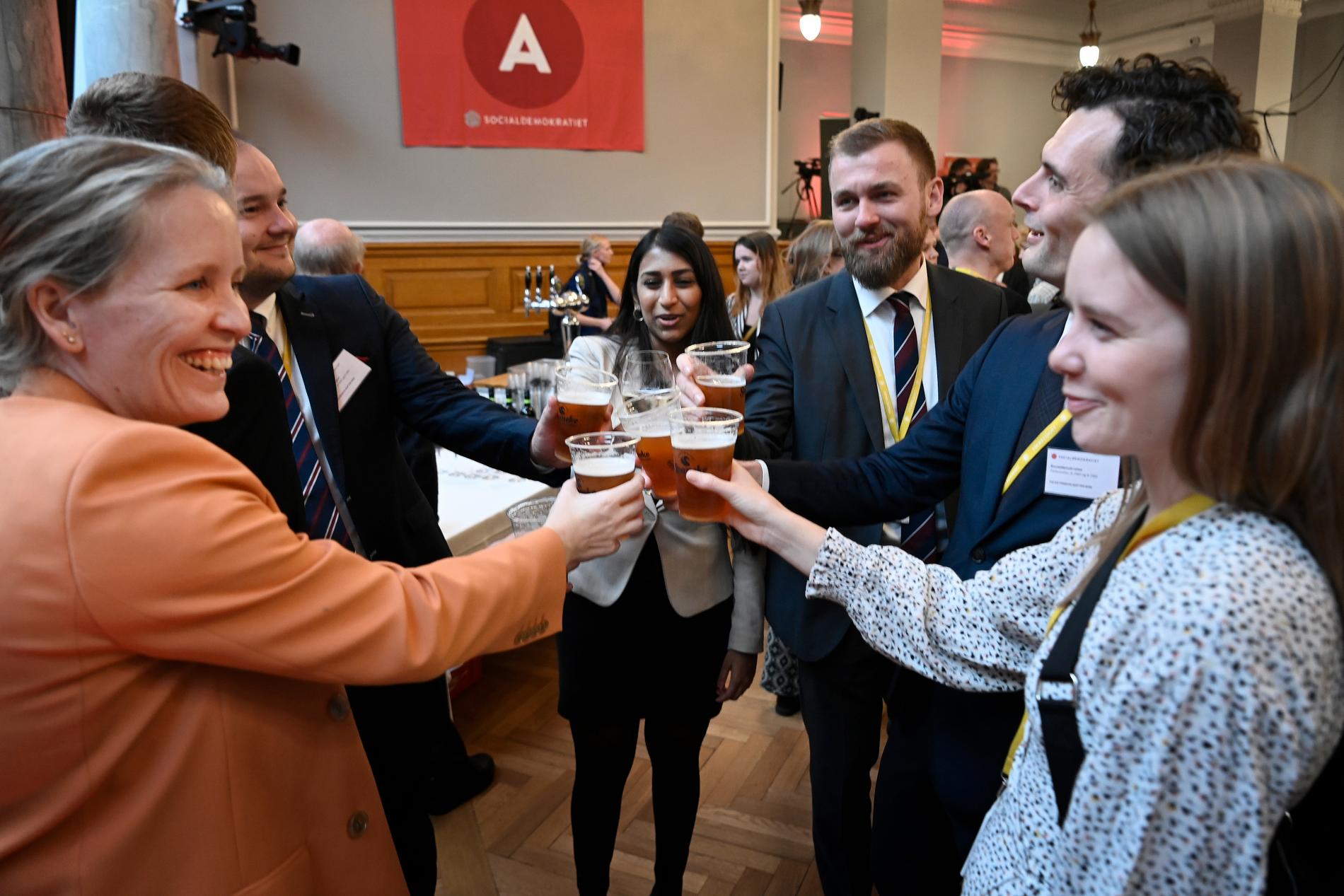
Chips and cheese arcs and wine and beer are offered. The atmosphere is
rising despite the fact that the Social Democrats appear to be losing
some seats in the Norwegian Parliament.
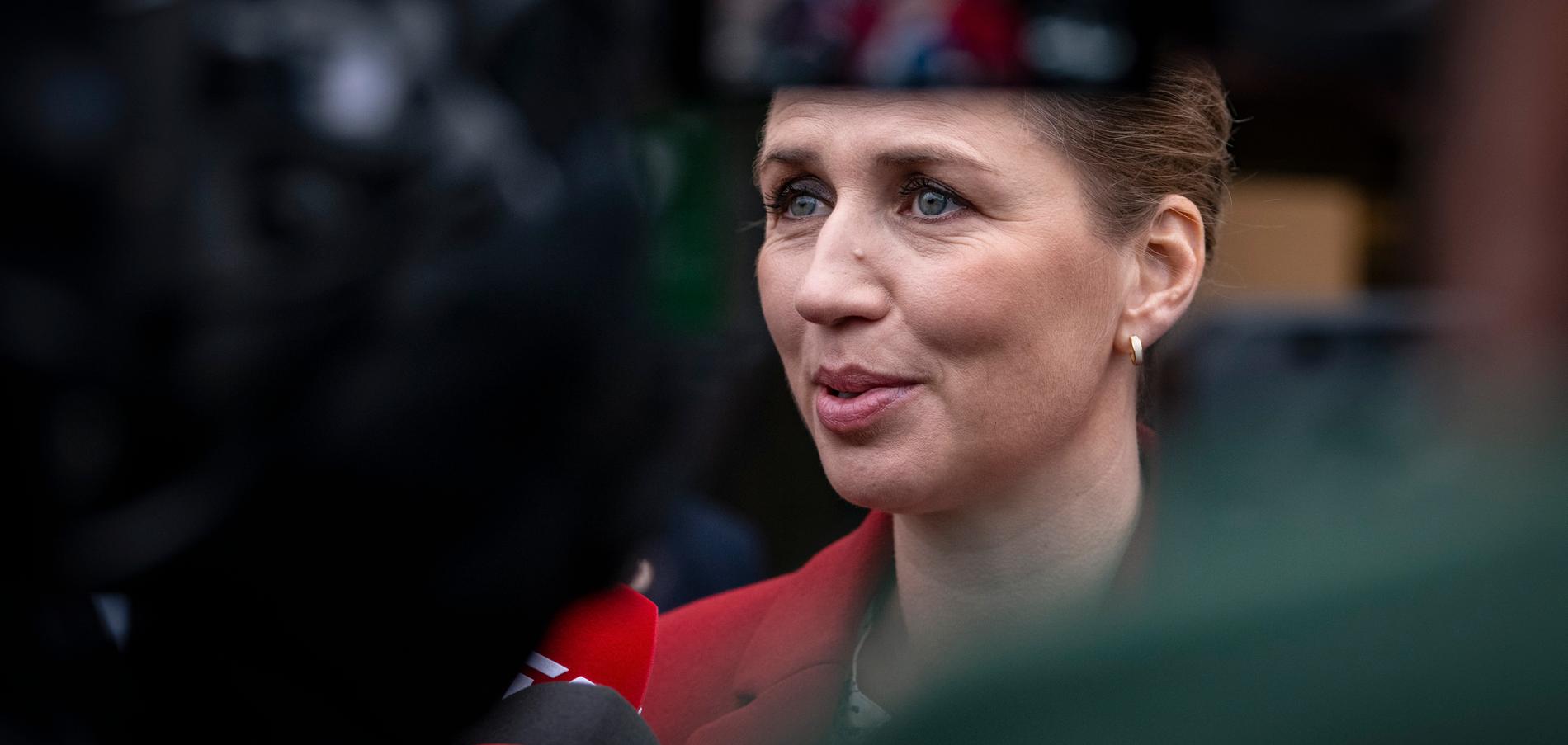
Prime Minister Mette Frederiksen voted in Hareskovhallen outside Copenhagen on Tuesday. Photo: Johan Nilsson/TT
Most other parties also hold their election vigils in the parliamentary premises.
The
victory for the incumbent Prime Minister Mette Fredriksen was more or
less a given. But even though her party became the largest by a wide
margin, there is no guarantee that she will remain as prime minister.
The left-wing bloc has not gained a majority of its own, but is dependent on one of the bourgeois parties changing sides.
It
is in that light that Fredriksen's announcement during the election
spurt that she wants to form a broad center government and not the
left-wing government she has led until now should be seen.
Power struggle
But
the bourgeois parties have throughout the election campaign rejected a
collaboration with Fredriksen where she continues as prime minister.
While Fredriksen has rejected all solutions where she is not prime
minister herself. She represents the largest party, therefore she must
also rule, according to her way of seeing it.
A principle that Magnus Heunicke thinks is completely natural.
- That's how we've almost always had it in Denmark, he says and swallows a sip of mineral water.
It
is simply a power struggle where the leaders of four different parties
all think they are best suited to lead the country. But the point is
that the normally largest bourgeois parties have not made any good
choices.
 .
.
Chips, cheese rings, wine, beer and cheers at the social democratic vigil. Photo: BJÖRN LINDAHL
Liberals
with Jakob Elleman-Jensen at the helm have lost almost ten percent
compared to the last election according to the polling station survey.
Conservative
party leader Sören Pape Poulsen has been involved in a number of
personal scandals involving the man he was married to until recently.
They are believed to have contributed to the party plummeting compared
to the opinion polls that gave the party 15 percent in September.
So neither of them has a really good negotiating position.
On the other hand, it has the brand new Moderate party with former Prime Minister Lars Lökke Rasmussen as leader.
Have to compromise
Rasmussen
was forced out as leader of Venstre after the last election loss but
has made a remarkable comeback and is largely behind Venstre's vote
loss.
His party gets just over nine percent according to the polling station
survey and thus becomes the balance between the left and right blocs,
despite the fact that he himself is a bourgeois politician. But during
the election campaign he has refused to say which side he intends to
support. In doing so, he also indirectly lays claim to the post of prime
minister.
Rasmussen's
promise is that he intends to bring down any government that is not a
centrist government, that is, one that has parties from both blocs.
If
the leaders of the four largest parties stick to their respective red
lines, no government will be able to be formed at all. Something has to
compromise.
The experts therefore believe that what is coming now are protracted and difficult negotiations where someone has to give way.
The fragmentation of the Danish will not make it any easier, will it?
A total of 14 parties lined up this time and as the barrier is set low, there are many small parties that entered more.
Results Wednesday morning
Despite
the fact that the Danish People's Party is one of the election's big
losers, the atmosphere is good at their election vigil held in the
parliament's cafeteria. Most people seem satisfied that the party
managed to stay in parliament by a hair's breadth. Otherwise, it is
doubtful whether the party survived.
Even
louder is the roar of joy at the completely newly formed party
Danmarksdemokraterne with Ingrid Stöjberg as leader. She has recently
served a sentence with foot shackles because, as integration minister in
the previous Danish government, she divorced asylum-seeking couples
where one of them was under 18 years of age. She was impeached but has
managed to make a remarkable comeback with her anti-immigration party,
which has taken both votes and members of parliament from the Danish
People's Party.
A
full election result likely won't be available until Wednesday morning.
But then there remains the difficult work of forming a government.
Many believe that it could be a Swedish long bench à la the 2018 election.


Inga kommentarer:
Skicka en kommentar