
American politics:
Racism is woven into American democracy
Martin Gelin's "The White Storm" depicts a nation threatened from above
Published: Today 05.00
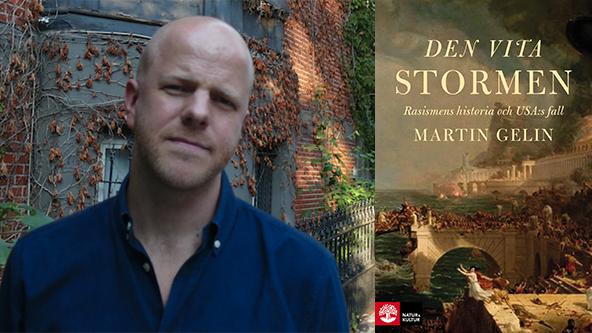
Martin
Gelin has worked as a journalist in the USA since 2001. He has written
several reportage books and was nominated for the August Prize for both
"The American Right" (2012) and "The Internet is broken - Silicon Valley
and the crisis of democracy" (2018), which was written together with
Karin Pettersson . Now he is current with "The White Storm: The History
of Racism and the Fall of the United States". Photo: Private
BOOK REVIEWS
No, the mob that stormed Congress in Washington in January 2021 did not consist of the people Hillary Clinton called
"deplorables" - the deplorables. The fighters at the Capitol were not
low-educated unemployed from the rust belt. The vast majority were villa
owners with top jobs – doctors, architects, engineers. Many were
self-employed who could give themselves time off from work. A group of
real estate agents from Dallas flew to Washington in a chartered private
plane. Less than fifteen percent of the occupiers were organized
right-wing extremists
This according to DN's US reporter Martin Gelin.
In his new book The White Storm - The History of Racism and the Fall of
America, he examines what four hundred years of slavery and plunder
have done to America. It is well-founded, often painful reading.
Gelin believes that
European – and also American – journalists present a false image of the
American working class. It's not made up of broad-shouldered
opioid-abusing miners who vote for Trump. Those who struggle for low wages are mostly black shop assistants and Hispanic cleaners who don't vote at all.
The
stormtroopers from the Capitol and Martin Gelin agree on one thing:
Democracy in the United States is urgently threatened. But Gelin sees
the threat - the "white storm" in the book's title - coming from above.
The seizure of power will not take place through civil war in the
streets but through decisions in the courts and the parliamentary
assemblies. The dismantling of democracy is already underway in
Republican states where the boundaries between constituencies are being
redrawn to make it harder to vote. Apolitical bureaucrats are replaced
with loyal party members.
According
to Gelin, racism is as fundamental a part of the history of the
American nation as the Pilgrim Fathers and the Declaration of
Independence. Thomas Jefferson, who formulated the famous statement that all men are created equal, was at the same time a slave owner himself, as was George Washington. Gel
goes through the protracted genocide of the indigenous people, the
slavery, the oppression of the Chinese, the deportation of the Japanese,
the privatized prison system, the falsification of history that hides
centuries of pogroms and murders. It's knowledgeable, it's important,
it's shattering reading – even if Gelin's need to highlight her rightful
anger at the state of affairs on every page of the book weighs down the
presentation a bit.
Racial
thinking and racism thus pervade the entire American society, as well
as, naturally enough, the resistance to racism. It is not a
straightforward story – the clash between black and white music in the
US, for example, has made the whole world a better place to live. The
one-sided and open oppression has another side: hatred and fear are
mixed with curiosity and attraction. When Thomas Jefferson wasn't busy
flogging slaves and formulating revolutionary truths, he fathered at
least five children with slave girl Sally Hemings (he freed the children on his deathbed, but not their mother).
The focus on racism sometimes makes the book a bit monotonous: Isn't there more to say about H L Mencken
than that he was anti-Semitic? Was it the breakthrough of the gangs
that led to the most dramatic reduction in crime in US history? Was the
monotonous Krikelin world in the residential suburbs really planned
exclusively so that the white population would not have new black
neighbors?
Interwoven with racism
in the United States lives the deep, originally religiously motivated
belief that the Creator rewards the rich for being morally superior
while the poor are poor because they are stupid and lazy.
I am reminded of a column I read years ago in the Miami Herald. Like the occupiers in Washington, the author—certainly a Republican—was convinced that a civil war in the United States was inevitable. However, there was nothing to worry about. His side would win, as long as the Americans who believed they could become rich outnumbered those who realized they would remain poor.

Inga kommentarer:
Skicka en kommentar