
Is Israel going to let two million Palestinians starve to death?
Wolfgang Hansson
This is a commenting text. Analysis and positions are the writer's.
Updated 19.26 | Published 17.06
Columnists
It is not difficult to understand that many Israelis call for revenge. But the State of Israel must nevertheless abide by the laws of war when striking back.
I don't know exactly what Israel wants to achieve with its blockade of Gaza but I hope the plan is not to let two million Palestinians starve to death.
Then Israel risks ending up in the same league as Russia when it comes to war crimes.
Israel's defense minister announced at the beginning of the week a total blockade of Gaza. Nothing is brought into the Hamas-controlled enclave. Not food, medicine, fuel, water or other necessities.
Now Israel says the blockade can be eased if Hamas releases the over a hundred Israelis held hostage, well aware that this will not happen.
The blockade has already had the effect of shutting down Gaza's only power plant because it has run out of fuel.
This means that all of Gaza is without electricity. Many hospitals and other places have diesel generators, but since no new fuel is coming in, they too are soon at a standstill.
The already overcrowded morgue coolers will no longer work. A number of medical equipment in hospitals can no longer be used. Patients die.
Residents will soon be without clean drinking water because electricity is needed to pump the water up. Gaza receives part of its water from facilities that convert the salt water of the Mediterranean Sea into drinking water. But they require electricity to work.
Nor do the water treatment plants work without electricity. The sewage will go directly into the sea, untreated.
Gaza imports much of its food. It is unclear how large stocks are in Gaza, but sooner or later the food will run out. Many of the residents are poor and will not be able to afford to buy food when prices rise due to the shortage. These are some of the immediate consequences of Israel's total blockade.
Palestinians search for survivors after an Israeli attack in Gaza on Thursday.
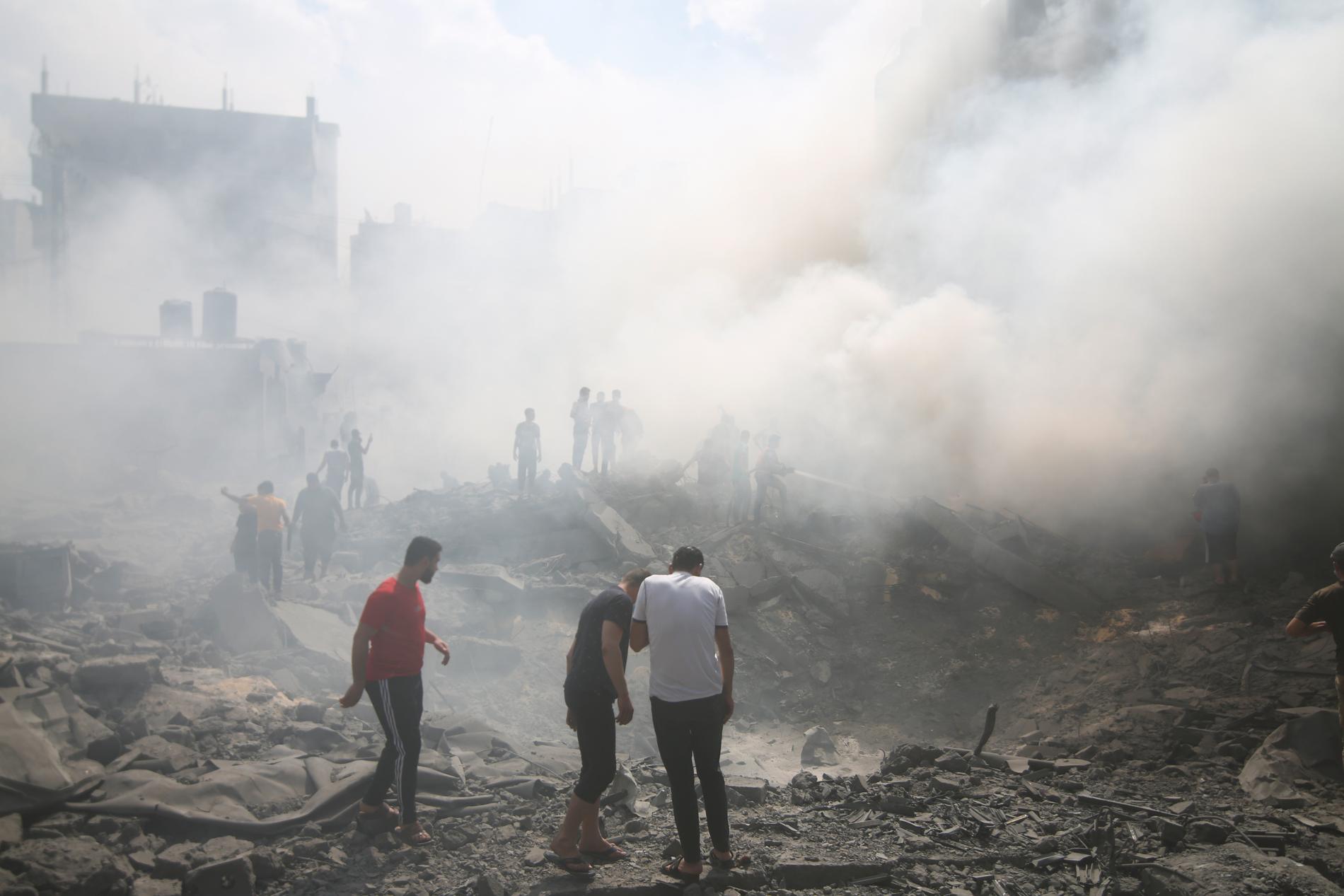
Palestinians search for survivors after an Israeli attack in Gaza on Thursday. Photo: Hatem Ali / AP
Trapped
One can of course argue that the Palestinians have themselves to blame. It is Hamas that put its population in this situation with its record deadly attack on Israel.
However, this does not absolve Israel of its responsibility to protect the civilian population when it engages in acts of war.
Israel has repeatedly in recent days called on people living near Hamas buildings to flee. The problem is that the people of Gaza have nowhere to run. They are surrounded by Israel's closed border on two sides. The sea on one side. To the south is the border with Egypt, which is closed to anyone who does not have special permission to cross.
Many Gazans have tried to get to the border with Egypt but were forced to turn back when Israel carried out heavy bombing on its side of the border.
The same bombings have prevented supplies from being driven in from Egypt.
The absolute majority of Gazans are trapped in the small territory that is half the size of New York City. They have nowhere to go.
There are no shelters in Gaza. Except the ones Hamas has built for their own. Instead, over 300,000 Gazans have already taken refuge in schools and other institutions run by the United Nations in the hope that Israel will refrain from bombing them.
Blocked illegal
Israel has long had a blockade against Gaza where certain goods are prohibited from entering. Especially things that could be used by Hamas to build weapons or tunnels. But today's total blockade is something completely different
The UN chief and other leaders have already condemned Israel's blockade as illegal.
"Cutting off water, electricity and food to a large civilian population is a violation of international law," says EU foreign affairs chief Joseph Borrell.
US President Joe Biden yesterday reminded Prime Minister Netanyahu in a phone call that "in all anger and frustration" Israel is still "bound by the laws of war".
The question is whether Israel, blinded by hatred, is listening.
Prime Minister Netanyahu's words "what we will do to the enemy in the coming days will echo for generations", makes me doubt.
Netanyahu and his defense leadership face a difficult dilemma. After the massacres that took place in southern Israel, the population demands a firm response against Hamas.
At the same time, Israel's friends in the West expect Israel's revenge to be proportionate.
It is the terrorists in Hamas that must be eliminated, not the entire Palestinian population.
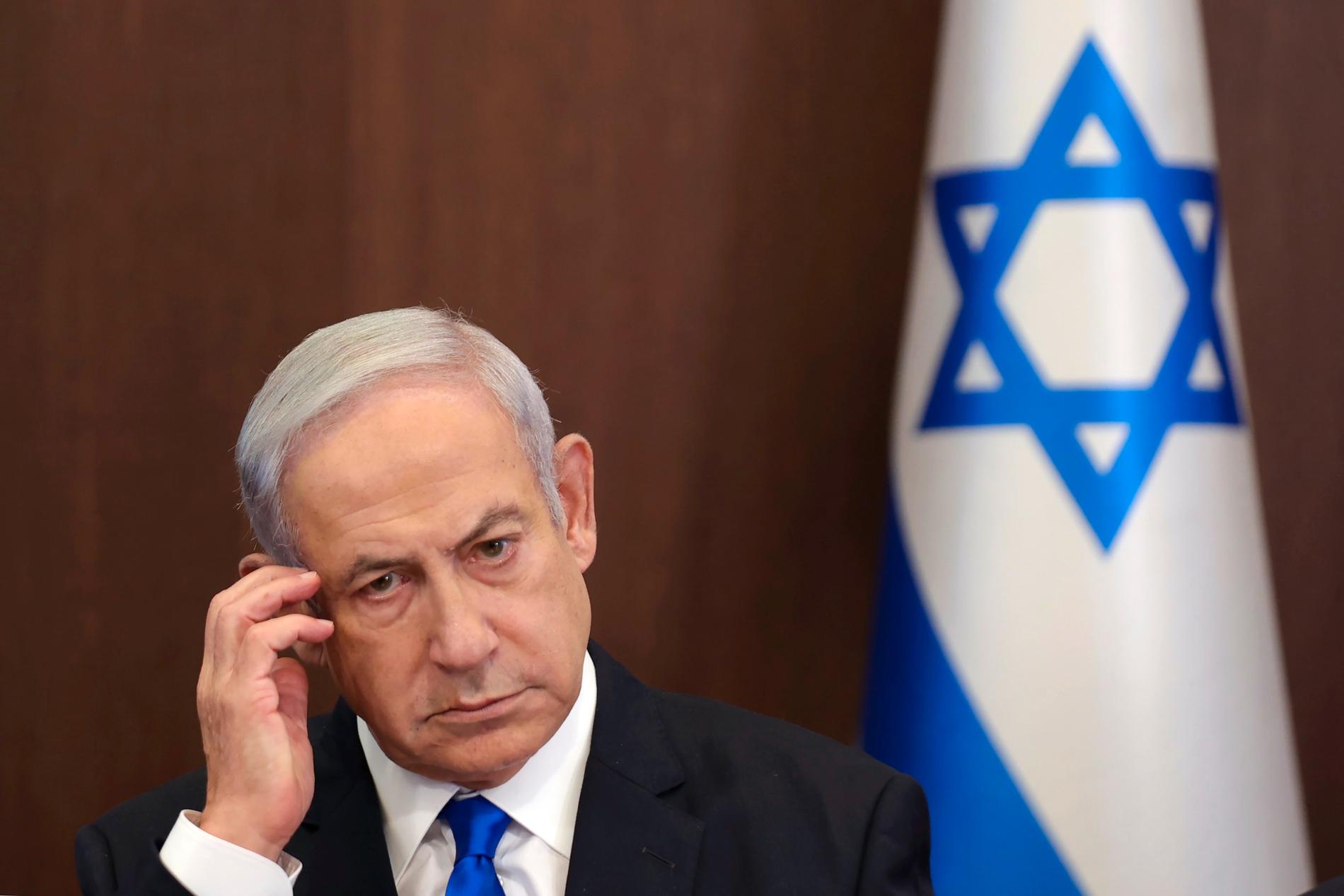
Israeli Prime Minister Benjamin Netanyahu. Photo: Abir Sultan / TT
Guerrilla warfare
But Hamas has entrenched itself in an extensive system of underground tunnels in Gaza. Israel cannot achieve that with its bombings. A ground offensive is required.
In a guerilla war, the risks increase avalanche-like for large Israeli losses, even though they are militarily far superior to Hamas. But also because the civilian population becomes targets.
If Israel crosses a border, unclear exactly where it crosses, it means that Iran-backed Hezbollah is likely to open a second front on Israel's northern border.
Right now, Israel has most of the world's sympathy on its side because of Hamas' mass murder of Israeli civilians. But the mood can change very quickly if Palestinian women and children fall victim by the hundreds to Israeli bullets.
Israel's challenge is to respond to a war crime without committing one itself.

Inga kommentarer:
Skicka en kommentar