
Columnists
The Israel/Palestine conflict
That is why it is so hopelessly difficult to end the conflict
Wolfgang Hansson
This is a commenting text. Analysis and positions are the writer's.
Published 20.40
How Hamas terrorists can cold-bloodedly massacre women and children in their beds is impossible to understand. Just like when Israeli settlers go wild in Palestinian villages.
But that this breeds hatred is easier to understand. A hatred that makes it hopelessly difficult to see an end to this conflict that has been going on for three quarters of a century.
Hate is the fuel in this battle over who has the right to a piece of land that is slightly smaller than Småland.
When the UN approved the formation of a Jewish state in 1948, it was not the risk of simultaneously planting a time bomb that was in focus. Rather, the shame of having allowed Hitler to exterminate six million Jews.
For those on both sides who want to maximize their own demands by keeping the strife alive, it is necessary to constantly fuel the hatred in the same way that one must constantly add new fuel to keep a fire alive.
One can suspect that Hamas' bestial violence this time is a deliberate tactic to make Israel overreact in its response.
A large number of dead Palestinians increases the hatred of Israel among the Palestinians and makes it even more difficult for Arab countries like Saudi Arabia to establish friendly relations with Israel or to just sit on the sidelines and watch. Decisive for whether the war is extended will be how brutally Israel proceeds.
The question is whether the Jewish nation in the hectic situation is able to keep a cool head and not fall into Hamas's trap.
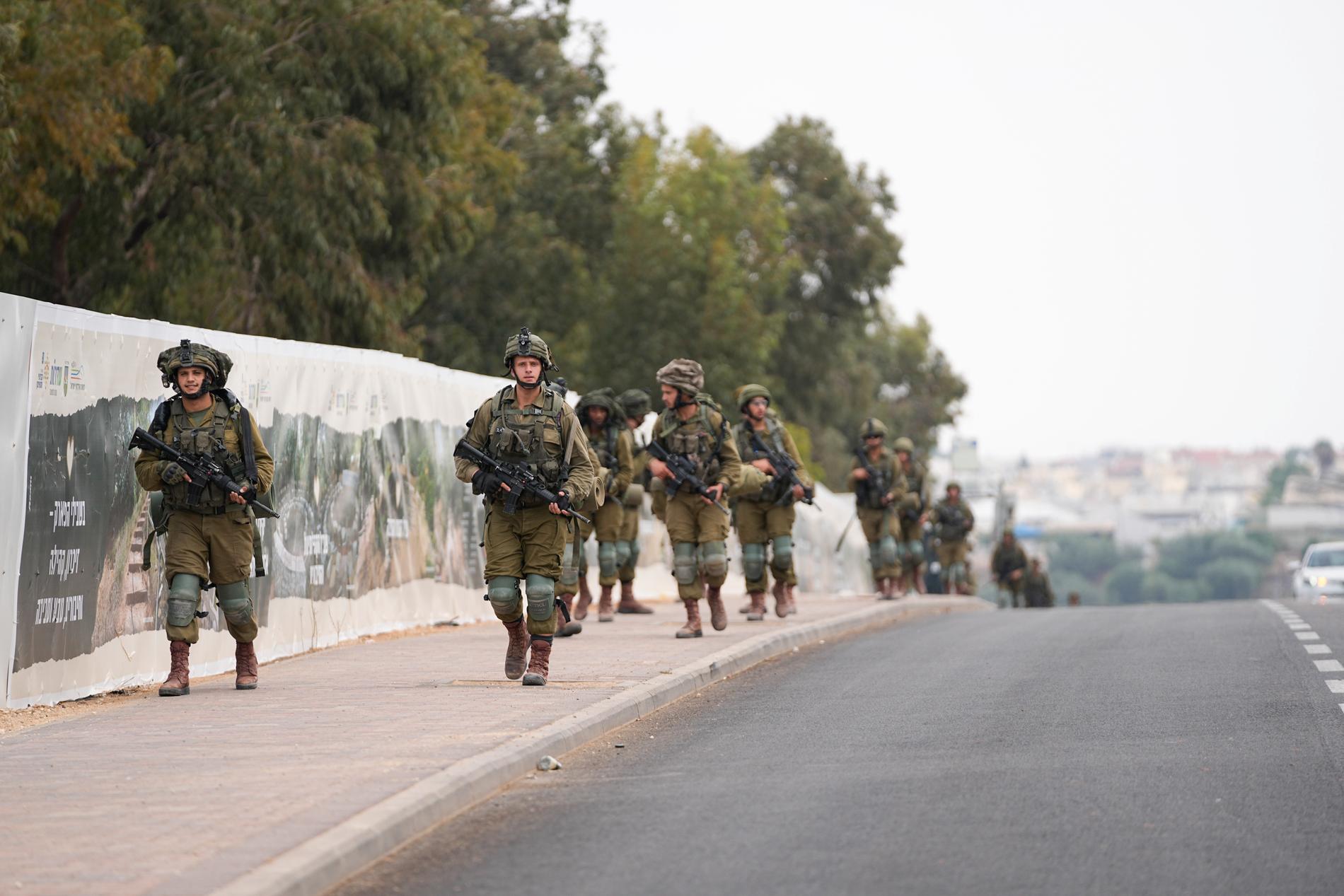
Israeli soldiers arrive in Sderot, a town near the Gaza Strip, on Wednesday, October 11. Photo: Ohad Zwigenberg / AP
Since 1986, I have made a large number of reporting trips to Israel, the occupied West Bank and Gaza
I have listened to the hatred from both sides as they recounted the wrongs and abuses they were subjected to.
I have heard the intransigence of Palestinian parents who have had their children shot by Israeli soldiers
and Israelis who have lost loved ones in acts of terrorism.
For short periods, violence and hatred have been mixed with attempts to bring about peace.
In 1993, hope was raised when, in the Oslo Accords, Israel exchanged recognition from the PLO for giving the Palestinians control over parts of the West Bank and Gaza.
In 2000, it looked like Bill Clinton would succeed in brokering a final peace agreement in which the Palestinians would receive over 90 percent of the West Bank and East Jerusalem as the capital of a Palestinian state.
But at the last moment, the legendary PLO leader Yassir Arafat did not dare to make the painful concessions that were required. There, a golden moment to resolve the conflict went up in smoke.
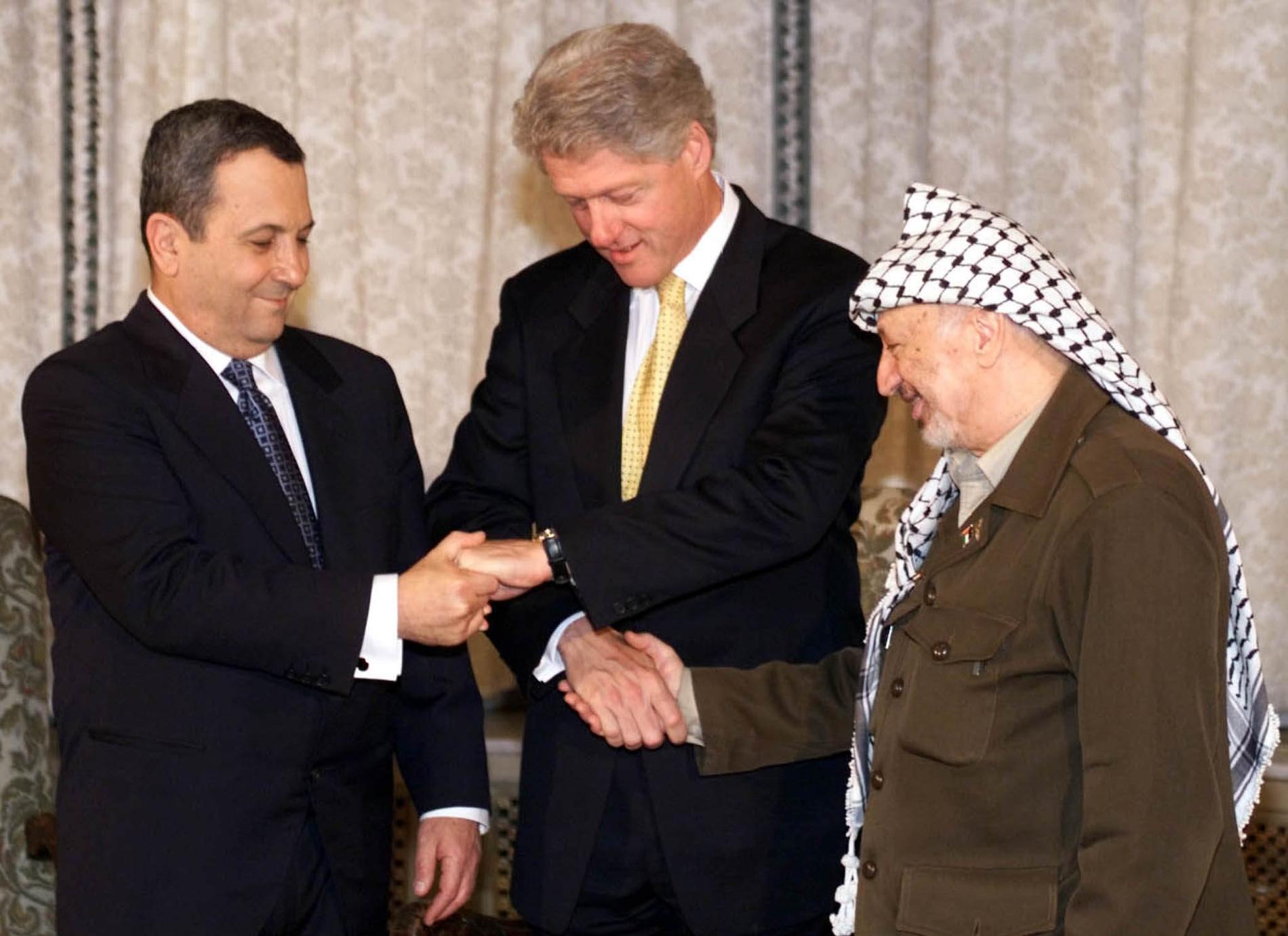
Israel's then prime minister Ehud Barak with Bill Clinton and PLO chairman Yasser Arafat November 2, 1999 before a meeting on the peace process in the Middle East. Photo: AP / AP
Since then, a peace agreement has never been close.
Instead, Israel and especially the West Bank and Gaza have been characterized by a low-intensity war-like state in which the Palestinian population of the West Bank is harassed daily by the Israeli army who fear militant activists. The next act of terror inside Israel is never far away.
The hatred and fear of the other party is constantly simmering beneath the surface.
A decisive factor is that the extremists are now allowed to dominate on both sides.
A majority of Palestinians are prepared to accept Israel's existence if they get their own state. But for Hamas, branded as a terrorist, Israel is a red flag that must be wiped off the face of the earth. With such an opponent, it is difficult to negotiate peace.
Iran is behind Hamas. Iran is now one of the few countries that openly wants to erase Israel from the world map. But with their pious support of both money and weapons to Hamas and Hezbollah in southern Lebanon, they contribute to the highest degree to keeping the hatred alive.
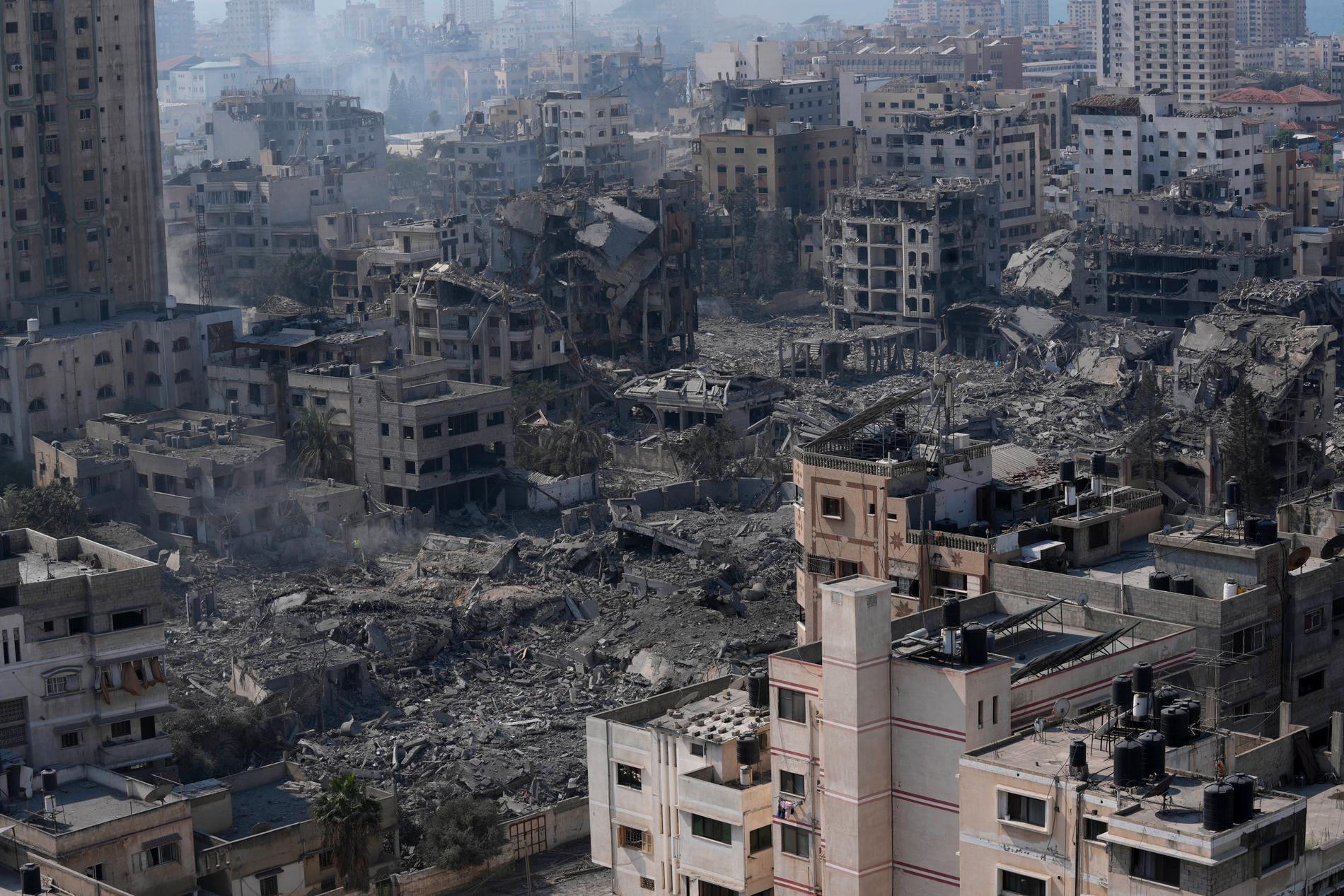
Destruction after Israeli aerial bombardment in Gaza City. Photo: Adel Hana / AP
On the Israeli side are the settlers who believe they have a biblical right to the West Bank and are prepared to use armed force to prevent the formation of a Palestinian state. The settlers were previously seen as extremists by many Israelis. Today they sit in the government.
The question both sides have to ask themselves is whether they should continue to kill each other forever and live in constant insecurity or whether they should try to agree on how to live side by side. None of them are going to take their pick and pack and disappear.
So far, unfortunately, the forces that would rather keep hostilities alive than try to bury the hatchet have always won.
In today's feeling of hopelessness, it is still worth remembering that Israel made peace with both Egypt and Jordan, which attacked Israel in 1967 and 1973.
The United Arab Emirates and Bahrain established diplomatic relations with Israel in 2020. More Arab states are moving in the same direction.
Now the hatred is being built up again with today's war, which many believe will end with a humanitarian disaster in Gaza. But the hope is that in the long run the pressure will increase on both Israel and the Palestinians to end the eternal spiral of violence and sit down at the negotiating table.

Inga kommentarer:
Skicka en kommentar