
Columnists
Nuclear weapons
Dangerous calls for nuclear weapons in Europe after Trump's overtures
Wolfgang Hansson
This is a commenting text. Analysis and positions are the writer's.
Published 17.19
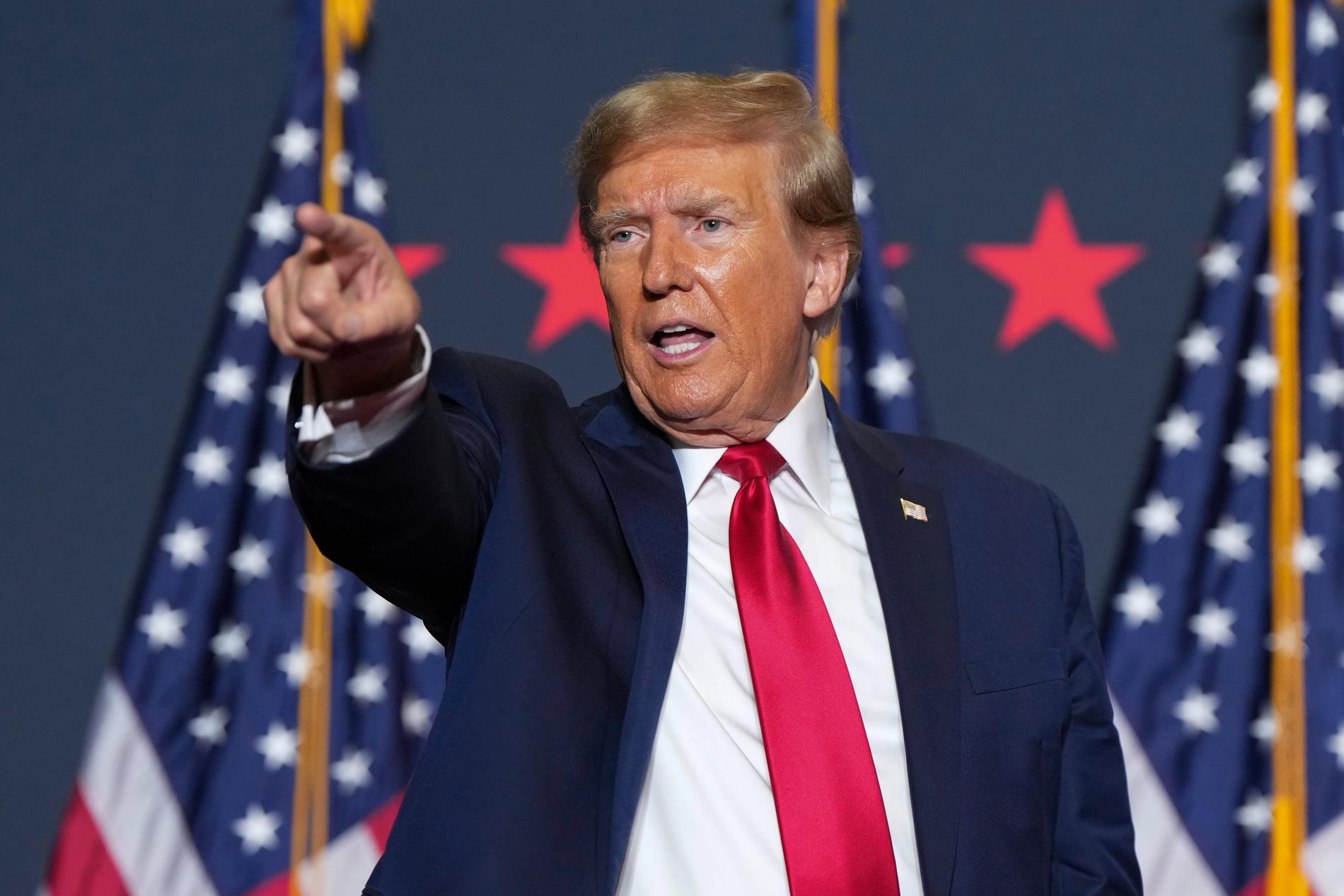
Trump at a campaign event on Wednesday. Photo: David Yeazell/AP
Trump's NATO statements have created panic among European governments.
The risk of a strong overreaction is obvious.
A number of politicians have already started talking about Europe having to acquire its own nuclear weapons.
A worrying development to say the least.
Trump's statement at a campaign rally that the countries that are members of NATO must pay their fair share of the military alliance's defense should have come as no surprise.
Nevertheless, Europe's leaders seem to have been taken to bed and are now desperately looking for solutions in case Trump is re-elected president this fall.
The issue will be high on the agenda at the international security conference in Munich starting on Friday.
What has created extra concern is Trump's casual statement that he would even encourage Putin to do "whatever the hell he wants" with the NATO countries that do not spend at least two percent of their GDP on defense. A questioning of the collective defense guarantee which is the cornerstone of the military alliance.
But Trump basically said nothing new. Throughout his presidency, he threatened that the US would leave NATO. In practice, on the contrary, the USA strengthened its participation in NATO.
His almost anecdotal passage about NATO at the campaign rally in South Carolina was primarily aimed at his own voters who love it when Trump plays the role of the tough negotiator who forces his counterparts to make concessions.
It is no wonder that Europe's leaders perceive his words as irresponsible and worrying but they should have gotten used to it.
Instead, the panic seems to be spreading. Leader after leader is standing up and saying that Europe must take greater responsibility for its own defense if the superpower can no longer be trusted.
That's probably exactly the reaction Trump wants. With his threats, he wants to force European countries to invest more in their defenses and now everyone does as he wants.
Some even go further than that.
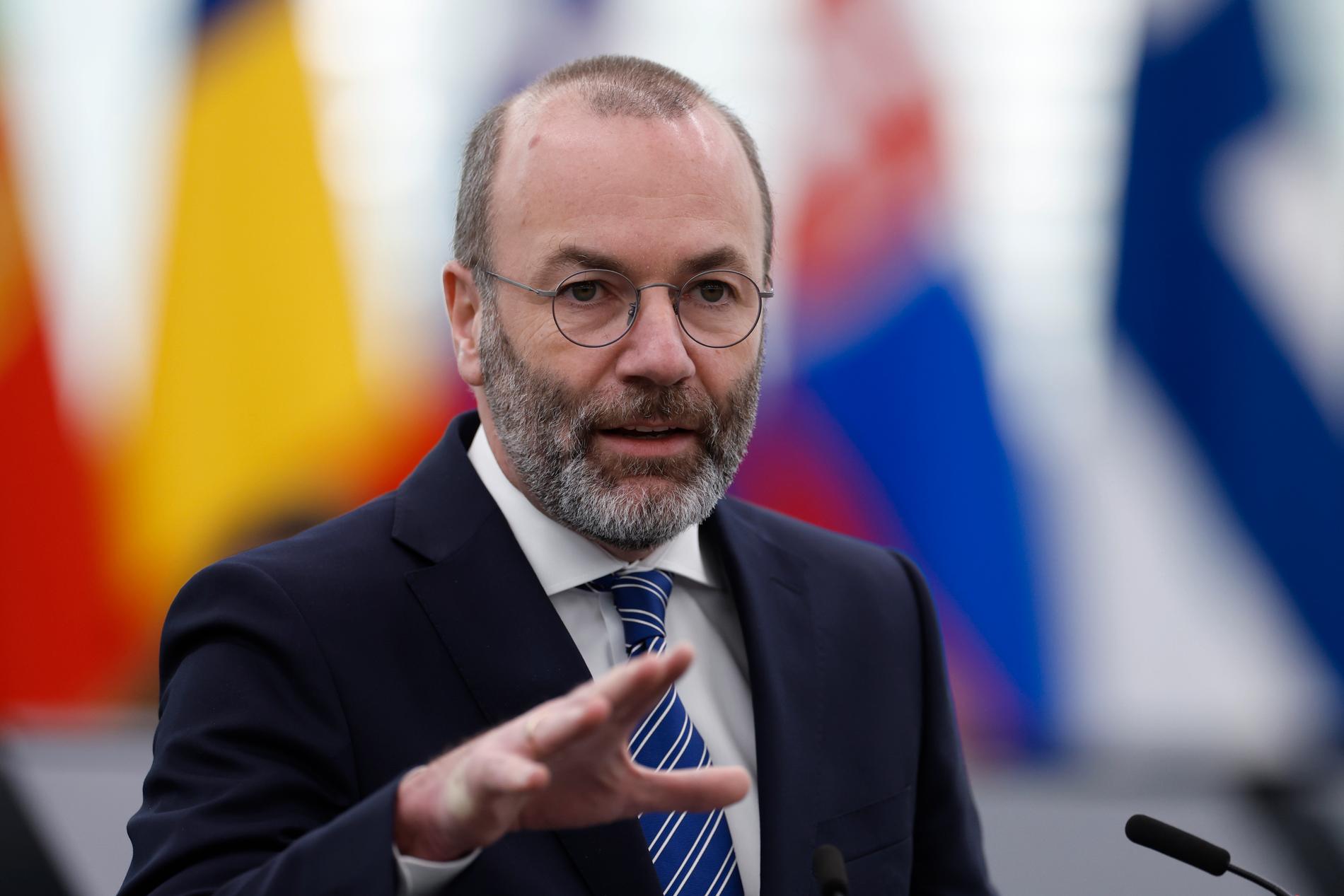
Manfred Weber. Photo: Jean-Francois Badias/AP
The German conservative politician Manfred Weber, leader of the powerful EPP group in the European Parliament, thinks that Europe must consider whether it should not acquire its own nuclear weapons.
Today, Europe is protected by the US nuclear umbrella. Nuclear weapons are stored at US military bases in Germany, Belgium, Italy and three other countries.
Weber and others fear that Trump will not only pull the United States out of NATO but also withdraw nuclear weapons. Which would reduce Europe's deterrence against an enemy like Russia.
He is not the only German politician who thinks along those lines. Finance Minister Christian Lindner has raised the issue of a European nuclear umbrella in a debate article.
Even the Social Democrats' top candidate in the EU elections, Katarina Barley, thinks the issue must be discussed because Trump's statement means that the US guarantees "can no longer be trusted".
France is today the only EU country that has nuclear weapons. But they are not part of NATO's defense. President Macron has several times in recent years offered Germany a "strategic dialogue" on how they could be used in a European perspective. Until now, Germany has been uninterested.
Great Britain, which is now outside the EU, is the only other country in Europe that possesses nuclear weapons.
That the discussion about a European nuclear umbrella started in Germany is both strange and interesting. Before Russia's invasion of Ukraine, such proposals would have been completely unthinkable. Now the pendulum seems to have swung fully in the other direction and all inhibitions have dropped in that post-World War II so pacifist Germany
If Germany were to produce its own nuclear weapons, it would be a violation of a series of agreements that the country signed, including in connection with German reunification. Add to that that Europe has a leading role in trying to stop countries like Iran from developing nuclear weapons.
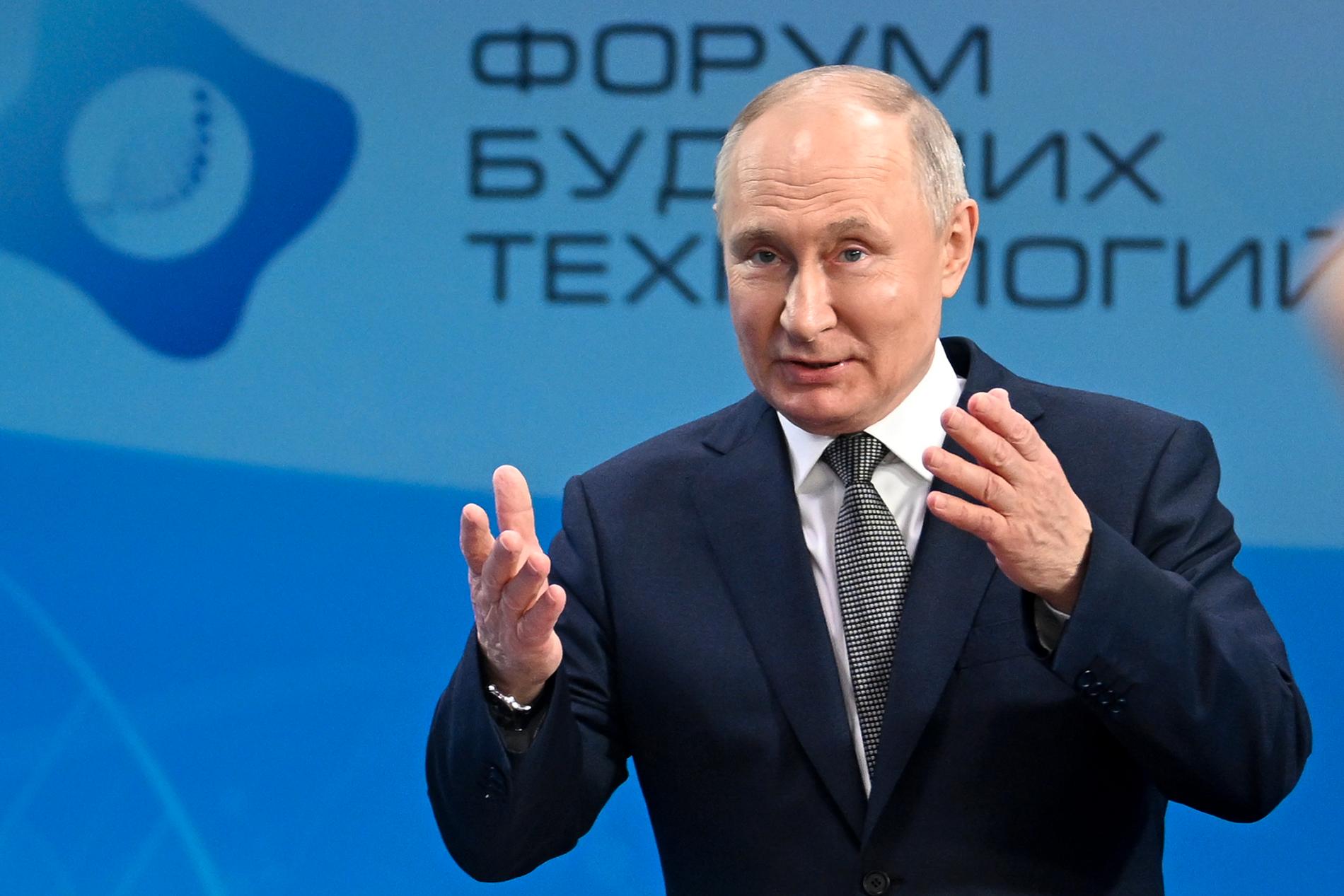
Russian President Vladimir Putin. Photo: Kristina Kormilitsyna/AP
The question is, of course, how Russia would react to such a development.
In that case, a more likely solution is to create a nuclear umbrella for Europe from the several hundred nuclear warheads that France and Great Britain already possess.
But how credible would such a thing be? Who would be responsible for pushing the button?
Just like German Defense Minister Boris Pistorius, you can think that many politicians should calm down.
- I want to warn against such irresponsible talk just because Trump made these statements, he says.
Of course, it makes sense to be prepared, but just as he points out, Donald Trump is not even the Republican presidential candidate yet (although it will take a lot for him not to be). Much less elected the next president of the United States.
Should he become one, it is still not very likely that the US would leave NATO, despite his threats. There are US laws that make it difficult, if not impossible, for Trump to order a NATO withdrawal on his own initiative. He must have the Congress with him. At the moment, it is out of the question that a majority of the US electorate would vote for a NATO withdrawal.
We are in a situation where the world has in a short time begun to equip itself to levels unthinkable in peacetime. Putin has given us good reasons for that. But there is also a risk of overmilitarization.
If Europe starts talking about acquiring its own nuclear weapons, we risk an armament spiral of epic proportions.

Inga kommentarer:
Skicka en kommentar