Japan's Imperial Dilemma: Reform or Downfall
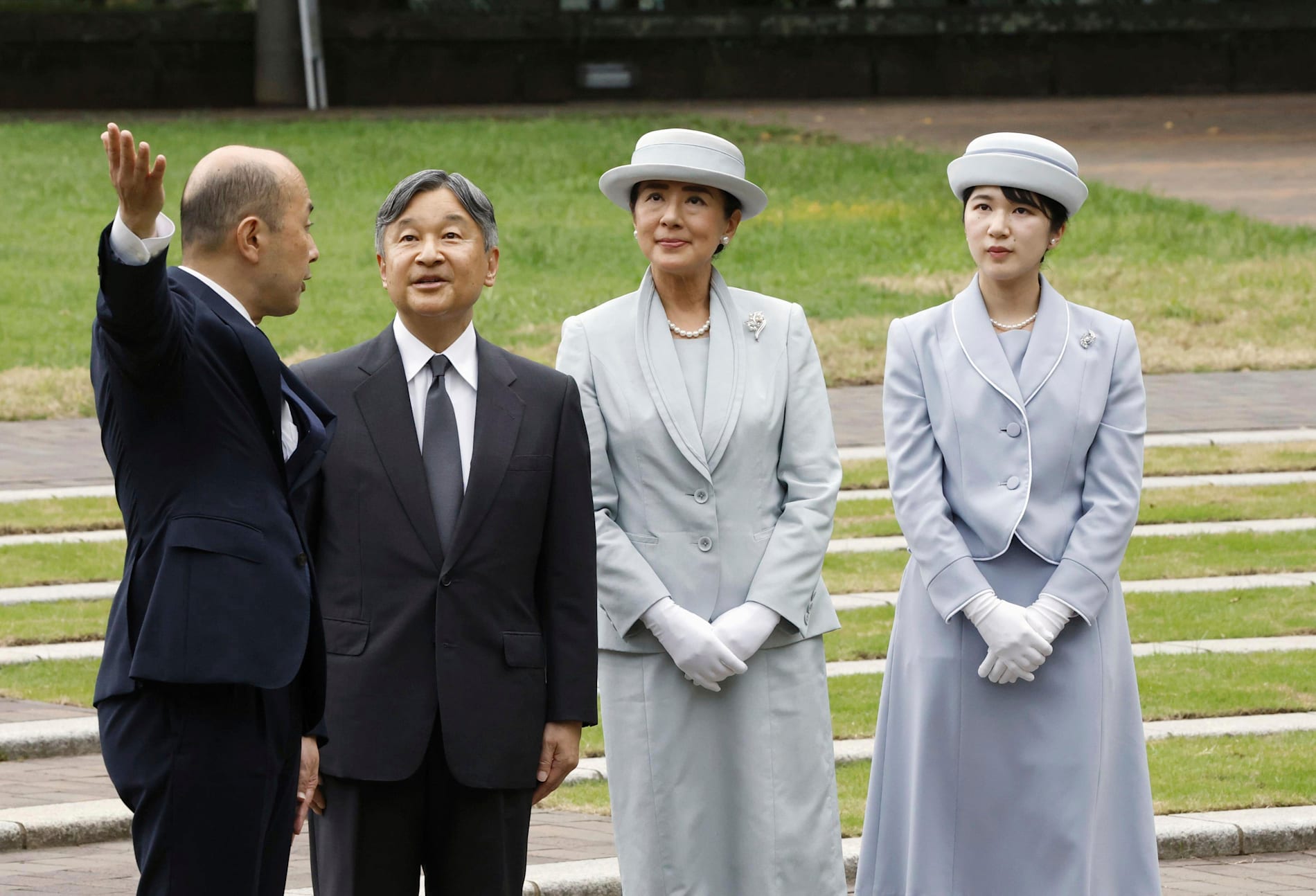


– Aiko! Aiko! Aiko! Aiko!
The cries of praise for the Japanese princess drown out the cheers for her parents, the Japanese emperor and queen, as the family visits Nagasaki.
But the people's hopes of seeing Aiko as empress are lost unless Japan resolves a deeply divisive question: should female succession be allowed – or must the world's oldest monarchy die out?
Since Princess Aiko made her public debut in 2021, her popularity has skyrocketed. As Emperor Naruhito's only child, she would have been next in line to ascend the Chrysanthemum Throne, as Japan's imperial seat is called, if it weren't for the country's constitution that disqualifies her because she is a woman.
"Never allow"
- We want her as the future monarch, says Mari Maechira, who has come to the Peace Park in Nagasaki to catch a glimpse of the princess, to the AP.
She is not alone. Several surveys show that around 80 percent of the population wants the country to have a female line of succession. But that would require a constitutional amendment, something that the country's conservatives oppose.
Not least, the country's Prime Minister Sanae Takaichi, the first woman in office, is against female succession.
- We must never allow a female emperor or an emperor from a female lineage, Takaichi said in an interview with Japan Today as recently as October of this year.
Aging and shrinking
But it is not just public opinion that makes the conservative line difficult to pursue.
Just as Japan’s population is aging and shrinking, the imperial family is in decline. In 30 years, it has almost halved to 16 members. Next in line to the throne are the emperor’s brother Fumihito, 60, and his son Hisahito, 19 and unmarried.
“Who wants to marry him? If someone does, she will be under enormous pressure to give birth to a male heir while performing official duties with superhuman capacity,” Nagoya University professor Hideya Kawanishi told the AP.
Male supremacy
The United Nations has said that Japan’s current constitution is an obstacle to gender equality in general in the country, but the government has dismissed the criticism as “regrettable” and “inappropriate.”
“Although it is not expressed directly, it is clear that the government advocates male supremacy. That is their ideal image of society, says Professor Kawanishi.
Visitors to the Peace Park in Nagasaki have a different idea of which path the country should take.
– I have always hoped that Princess Aiko will be crowned. I like everything about her, especially her smile, it is so comforting, says visitor Setsuko Matsuo, to the AP.
FACTS
Japan
Japan is an island nation in East Asia and has about 123.9 million inhabitants.
The country is a constitutional monarchy with the emperor as head of state and has a parliament that is governed democratically.
The economy is the world's fourth largest and the country is a leader in the electronics and automotive industries, with strong development after World War II.
Japan has the world's oldest population, with around a third of the population being 65 years or older.
This poses major challenges for society as fewer people of working age will have to support a growing group of elderly people, which hinders economic growth and increases pressure on welfare.
Source: Swedish Institute of International Affairs, UN– Aiko! Aiko! Aiko! Aiko!

Inga kommentarer:
Skicka en kommentar