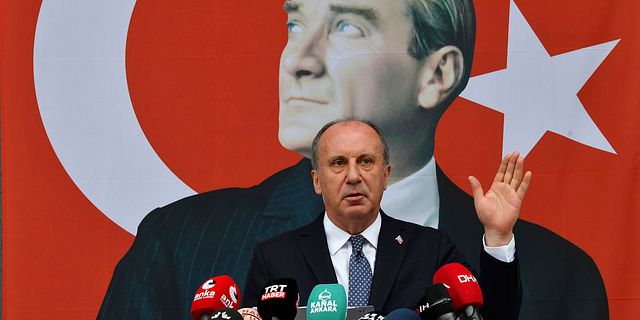
Muharrem Ince. AP
"Shock move" before the election - the sudden defection increases the chances for the opposition
The Turkish presidential candidate Muharrem Ince withdraws from the presidential election, several media reports. AFP calls Ince's resignation "a shock move" that increases the opposition's chances of victory in the first round on Sunday.
Ince, who has been one of four candidates, received 2.2 percent support in the heavy opinion poll from the institute Konda today.
President Erdogan's main rival Kemal Kilicdaroglu recorded support of 49.3 percent in the same poll, just short of the majority required to decide the election in the first round. Erdogan lags behind in the survey with a support of 43.7 percent.
Ince announced his decision after a smear campaign on social media.
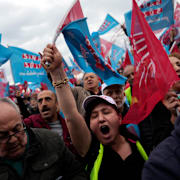
Election meeting for Kilicdaroglu. Khalil Hamra / AP
Lead for Erdogan's rival in heavy polling ahead of the election
Opposition candidate Kemal Kilicdaroglu has the lead ahead of Sunday's election in Turkey. President Erdogan's main rival receives 49.3 percent support, according to a recent survey by the heavy opinion institute Konda. The sitting president notes a support of 43.7 percent.
Kilicdaroglu, who has the support of a broad coalition, wants to rule the country in a more pro-Western direction with promises of increased democracy. Erdogan's party has instead run on traditional family values and promises of jobs, while he has accused the West of trying to force him out.
If no candidate gets a majority, the election is decided in a second round.
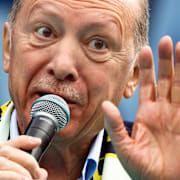
Turkish President Erdogan. Ali Unal / AP
Analysis: "EU leaders have a good reason to like Erdogan"
There are many reasons why Western Europe dislikes Turkey's incumbent President Erdogan and keeps its fingers crossed for his rival Kemal Kilicdaroglu, writes Politico's Suzanne Lynch. However, there is one clear thing that gives the EU leaders reason to miss him.
"The fact that Erdogan was in power, and took the country in an increasingly authoritarian direction, has enabled the EU to duck the issue of Turkish EU membership," she writes and states that that dynamic may now change.
Erdogan's AKP party has long dominated the Turkish diaspora, but something is about to happen, writes researcher Gözde Böcü in an analysis in Foreign Policy.
The 2016 military coup attempt led to new groups going into exile, including intellectuals, members of the Kurdish group and fed-up secular youth.
"In this year's elections, these changes and increased activism could mean that Turkish voters abroad may finally give some weight to Erdogan's challenger, Kilicdaroglu."

Inga kommentarer:
Skicka en kommentar