Russia's invasion of Ukraine
Säpo on Russian attacks in Europe: "Taking greater risks"
Knut Sahlin Ekberg
Updated 12.17 | Published 12.07
Intelligence services in Europe are now warning their governments of Russian attacks on European soil.
According to information provided to the Financial Times, Russia is planning arson and bombings.
- We see a Russia that takes greater risks to achieve its goals, says Fredrik Hultgren-Friberg at Säpo.
Quick version
Russia is actively planning bombings, arson and attacks on infrastructure through third parties on European soil, according to information provided to the Financial Times.
Now governments in Europe have received warnings from their security services.
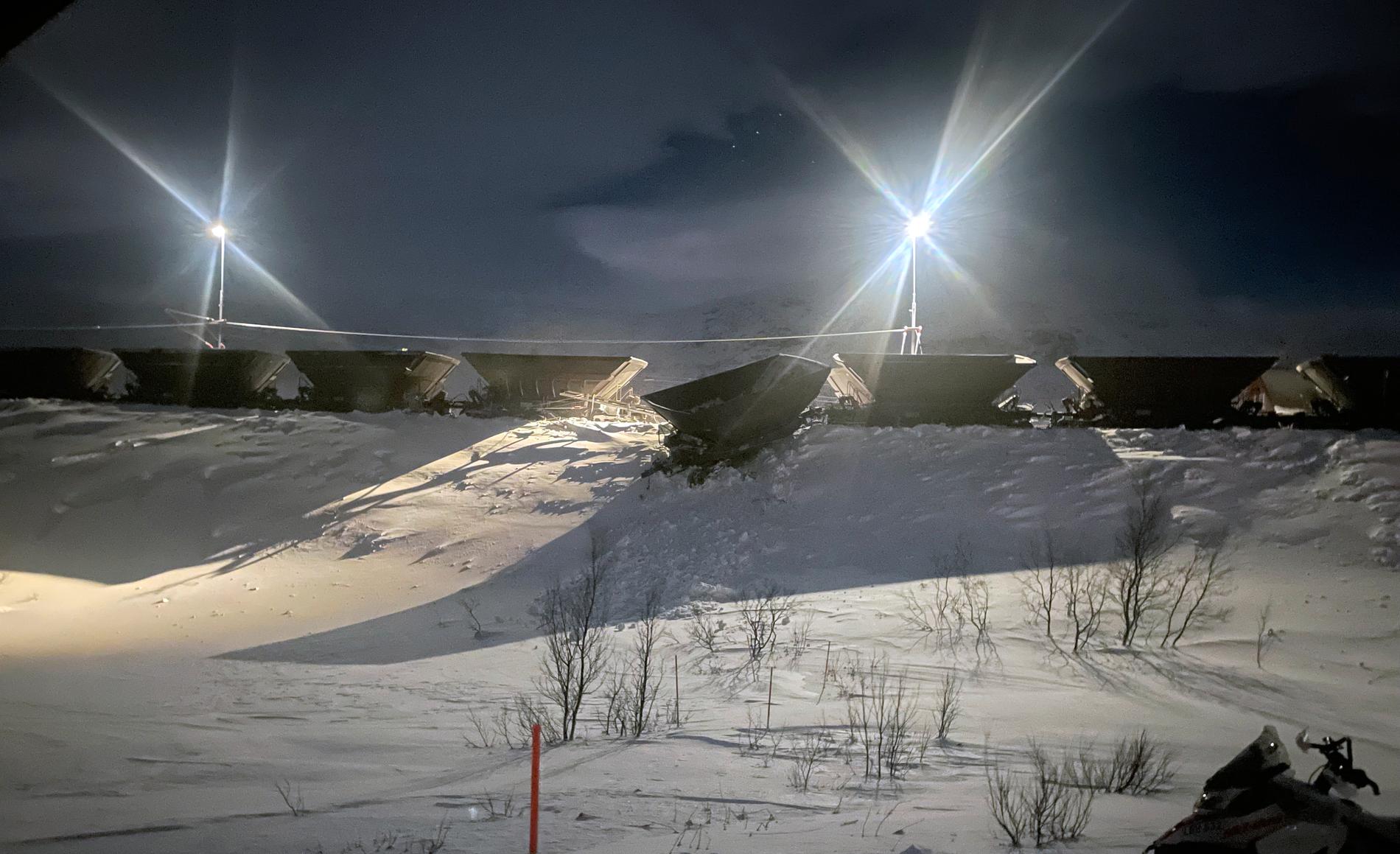
The Financial Times writes that the Swedish Security Police is investigating two train derailments on the Malmbanan as an attack by a foreign power.
In February, an empty ore train derailed on its way to Kiruna. It was in exactly the same place that another ore train derailed last December.
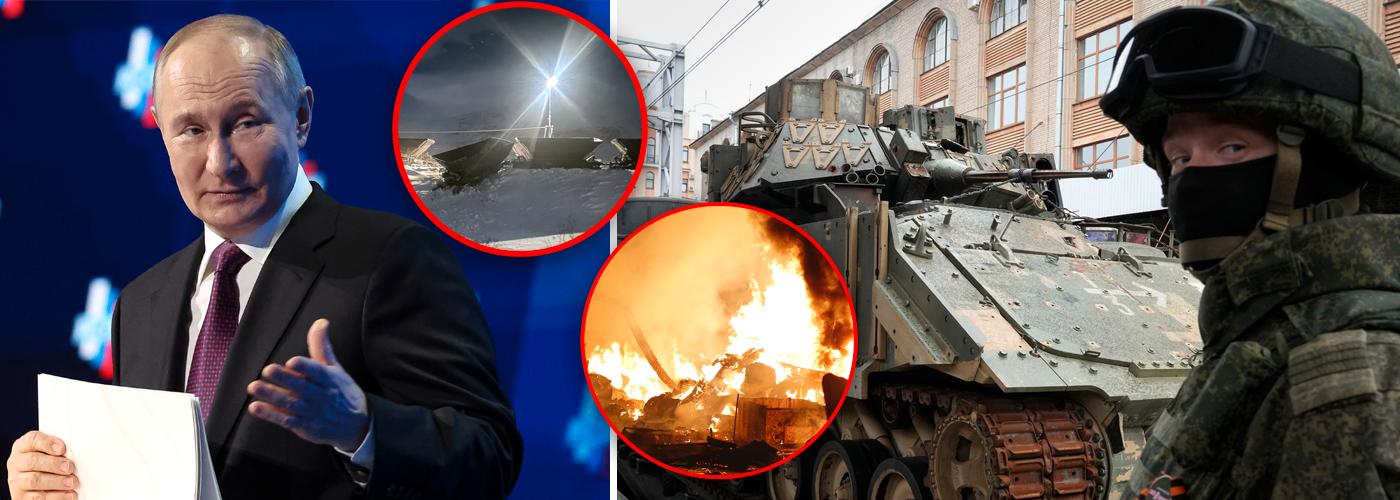
At a press event in Moscow on Saturday, pictures were shown of Russian soldiers posing in front of captured Ukrainian tanks.
The ore line has derailed twice in the space of three months. An investigation is being led by the police - and Säpo has been involved.

1 / 2Photo: Dmitri Lovetsky / AP
Säpo: Pure war preparation measures
- In events where it cannot be ruled out that a foreign power is behind attacks, Säpo cooperates with the police. And the incident at Malmbanan is no exception. That's what Fredrik Hultgren-Friberg, press spokesperson at Säpo, says.
He notes, like the other intelligence agencies in Europe, that Russia is becoming increasingly aggressive. But also carelessly.
- We see a Russia that takes greater risks to achieve its goals. But I cannot go into details about specific events, he says.
Although he does not want to comment on details, Säpo sees that Russia is engaged in purely war-preparatory measures.

- Everything from mapping Swedish military capabilities, to preparation for sabotage all the way to disinformation and influence campaigns.
Russia is becoming more comfortable
Other cases, where influence from a foreign power cannot be ruled out, have also taken place in Sweden recently, according to Fredrik Hultgren-Friberg. But he does not want to comment on details about them.
Russia has become increasingly comfortable with operations on European soil. This is according to the head of the German security service, Thomas Haldenwang.
- We assess that the risk of state-controlled acts of sabotage has increased significantly, he says to the FT.
The statement comes just days after two German-Russian nationals were arrested on suspicion of planning an attack on military targets.
Joakim Paasikivi, lieutenant colonel at the Norwegian Defense Academy, explains that the threat has been present for a long time.

Joakim Paasikivi is a lieutenant colonel at the Norwegian Defense Academy. He believes that Russia has increased its activity. Photo: Jerker Ivarsson
"Has escalated in various ways"
He points to some concrete examples: sabotage against ammunition warehouses and factories in Bulgaria and the Czech Republic, assassination attempts on dissidents in Sweden and the well-known cases of poisoning poisoning in Great Britain.
But, like the other viewers, Joakim Paasikivi sees that Russian activity has increased overall.
- And it has escalated in different ways. Not least with GPS interference over the Baltic Sea. Russia is trying to establish a new normal where they are more active, he says.
It is not known whether more attacks against Sweden are to be expected, but it cannot be ruled out.
- In a further tightened situation where Russia feels squeezed, there is an interest in limiting the West's ability in general, and we are part of that. Not particularly singled out, but an opponent.
On Thursday, NATO said it is concerned about increasing "malicious activity on allied territory" from Russia - and that it is stepping up its work across the continent, the FT reports.
Russia, in turn, says it has no plans to escalate the conflict with NATO - he has denied rumors that


Inga kommentarer:
Skicka en kommentar