
The Riksbank
How many nurses do you get for 43,700 million?
Andreas Cervenka
Reporter and economic commentator
This is a commenting text. Analysis and positions are the writer's.
Updated 15.21 | Published 14.41

At the same time, the state must push to SEK 43.7 billion to cover losses after headless speculative deals at a state authority.
The Riksbank's fiasco must have consequences.
"The Riksbank proposes that equity be restored to the basic level of the law".
That's what the not-so-brave headline of the press release that the Riksbank sent out on Tuesday reads.
The news was certainly expected but no less spectacular for that.
Behind the boring language hides one of the biggest blunders made in the authority's 356-year history.
At the turn of the year, the equity in the Riksbank, which ultimately belongs to the Swedish people, amounted to minus 2 billion kroner.
For a private bank, that would have meant bankruptcy a long time ago.
In order to meet the law's requirements, the Riksbank asks the Riksdag to push for 43.7 billion in new healthy capital. It will burden the budget, just as if the state borrowed the money.
How much is 43.7 billion really?
If an unauthorized substitute in math were to task his students to silently count up to 43,700 million, four seconds per number, it would take them 5,500 years away.
A pile of 43.7 billion in two hundred notes weighs about 200 tons, or as much as can fit in ten of the defense transport aircraft Lockheed C-130 Hercules.
43.7 billion corresponds to one year's salary costs for 68,000 nurses or 74,000 primary school teachers.
The amount is seven times more than the 6 billion that the government recently said it would like to send to the economically depressed regions in the spring budget.
43.7 billion is also roughly the same as the state's aid budget and a third of what the armed defense is estimated to cost this year.
The money would also be enough to renovate Prime Minister Ulf Kristersson's gym at Harpsund. 90,000 times over.
In short: it would have been possible to do much better things for 43.7 billion than to waste them.
Which is what the Riksbank has done.
Not because there is so much about that in the press release.
It appears under the heading "background":
"The Riksbank reported a loss in 2022 which was due to interest rates rising sharply in both Sweden and the rest of the world that year due to rapidly increasing inflation".
Just a little headwind. Can happen to anyone.
The truth is that the loss, of a staggering 81 billion, was due to the Riksbank buying bonds for a total of around 1,000 billion kroner, first between 2015 and 2019 and then during the pandemic.
The purchases took place at record low interest rates, which for bonds is the same as record high prices. When the interest rate rose, the value fell like a stone. It must be some kind of record for bad timing.
In a scathing evaluation that the National Audit Office published in December under the heading "expensive experiences", it is also stated that the hundreds of billions spent until 2019 on buying bonds basically had no effect at all when it came to raising inflation, which was the aim.
The purchases of 700 billion during the pandemic did manage to calm the financial markets, but continued long after it was clear that no financial crisis was imminent.
2021 instead became one of the craziest years ever in the Swedish economy with bubble warnings on everything from housing to real estate companies, tech companies and Rolex watches.
An evaluation by Stockholm University commissioned by the Riksdag's finance committee directed harsh criticism at the Riksbank's raising interest rates too late when inflation took off and also considered that the authority should have done a complete overhaul as early as 2022 and started selling securities.
On top of this will therefore be the losses that the taxpayers now have to bear.
The strange thing is that the criticism has not been more severe.
If a major bank made similar mistakes and the state was forced to cough up 44 billion, the politicians in the Riksdag would have competed in delivering toxic one-liners on the theme of greedy and stupid bankers.
Now it has been quieter than in a closed nursing home.
If there has been any accountability at all, it has been done quietly.
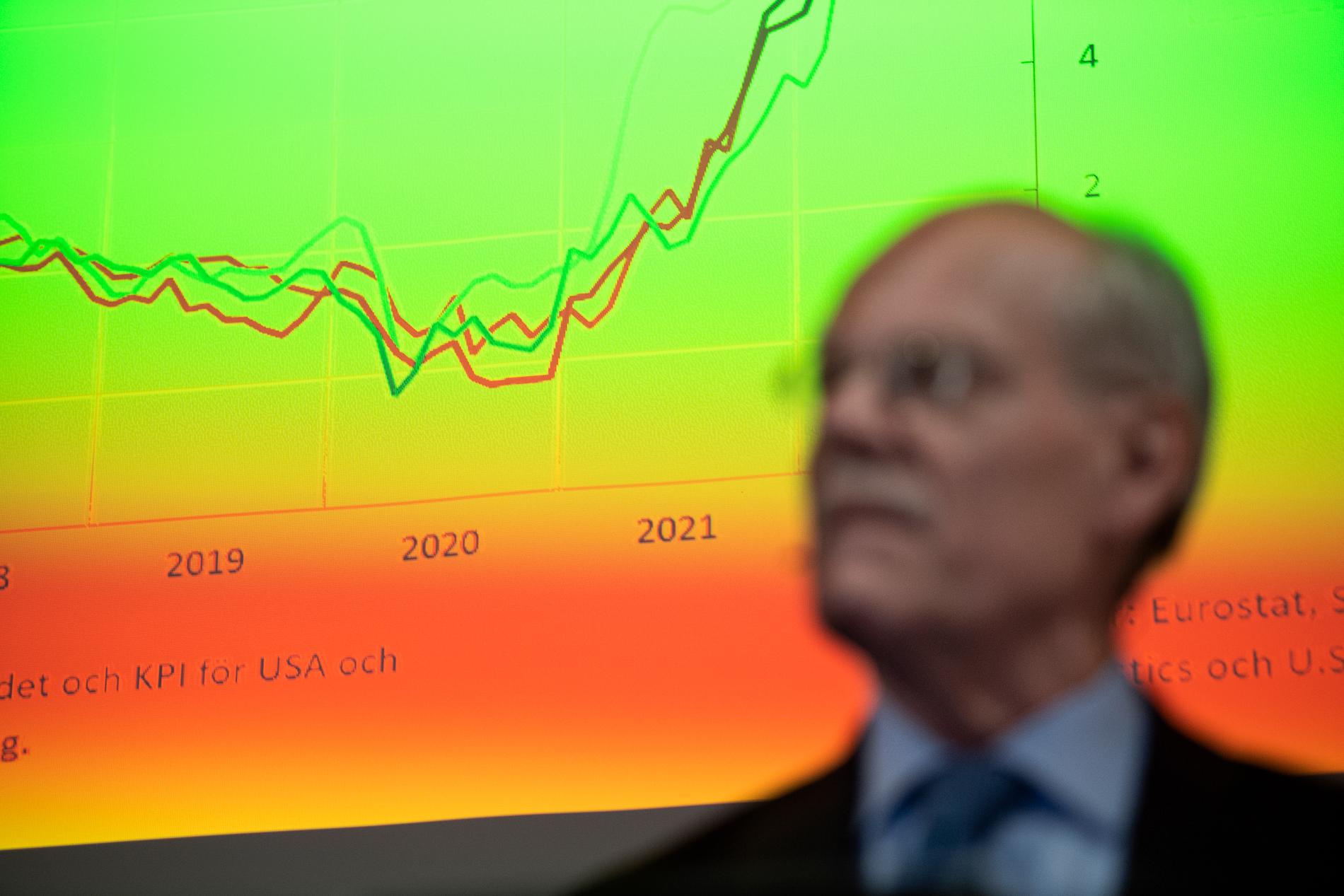
Former head of the Riksbank, Stefan Ingves. Photo: Jerker Ivarsson
Riksbank governor Stefan Ingves has retired, and another three of the members who sat on the executive board in 2021 have already or are about to quit.
Anna Seim, researcher at Stockholm University and one of the authors behind the critical evaluation, is proposed to take a seat on the board this spring.
Only two of the former members, Anna Breman and Per Jansson, remain.
But no official criticism of these or any of those who left has been made.
It is quite unique that an authority can squander 44 billion without any proper political debate arising.
The reason is that the politicians are terrified of looking as if they are meddling in what the Riksbank is doing.
Independence is a good idea on paper, but the construction is based on the officials who in practice get the keys to the Swedish economy using this power wisely.
When Stefan Ingves was asked on Sveriges Radio some time ago about his 17 years as Governor of the Riksbank, he regretted nothing and was satisfied with everything. Especially the purchase of securities.
There were roughly 43.7 billion reasons to argue against.
But not a peep was heard from Swedish politicians.
It's actually too pitiful.

Inga kommentarer:
Skicka en kommentar